All About Grains: Illustrated Grain Encyclopedia Printable for Kids (27 Grains, Nutrition, Kernel Science & Activities)
$12.00
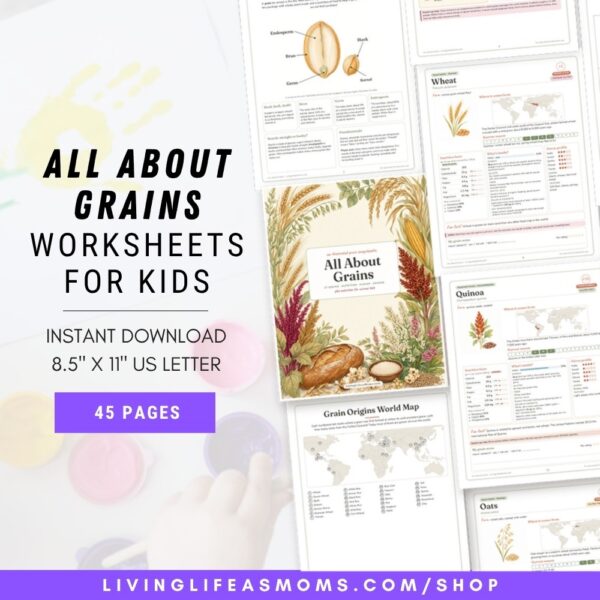
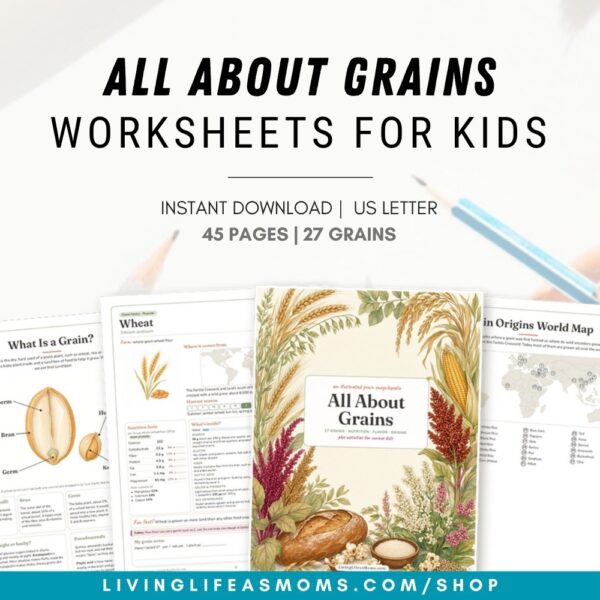
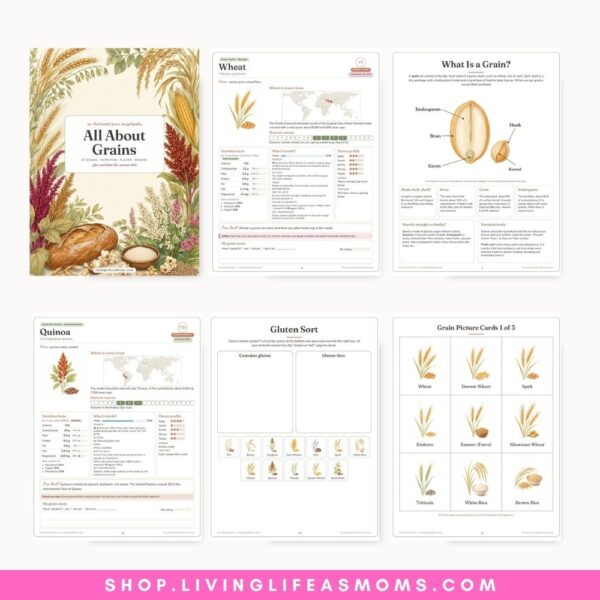
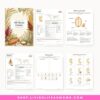
Explore 27 grains and pseudocereals, from wheat and rice to teff, fonio and quinoa, in this illustrated 45-page printable encyclopedia. Each grain gets its own page with:
an origin map
a harvest strip
USDA nutrition facts
a “What’s inside?” box covering starch, gluten, fiber, phytic acid and pigments
a flavor profile and a fun fact
The book also explains kernel anatomy, whole vs. refined grains, and gluten, and ends with activities and picture cards. Made for curious kids ages 5–12 and homeschool families. It’s the third book in the series, after All About Fruits and All About Vegetables.
Bread, rice, tortillas, oatmeal and popcorn all start as tiny seeds. All About Grains is an illustrated grain encyclopedia for kids. It is easy enough for early readers to enjoy and detailed enough for homeschool botany, nutrition and geography lessons.
Every grain page includes:
An original watercolor-style illustration
The common name, scientific (Latin) name and plant family, plus the form shown (flour, dry kernels, cooked, or popped)
A “Where it comes from” world map showing where the grain was first farmed
A month-by-month “Harvest season” strip
Nutrition facts for one typical serving, clearly labeled raw or cooked:
calories, carbohydrate, fiber, protein, fat, iron and magnesium
%DV bars and the top other vitamins and minerals
all numbers come from USDA FoodData Central
“What’s inside?”:
water %
starch, and what amylose vs. amylopectin means for fluffy or sticky grains
gluten: yes or no
fiber, including oat and barley beta-glucan
phytic acid
color pigments (USDA lutein and zeaxanthin where measured)
key compounds
A flavor profile with nutty, sweet, earthy, chewy and toasty rating dots, plus aroma and texture notes
A fun fact, grown-up and safety notes, and a “My grain notes” section for writing and rating
The 27 grains:
Wheat & its relatives: wheat, durum wheat, spelt, einkorn, emmer (farro), khorasan wheat, triticale
Rice & wild rice: white rice, brown rice, black rice, red rice, sticky rice, wild rice
Corn (maize): corn, blue corn, popcorn
Oats, barley & rye: oats, barley, rye
Sorghum & the little grains: sorghum, millet, teff, fonio
Pseudocereals: quinoa, amaranth, buckwheat, chia
Also inside:
Welcome page with a how-to-read-a-grain-page guide, ideas for using the book, and printing tips
Contents page
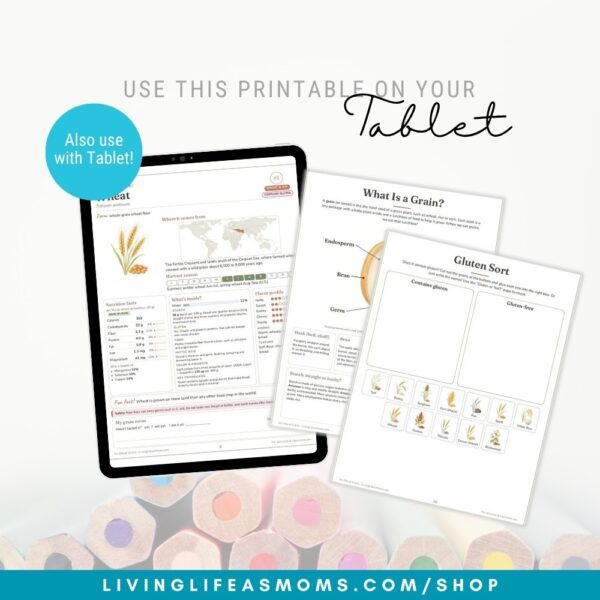
“What Is a Grain?”: a labeled kernel diagram (husk, bran, germ, endosperm), starch basics, and pseudocereals
“Whole or Refined?”: USDA comparison of whole-wheat and white flour, plus grain forms such as groats, pearled, rolled, cracked and flour
“Gluten or Not?”: which grains contain gluten, the oat question, and why “glutinous” rice has no gluten
“Meet the Grass Family”: grass tribes, how to spot a grass, and the non-grass pseudocereal families
Grain Origins world map with numbered pins and a key
“Where in the World?” map activity with a word bank
Match It Up! (grain to food)
Gluten Sort (cut and paste)
Field to Table sequencing cards (plant, grow, harvest, thresh, mill, bake)
Grain Taste Log with a “My grain experiment” cooking box
27 grain picture cards, 9 per page
Answer key
Sources & credits
Accurate and sourced:
Nutrition, water, starch and carotenoid values come from USDA FoodData Central:
SR Legacy for most grains
Foundation Foods for einkorn, emmer, black rice, red rice and fonio
Values are scaled to USDA serving weights.
%DV uses FDA Daily Values.
Each grain’s FDC ID is listed on the credits page.
USDA does not measure gluten, amylose, phytic acid, beta-glucan or saponins, so the book describes those in words and gives no made-up numbers.
Safety built in. Clear notes on:
raw flour and batter, which can carry E. coli
gluten and celiac disease, including why oats should be labeled gluten-free
rinsing quinoa to wash off bitter saponins
cooling leftover rice quickly
no popcorn for children under 4
soaking chia seeds before eating
Ink-friendly. Clean white pages with light accents. A black-and-white version is included too.
Great for: morning baskets, a grain-of-the-week routine, homeschool science, nutrition and geography units, Thanksgiving and harvest lessons, co-op classes, and kitchen-science days.
Details: 45 pages · US Letter (8.5 × 11 in) · PDF · instant download · ages about 5–12 (younger with help) · personal, homeschool, and single-classroom use.
Safety: never taste raw flour or batter. Popcorn, whole grains and dry seeds can be choking hazards for young children. People with celiac disease or food allergies should follow their doctor’s advice. Always taste-test with an adult. This book is educational and is not medical or dietary advice.