All About Vegetables: Illustrated Vegetable Encyclopedia Printable for Kids (36 Vegetables, Nutrition, Science & Activities)
$12.00
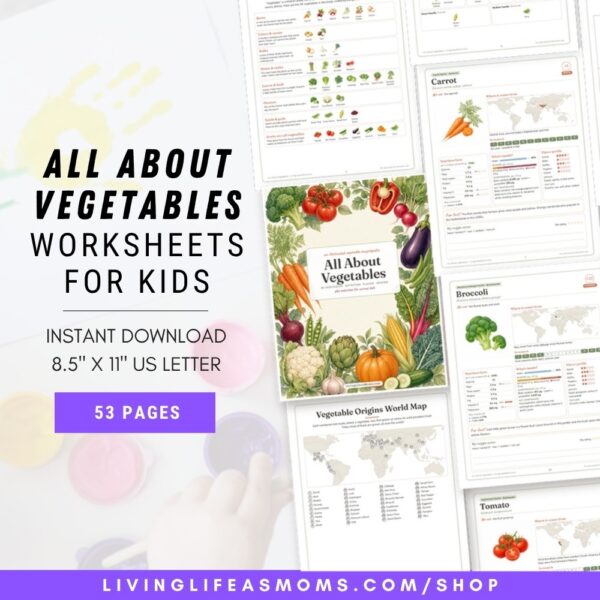
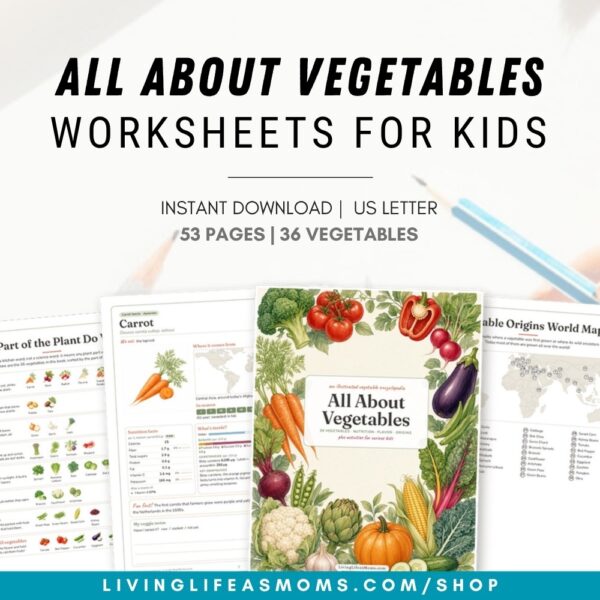
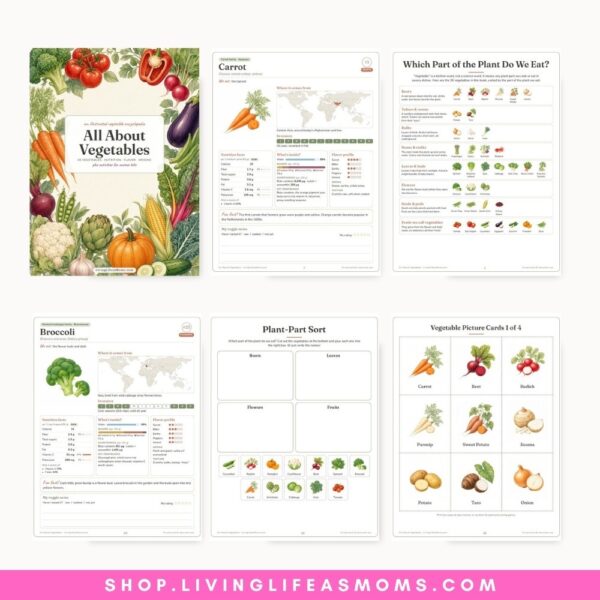
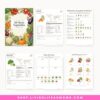
Explore 36 vegetables, from carrots to kohlrabi, in this illustrated 53-page printable encyclopedia. The vegetables are grouped by the part of the plant we eat. Each one gets its own page with an origin map, a season strip, USDA nutrition facts, a “What’s inside?” box, a flavor profile, and a fun fact. The book also includes activities, picture cards, and a garden and taste log. Made for curious kids ages 5–12 and homeschool families. It’s the companion to All About Fruits.
Roots, stems, leaves, flowers, seeds, and even fruits: every vegetable is a part of a plant. All About Vegetables is an illustrated vegetable encyclopedia for kids. It is easy enough for early readers to enjoy and detailed enough for homeschool botany, nutrition, and geography lessons.
Every vegetable page includes:
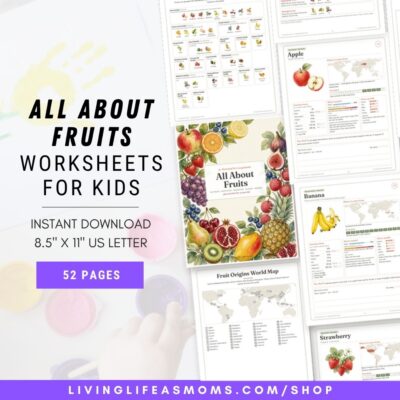
An original watercolor-style illustration
The common name, scientific (Latin) name, and plant family, plus which part of the plant we eat
A “Where it comes from” world map showing where the vegetable was first grown
A month-by-month “In season” strip
Nutrition facts for one typical USDA serving, clearly labeled raw or cooked: calories, fiber, total sugars, protein, fat, vitamin C, potassium, %DV bars, and the top other vitamins and minerals. All numbers come from USDA FoodData Central.
Seeds & pods: green peas, green beans, sweet corn, kidney beans
Fruits we call vegetables: tomato, bell pepper, cucumber, eggplant, zucchini, pumpkin, okra
Also inside:
Welcome page with a how-to-read-a-vegetable-page guide, ideas for using the book, and printing tips
Contents page
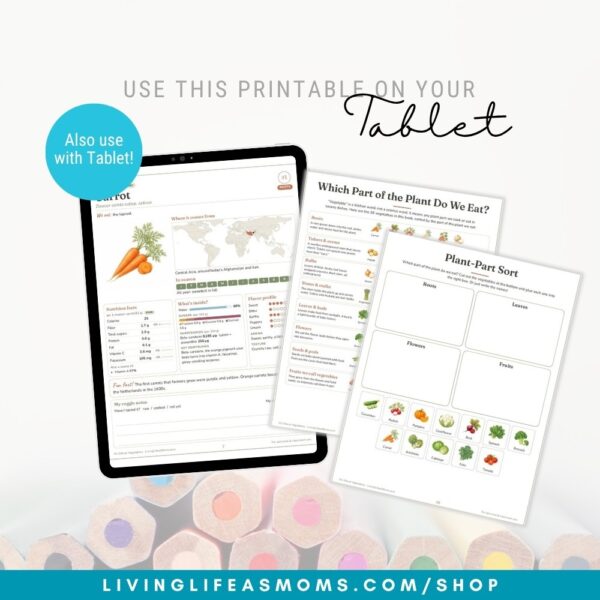
“Which Part of the Plant Do We Eat?” page
Plant Families overview (14 families)
“Fruit or Vegetable?” page: botanists vs. cooks, the 1893 Supreme Court tomato case, rhubarb’s 1947 “fruit” ruling, and a quick quiz
Vegetable Origins world map with numbered pins and a key
“Where in the World?” map activity with a word bank
Match It Up! (vegetable to scientific name)
Plant-Part Sort (cut and paste: roots, leaves, flowers, fruits)
Garden & Taste Log with a mini garden journal
36 vegetable picture cards, 9 per page
Answer key
Sources & credits
Accurate and sourced:
Nutrition, water, sugar, and carotenoid values come from the USDA FoodData Central SR Legacy database and are scaled to USDA serving weights.
%DV uses FDA Daily Values.
Each vegetable’s FDC ID is listed on the credits page.
USDA does not measure glucosinolates, nitrates, oxalates, allicin, or solanine, so the book describes those in words and gives no made-up numbers.
Safety built in. Clear notes explain why you must:
never eat raw or undercooked kidney beans
skip green or sprouted potatoes
never eat rhubarb leaves
always cook taro
Ink-friendly. Clean white pages with light accents. A black-and-white version is included too.
Great for: morning baskets, a veggie-of-the-day routine, homeschool science and nutrition units, garden-season lessons, co-op classes, and picky eaters who are ready to try something new.
Details: 53 pages · US Letter (8.5 × 11 in) · PDF · instant download · ages about 5–12 (younger with help) · personal, homeschool, and single-classroom use.
Safety: some vegetables must be cooked before eating, and some plant parts are not food. Whole peas, corn kernels, and hard raw vegetables can be choking hazards for young children. Always taste-test with an adult. This book is educational and is not medical or dietary advice.