Kids’ Dental Care by Age: Brushing, Fluoride and First Dentist Visits
How to care for your child's teeth from the first tooth through the school years: when to start brushing, how much fluoride toothpaste to use, dentist visits, sealants and sugar habits.
As an Amazon Associate I earn from qualifying purchases. Some links in this post are affiliate links, which means I may earn a small commission at no extra cost to you.
Baby teeth do not last forever, so it is tempting to think they matter less. Dentists say otherwise. Baby teeth hold space for permanent teeth, help children chew and speak clearly, and an untreated cavity can cause pain, infection and missed school days. Healthy habits formed in the first years also tend to stick.
This guide follows recommendations from the American Dental Association (ADA), the American Academy of Pediatrics (AAP), the American Academy of Pediatric Dentistry (AAPD) and the Centers for Disease Control and Prevention (CDC). It takes you through each age, from the first tooth to the school years, with practical steps on brushing, fluoride, flossing, diet and dentist visits. Your child’s dentist can tailor all of it to your child’s needs.
Quick answer: start brushing as soon as the first tooth appears, twice a day with a smear of fluoride toothpaste (about the size of a grain of rice) until age 3, then a pea-sized amount. Brush for two minutes. Schedule the first dental visit by your child’s first birthday or within six months of the first tooth.
Why Baby Teeth Matter
The CDC describes tooth decay as one of the most common chronic diseases of childhood in the United States, and it is largely preventable. Decay happens when bacteria in the mouth feed on sugars and produce acids that wear down the tooth surface. Frequent snacking and sipping on sugary drinks, along with poor brushing, give those bacteria more fuel.
Cavities in baby teeth can spread, hurt, and affect how a child eats, sleeps and learns. They also raise the risk of cavities in permanent teeth. The good news is that a few consistent habits make a big difference.
Babies: Before and After the First Tooth
Even before teeth arrive, you can wipe your baby’s gums with a clean, damp washcloth or gauze after feedings. This clears away milk residue and gets baby used to mouth care.
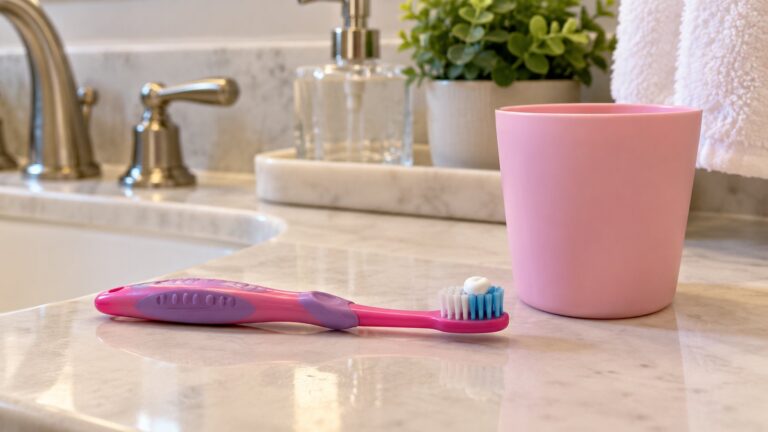
When the first tooth comes in, usually around six months, though the timing varies a lot, start brushing it twice a day with a soft, small-headed toothbrush. The ADA recommends a smear of fluoride toothpaste, about the size of a grain of rice, for children under 3. Fluoride strengthens enamel and helps teeth resist decay. The amount is small on purpose, because young children swallow much of the toothpaste.
Bottles, sippy cups and bedtime
- Do not put a baby to bed with a bottle of milk, formula or juice. Liquids pool around the teeth and feed bacteria all night.
- Offer only water in a bottle at bedtime if baby needs one after brushing.
- Start moving to an open or straw cup around the first birthday, as your pediatrician advises.
- The AAP recommends no juice for infants under 12 months and limits for older kids: up to 4 ounces a day for ages 1 to 3, and 4 to 6 ounces for ages 4 to 6.
Toddlers and Preschoolers: Building the Habit
Toddlers like to do things on their own, which is wonderful for confidence and difficult for toothbrushing. A common approach is to let your child have a turn first, and then you finish the job. Children do not have the hand skills to brush well until the early school years. Many dental groups advise that parents help or supervise brushing until children are around 6 to 8 years old, and they should be watched even after that.
- Brush twice a day, in the morning and before bed, for two minutes each time.
- Use a soft toothbrush with a small head, and replace it every three to four months, or sooner if the bristles look frayed.
- From age 3 to 6, use a pea-sized amount of fluoride toothpaste, and remind your child to spit and not swallow.
- Make sure to brush all surfaces: the outside, inside and chewing surfaces of every tooth, plus the tongue.
- Start flossing when two teeth touch each other, using floss picks or a small piece of floss.
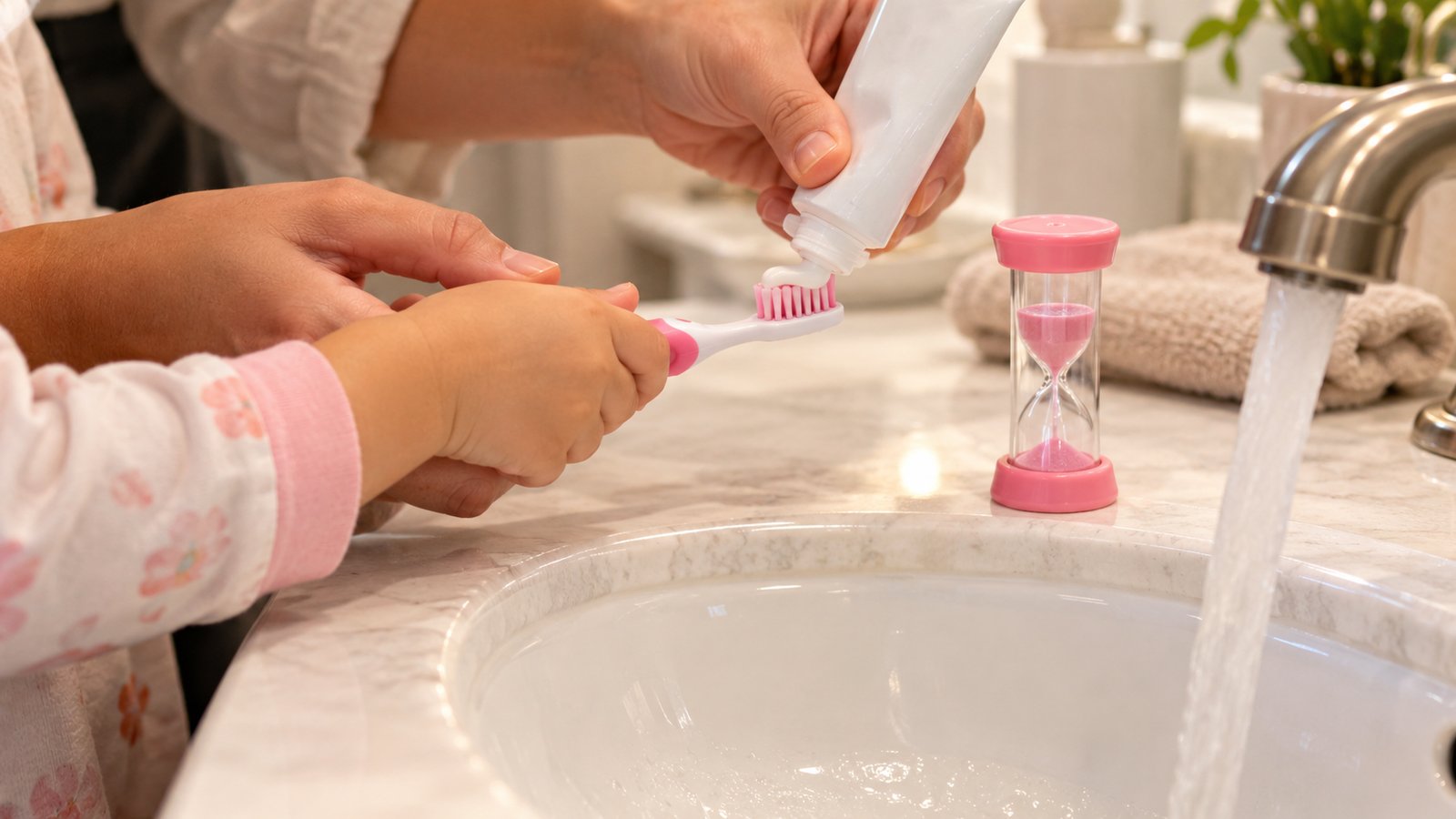
Two minutes can feel long for a preschooler. Try a timer, a favorite song, or a hand-held sand timer. A small countdown timer made for kids, such as this kids timer for toothbrushing and handwashing, gives them something to watch, and it works for other routines, too. Turn it into a game: brush the “sugar bugs” off each tooth, and let your child pick the song.
Handling the child who refuses
Almost every family hits a stretch when a child clamps their mouth shut. Try a few things: let them choose the toothbrush and flavor of toothpaste, brush a stuffed animal’s teeth first, sit them in your lap so you can see, or take turns brushing. Stay calm and keep it short. A quick but thorough brush is better than a battle that ends in tears. If resistance goes on for weeks, ask your dentist for ideas.
The First Dental Visit
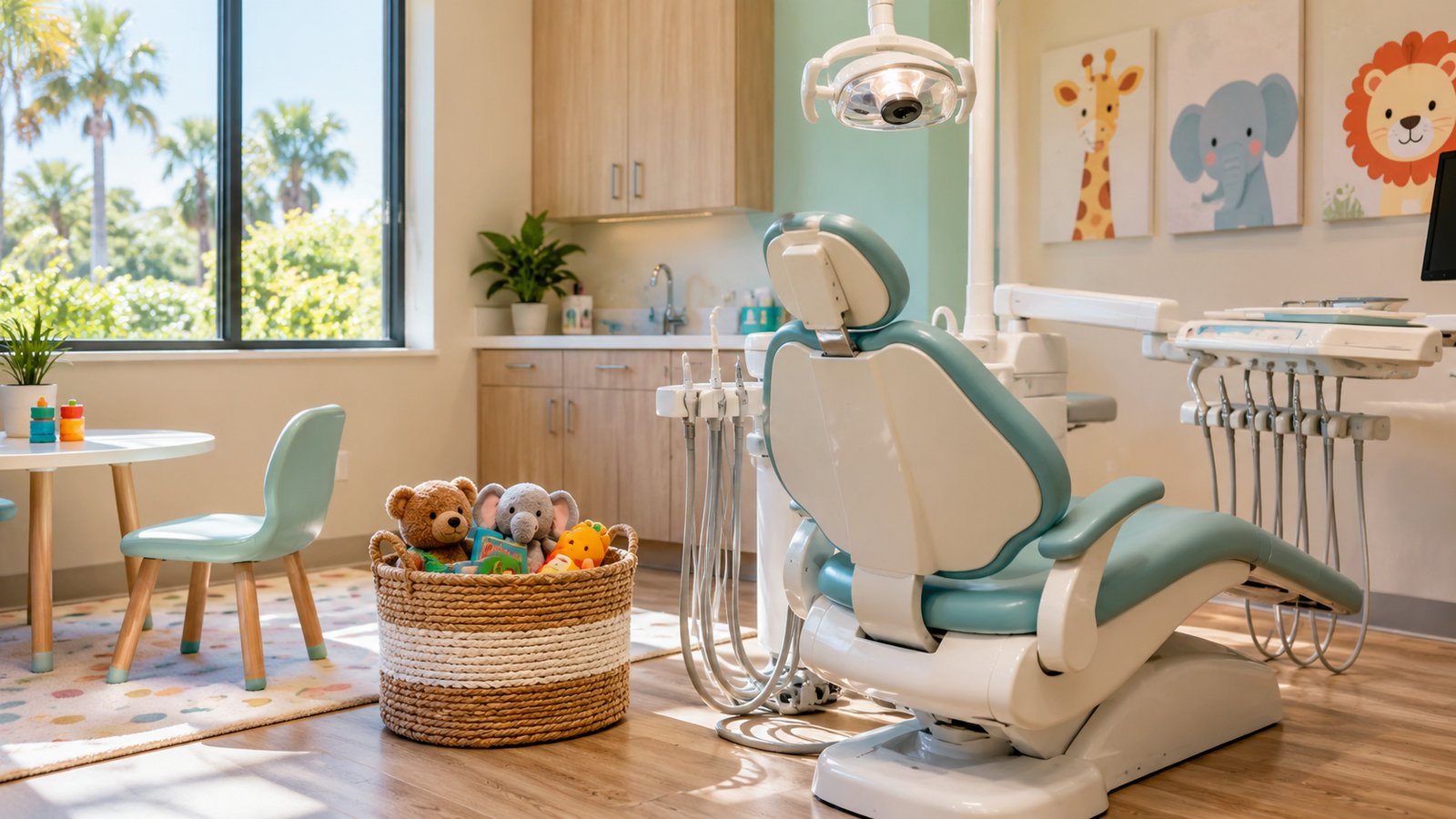
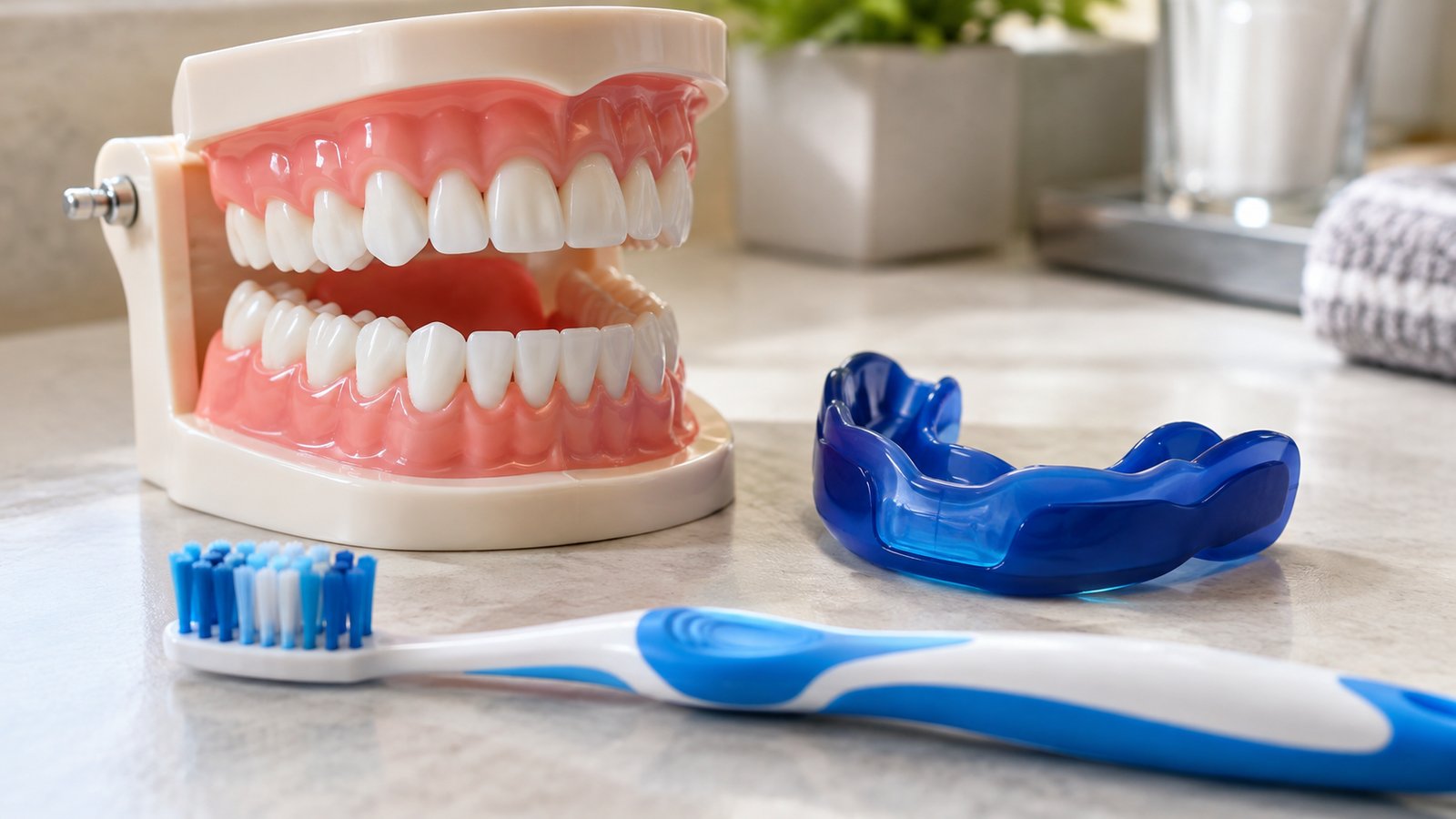
The AAPD, the AAP and the ADA recommend a first dental visit by age 1, or within six months of the first tooth appearing. Expect a short appointment, in which the dentist checks the teeth and gums, looks at how your child’s mouth is developing, talks about brushing, fluoride, diet and habits such as pacifier use or thumb sucking, and may apply fluoride varnish.
To prepare, talk about the visit in a positive way. Read a children’s book about the dentist, and avoid scary words. Choose a time of day when your child is rested. Many pediatric dentists are trained to handle anxious kids and have child-friendly offices. If cost is a concern, ask about community health centers, dental schools and state programs. Your pediatrician can also check your child’s teeth and apply fluoride varnish at well visits.

School-Age Kids: Sealants, Sports and Independence
Around age 6, the first permanent molars arrive behind the baby teeth, and children start to lose front teeth. The ADA suggests that children continue to brush twice a day with fluoride toothpaste. As children become more independent, check their technique every so often and make sure they are really brushing for two minutes.
Dental sealants
Sealants are thin protective coatings painted on the chewing surfaces of back teeth, where decay often begins. The CDC says that school-age children without sealants have almost three times more cavities in their first molars than children with sealants. Ask your dentist whether sealants are a good fit for your child. Many schools also run sealant programs.
Mouthguards and dental injuries
If your child plays contact sports or sports such as basketball and baseball, ask your dentist about a mouthguard. A custom-fitted guard offers good protection, and store-bought boil-and-bite versions are an alternative. If a permanent tooth is knocked out, the ADA advises to pick it up by the crown and not the root, rinse it gently if it is dirty, try to put it back in the socket, or keep it in milk, and see a dentist right away. Baby teeth that are knocked out should not be put back in. Call the dentist for advice.
Braces and retainers
Orthodontic care often starts in the tween years. Brushing around braces takes more time, and kids may need special brushes. Retainers need daily cleaning, and our guide on how to clean retainers walks through the simple steps for each type.

Food, Drink and Teeth
It is not only how much sugar a child eats, but how often. Each time kids eat or drink something sugary, the mouth stays acidic for a while. Constant sipping and grazing keep teeth under attack. Some simple guidelines:
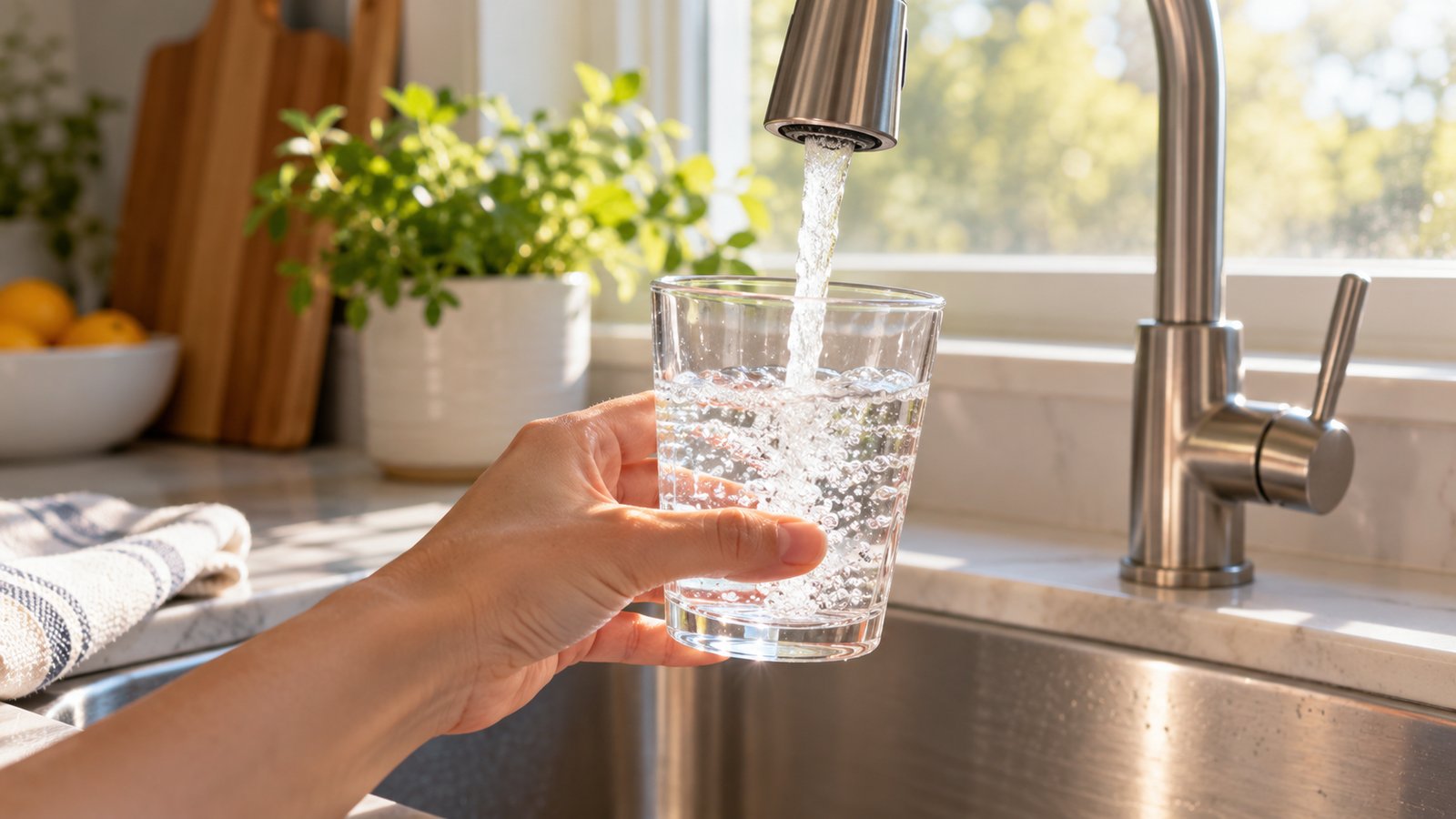
- Make water your child’s everyday drink, especially between meals. Fluoridated tap water also helps protect teeth.
- Keep juice, soda, sports drinks and sweet drinks for occasional treats and serve them with meals.
- Offer snacks that are low in sugar and not sticky, such as cheese, fruit, vegetables and yogurt without added sugar. Our tips for picky eaters and healthy strawberry yogurt parfait are good starting points.
- After sweets, have your child rinse with water or eat with a meal, and brush at the usual time.
- Do not share spoons, cups or toothbrushes, because bacteria can pass from parent to child.
Holiday seasons are a good time to remember these habits. Our posts on candy at home and Halloween safety talk about managing sweets without turning them into a fight.
Fluoride in your water
Many communities add fluoride to public drinking water at a level recommended by the U.S. Public Health Service, and the CDC counts community water fluoridation among the major public health achievements of the 20th century. To find out about your area, ask your water utility or check the CDC’s My Water’s Fluoride tool. If your family uses well water, have it tested, because levels vary. Many bottled waters do not contain fluoride, so ask your dentist whether your child needs a supplement or varnish. Do not decide this on your own, because too much fluoride during the years when teeth are forming can cause faint white marks called fluorosis.
Teens and older kids
Teen years bring new challenges, including snacking between meals, sugary sports and energy drinks, braces, and sometimes less careful brushing. Talk about how drinks affect teeth, and encourage water. Remind teens to see the dentist on the schedule your dentist sets, usually every six months, although some children need visits more or less often depending on their risk. Teens who smoke or vape face dental problems along with other health risks, and a dentist can be a useful ally in that conversation. Wisdom teeth are usually checked in the late teens.
Pacifiers, Thumb Sucking and Teething
Pacifiers and thumb sucking are normal in babies and toddlers. The ADA says that most children stop on their own, and that problems may arise if the habit continues beyond the age when permanent teeth start to come in, since it can affect how the teeth and jaws grow. Gentle encouragement and praise work better than punishment. Talk with your dentist if you are worried.
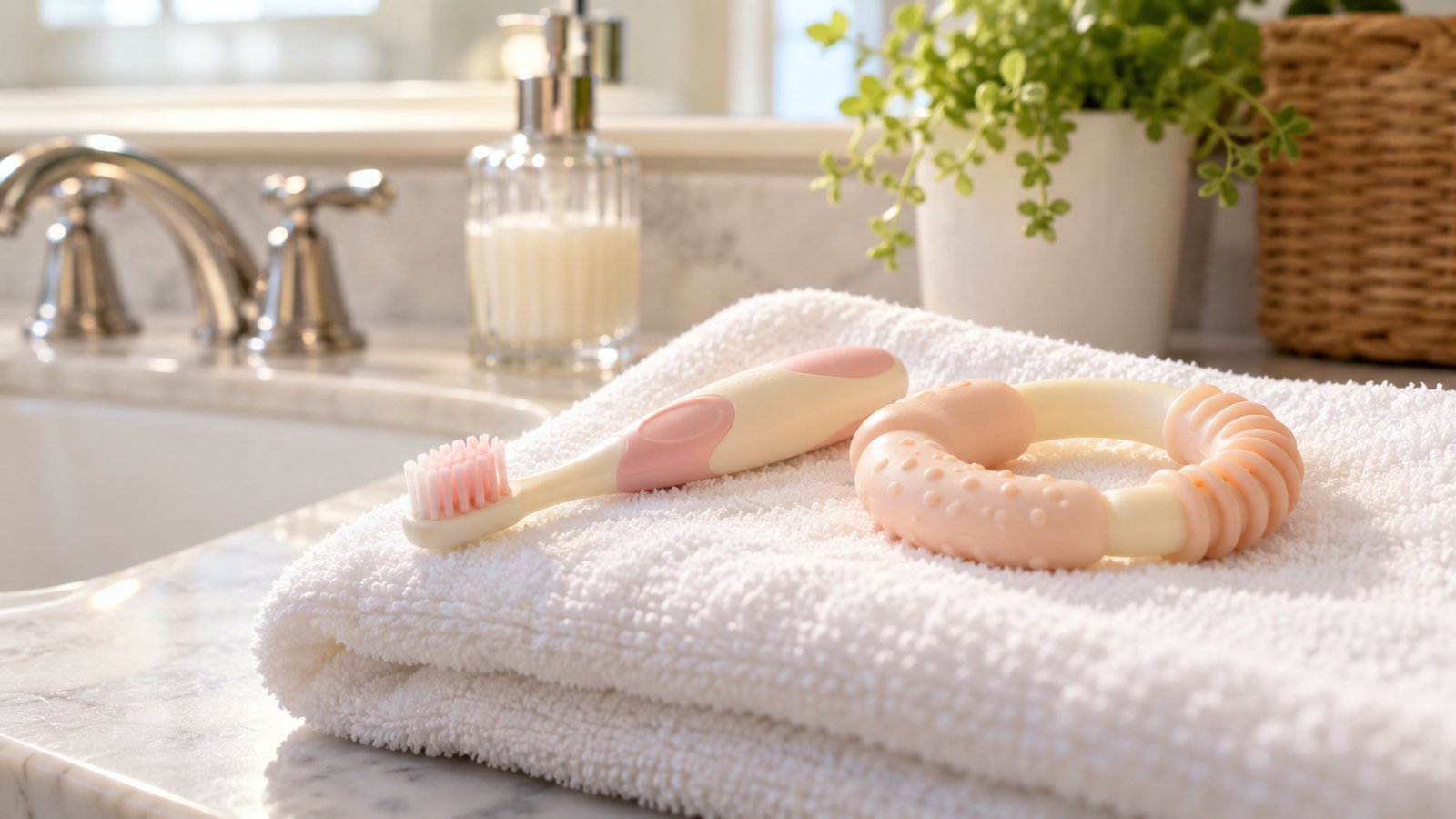
Teething can make babies fussy, drool and chew on everything. A clean, chilled (not frozen) teething ring or a clean finger to rub the gums can help. The FDA warns against teething gels and tablets containing benzocaine or belladonna for babies and young children, and amber teething necklaces are a choking and strangulation risk. Your pediatrician can suggest safe ways to ease teething pain.
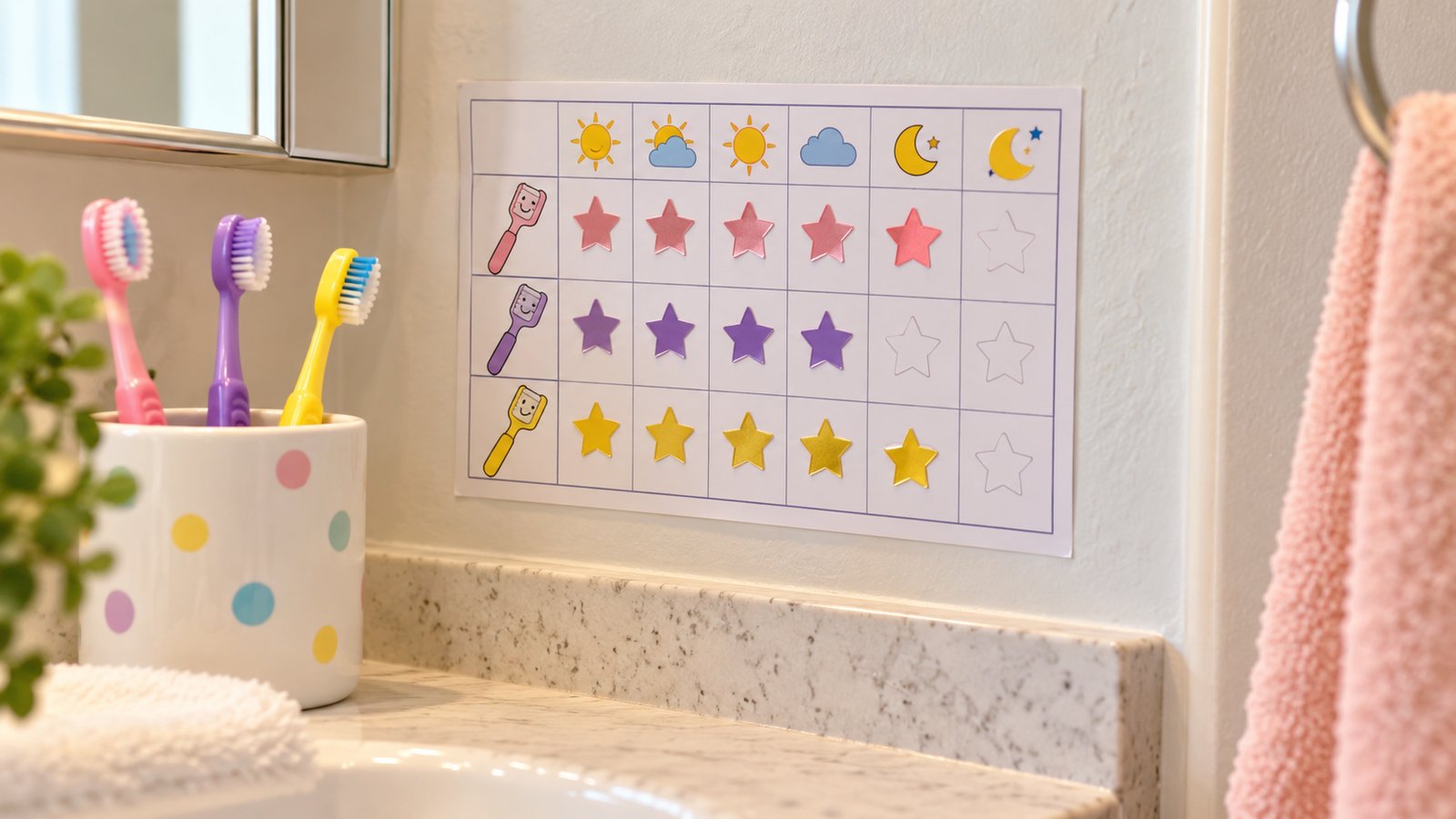
A last tip is to make dental care a family habit and not only a kid chore. Brush together morning and night, so your child sees you doing it. Put a calendar reminder on the phone for dental appointments, and book the next visit before you leave the office. Keep spare toothbrushes on hand, and swap brushes after your child has been sick. Sticker charts or a simple family chart can help younger children feel proud of their routine, and our printable kids chore chart has a space for it. With steady habits and regular check-ups, most children can grow up with healthy teeth.
Frequently Asked Questions
When should my child first see a dentist?
By the first birthday or within six months of the first tooth. Early visits let the dentist spot problems early and give you advice.
How much toothpaste should my child use?
A smear about the size of a grain of rice for children under 3, and a pea-sized amount for ages 3 to 6, according to the ADA.
Is fluoride safe for kids?
Used in the recommended amounts, fluoride is safe and effective at preventing cavities, according to the ADA and CDC. Using too much toothpaste can cause mild white spots on developing teeth, so keep the amount small and supervise.
Do baby teeth really need to be cared for?
Yes. They help with chewing and speaking, guide permanent teeth into place, and cavities in baby teeth can cause pain and infection.
When can my child brush alone?
Children usually need help or supervision until around age 6 to 8. Watch their technique, and finish up any spots they miss.
Sources: American Dental Association, MouthHealthy.org; American Academy of Pediatric Dentistry; American Academy of Pediatrics, HealthyChildren.org on juice and dental health; CDC Division of Oral Health on tooth decay and sealants; FDA warning on benzocaine teething products. Product links are affiliate links. This article is general information and not dental or medical advice.