Halloween Safety Tips for Kids: Costumes, Trick-or-Treating and Candy Checks
Halloween safety tips for families based on CDC, AAP and Safe Kids guidance: costume safety, trick-or-treat rules, candy checks, allergy-friendly options and how to handle the sugar.

As an Amazon Associate I earn from qualifying purchases. Some links in this post are affiliate links, which means I may earn a small commission at no extra cost to you.
Halloween is one of the best nights of the year for kids, and one of the busiest nights of the year for parents. Costumes have to fit, pumpkins need carving, the candy bowl needs filling, and you need to get everyone around the neighborhood in the dark. A little planning keeps the evening fun and the stress low.
This guide pulls together safety advice from the Centers for Disease Control and Prevention (CDC), the American Academy of Pediatrics (AAP), Safe Kids Worldwide and the National Fire Protection Association (NFPA). It covers choosing costumes, getting around safely after dark, checking candy, handling food allergies, and keeping the sugar under control. Halloween falls on Saturday, October 31 this year, so you have time to prepare.
Quick answer: choose costumes that fit and are flame-resistant, add reflective tape or a light, make sure kids can see and walk easily, have an adult go with younger children, use sidewalks and crosswalks, and check all candy before anyone eats it. For kids with food allergies, read every label and consider non-food treats.
Choose a Safe Costume
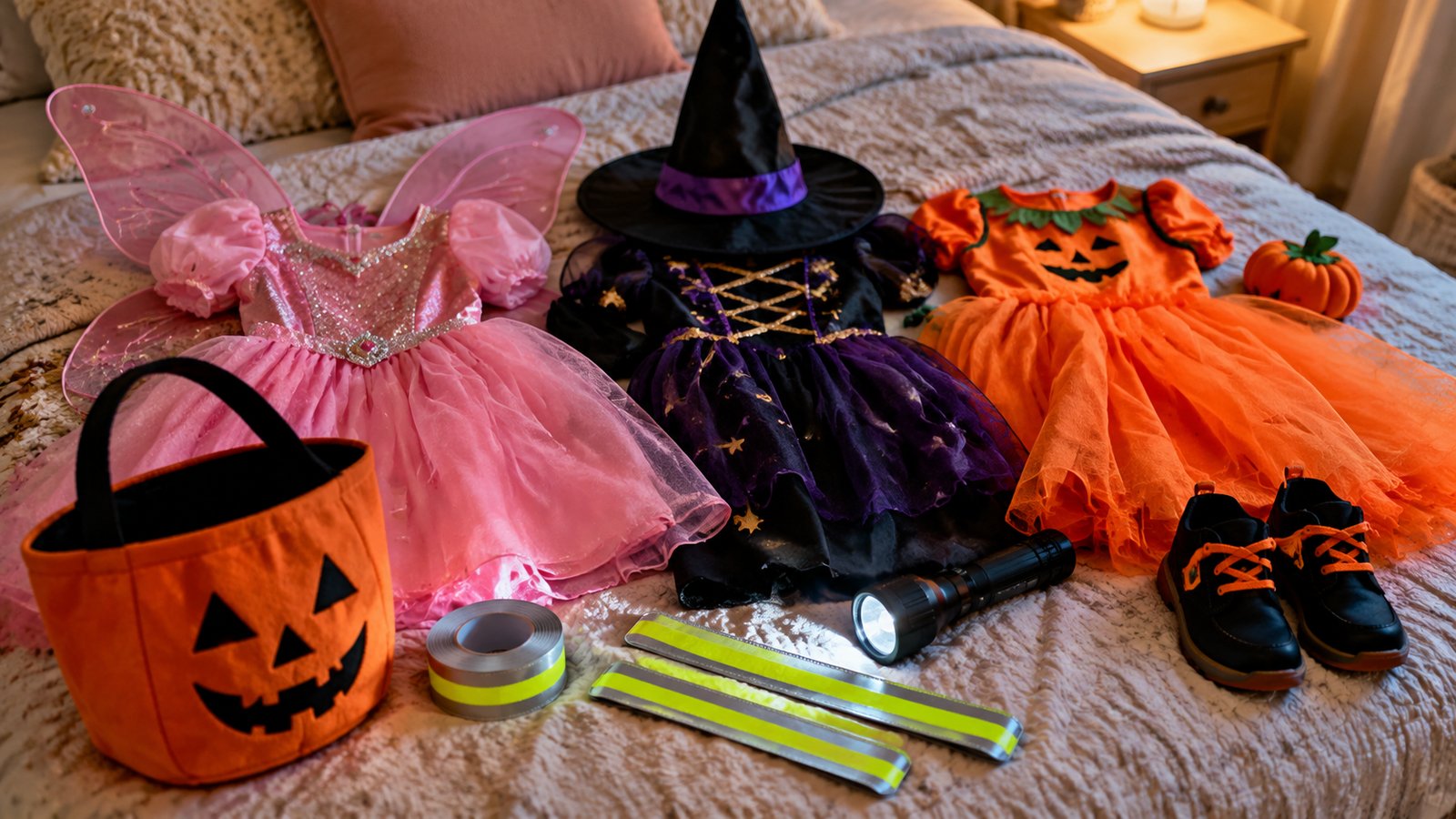
The best costume is one your child can wear comfortably, see out of and move around in. The AAP and CDC suggest a few checks before the big night.
- Look for the label “flame-resistant” on costumes, wigs and accessories. Flame-resistant does not mean fireproof, so keep kids away from candles and open flames.
- Make sure the costume fits. Hems that drag on the ground can cause tripping, and sleeves that are too loose can brush against a flame.
- Choose bright colors or add reflective tape to costumes and treat bags so that drivers can see your child.
- Use non-toxic face paint or makeup in place of masks, which can block vision. Test it on a small patch of skin a day or two before, to check for allergic reactions.
- Keep costume props soft and flexible. Swords, wands and canes should not be sharp or rigid enough to hurt someone in a fall.
- If kids wear decorative contact lenses, the American Academy of Ophthalmology and the FDA warn against them unless they are prescribed and fitted by an eye doctor.
Think about layers, too. October evenings can be chilly, and a costume that works only without a jacket can end up with a coat that spoils the look. Plan the costume to go over a warm base layer, or choose one that works with a coat.
Light up the dark
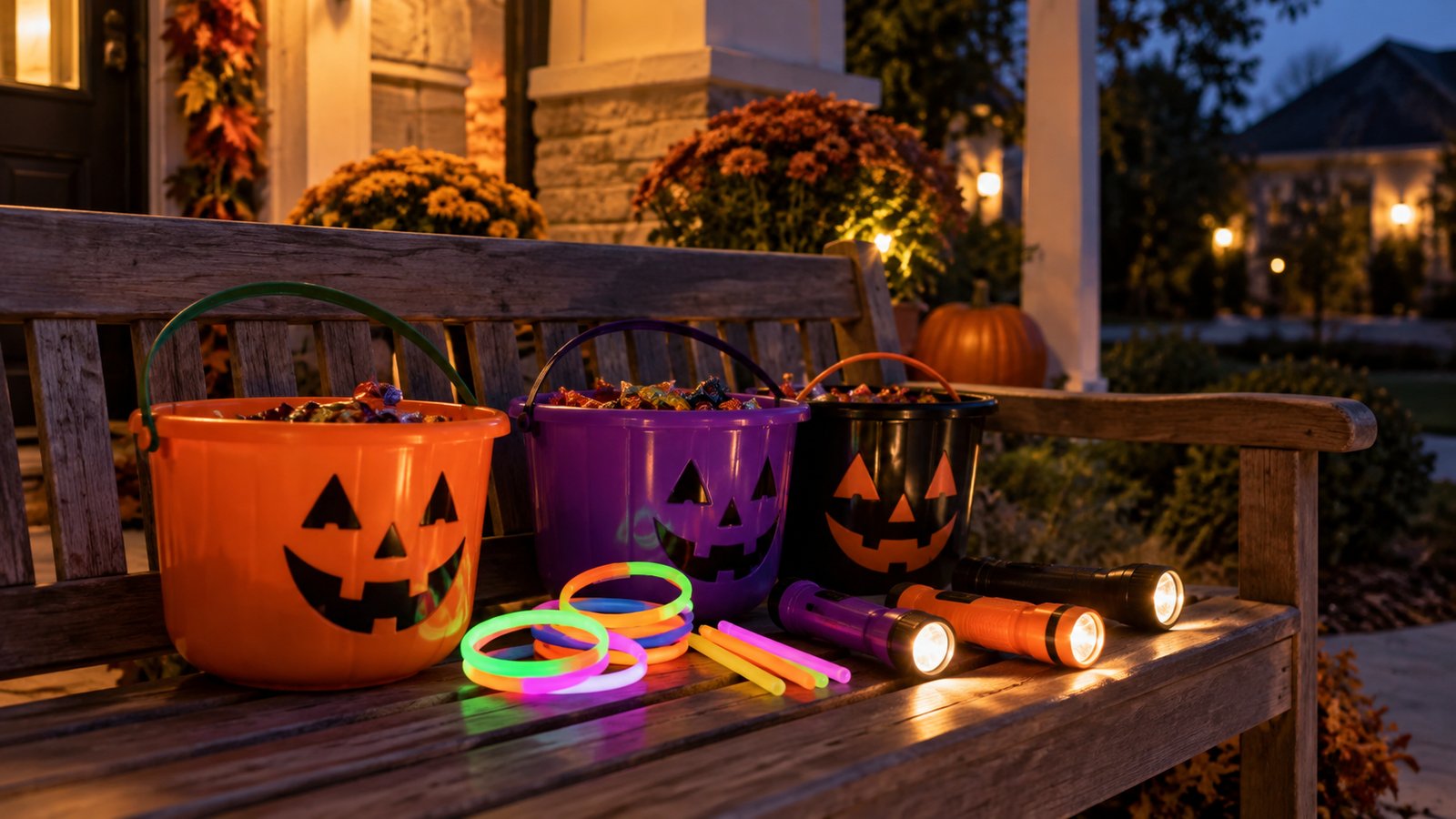
Visibility is the most important safety feature on Halloween night. Kids can carry a flashlight or glow stick, and wearing reflective strips helps drivers spot them from farther away. Light-up armbands are a simple add-on that kids tend to like. A set such as these rechargeable LED armbands can be worn over a costume, and you can wear one yourself as the adult on duty. Check the product details to make sure the size fits your children before you buy.
Plan the Trick-or-Treat Route
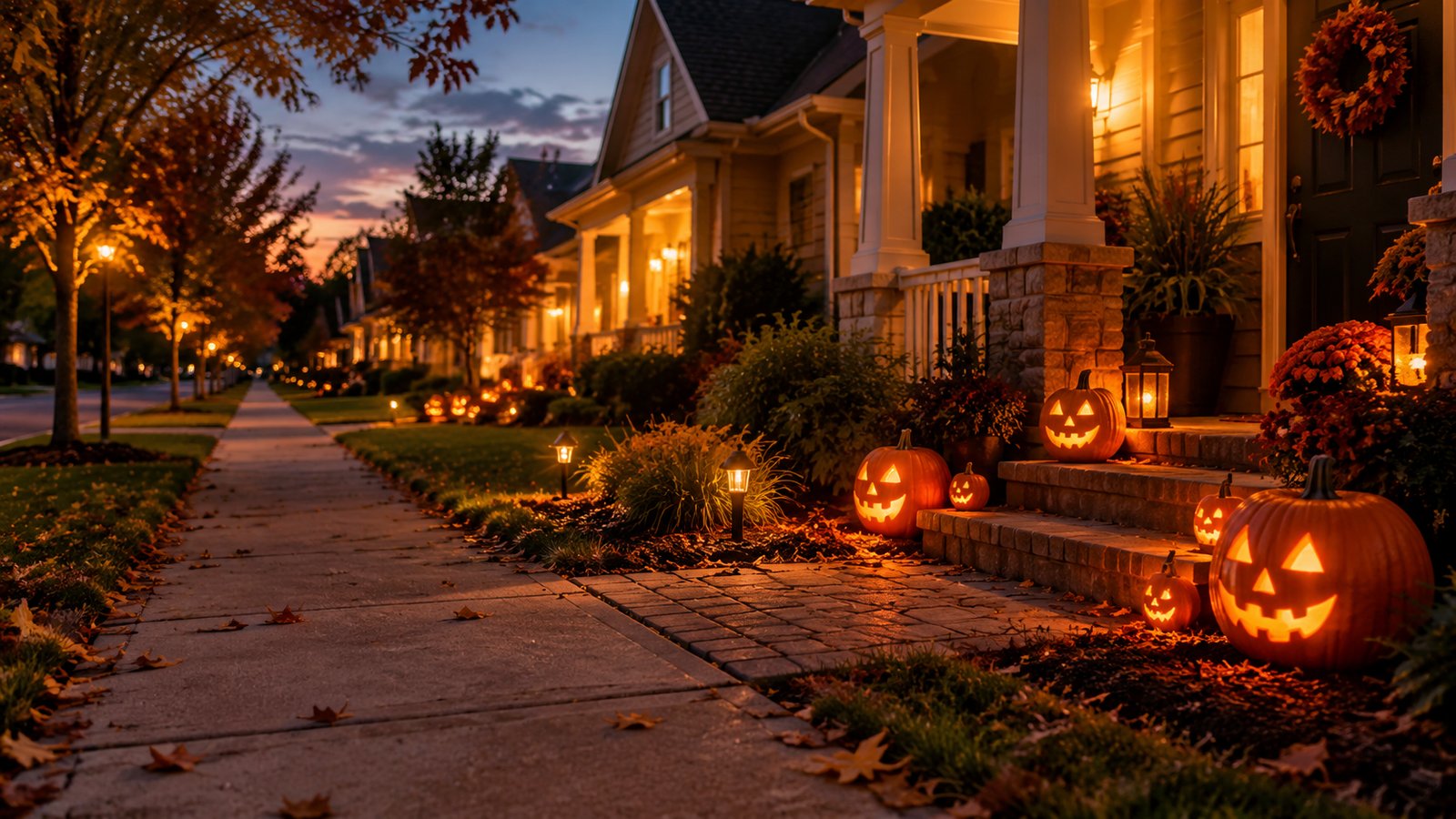
Safe Kids Worldwide notes that Halloween is a high-risk evening for pedestrian injuries, because more kids than usual are out walking in the dark, often excited and distracted. A few ground rules help.
- Go together. The AAP advises that children under 12 should not trick-or-treat alone at night without an adult, and older kids should go in a group with a planned route and a set return time.
- Stay on sidewalks. If there are none, walk on the far edge of the road facing traffic.
- Cross at corners and crosswalks. Look both ways, and do not dart between parked cars.
- Put phones away while walking. Distracted walking is a problem for adults and teens, too.
- Visit well-lit houses and only go to the door. Never go inside a home or get into a car with a stranger.
- Carry a charged phone, and agree on a plan if you get separated.
Drivers should slow down in residential areas, watch for kids on and near the road, and put away their phones. Some places also have community trunk-or-treat events in parking lots, which can be a good option for toddlers and kids who are nervous about the dark.
Check the Candy Before Anyone Eats It
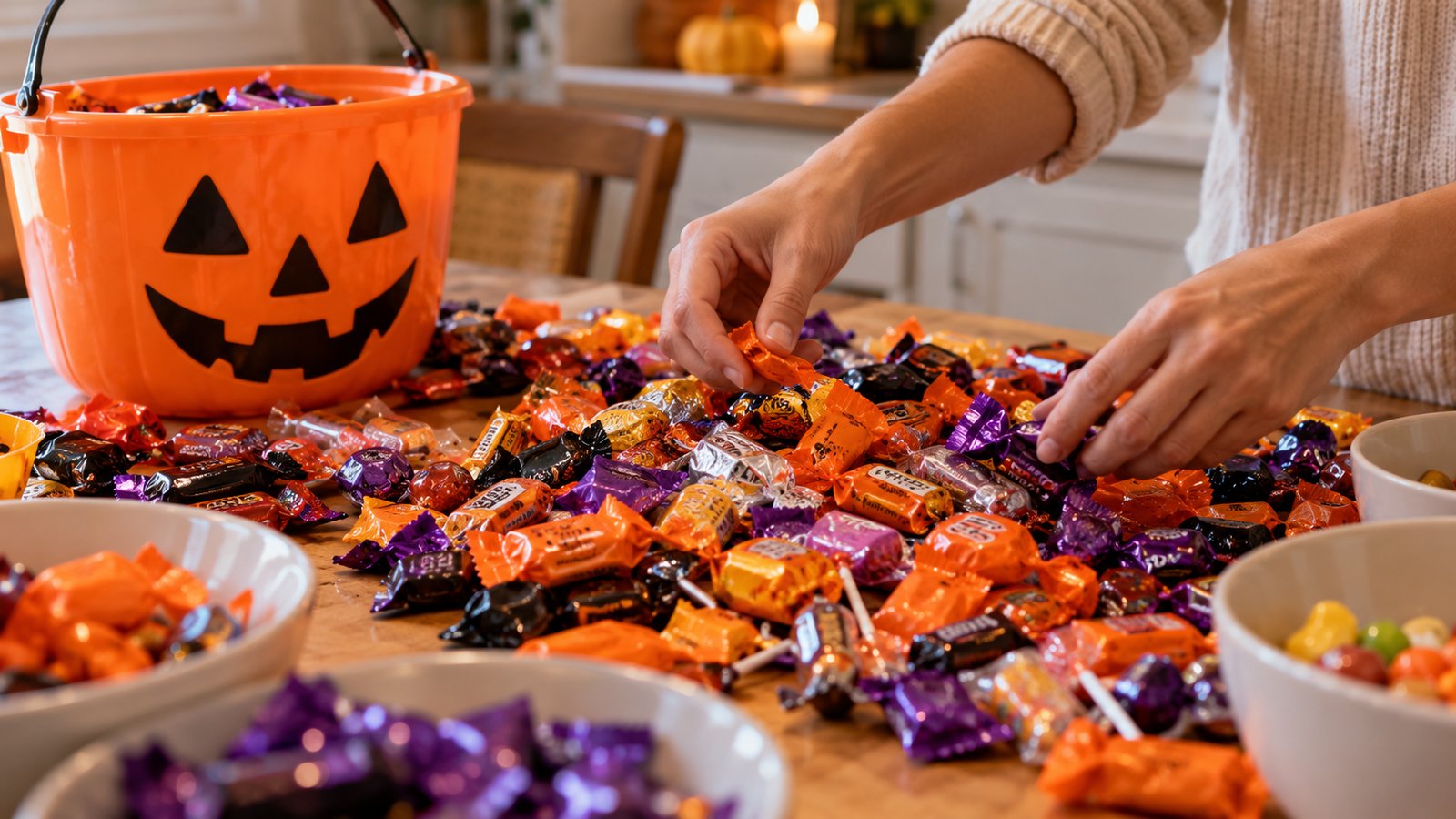
Hold off on tasting until you are back home. Spread the candy out and look through it with your kids. Throw away anything that is unwrapped, that looks tampered with, or that you do not recognize. Documented cases of strangers tampering with treats are extremely rare, but a quick check is still smart because torn wrappers and unlabeled items are also an allergy risk.
Choking is a larger concern for young children. Hard candy, gum, popcorn, nuts and small candies are choking hazards for children younger than 4 years old, according to the AAP. Take them out of toddlers’ bags or save them for when they are older.
If your child has a food allergy
Always read labels. Fun-size versions often have different ingredients from full-size bars, and manufacturers change recipes. Teach your child never to eat anything without checking with you. Many families keep a stash of safe treats at home to swap for unsafe candy. The Teal Pumpkin Project, run by Food Allergy Research and Education (FARE), encourages houses to offer non-food treats such as stickers, pencils or glow bracelets and to display a teal pumpkin so that kids with allergies know they are welcome. You can join in by offering a few non-food items next to the candy.
Managing the Sugar
A big bucket of candy can feel like a parenting challenge that lasts for weeks. There is no single right way to handle it, but a few approaches help families avoid fights.
- Eat a real meal before going out, so kids are not trick-or-treating on an empty stomach.
- Let kids pick a number of favorites to keep, and decide together what to do with the rest. Some families swap extra candy for a small toy or donate it.
- Offer a set treat time each day, such as one or two pieces after dinner, so candy does not become an all-day snack.
- Keep the candy out of sight. A box on a high shelf is easier on everyone than a bowl on the counter.
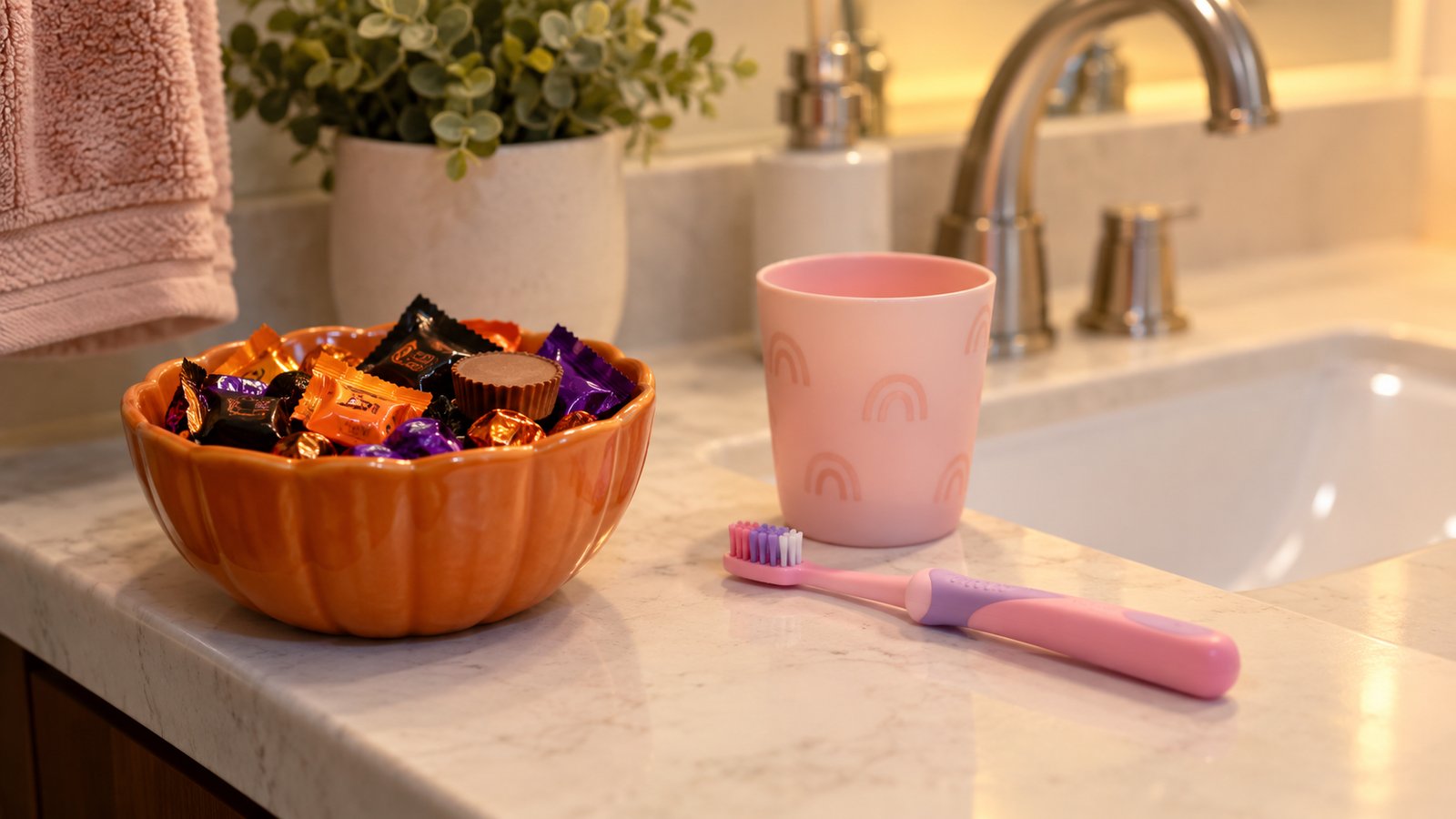
- Remind kids to brush their teeth. Sticky candies cling to teeth, and the American Dental Association advises brushing twice a day with fluoride toothpaste.
Some parents prefer a firm approach, and our post on why one parent hides candy from her kids gives one point of view. Whatever you choose, keep the tone relaxed. Treating candy as a forbidden prize can make kids want it more.
If you would like to make a few treats at home, our spooky Halloween pretzel bites, pumpkin pretzel bites and spider-themed snacks are easy options. Just be sure to check for allergies before you share.
Decorations, Pumpkins and Fire Safety
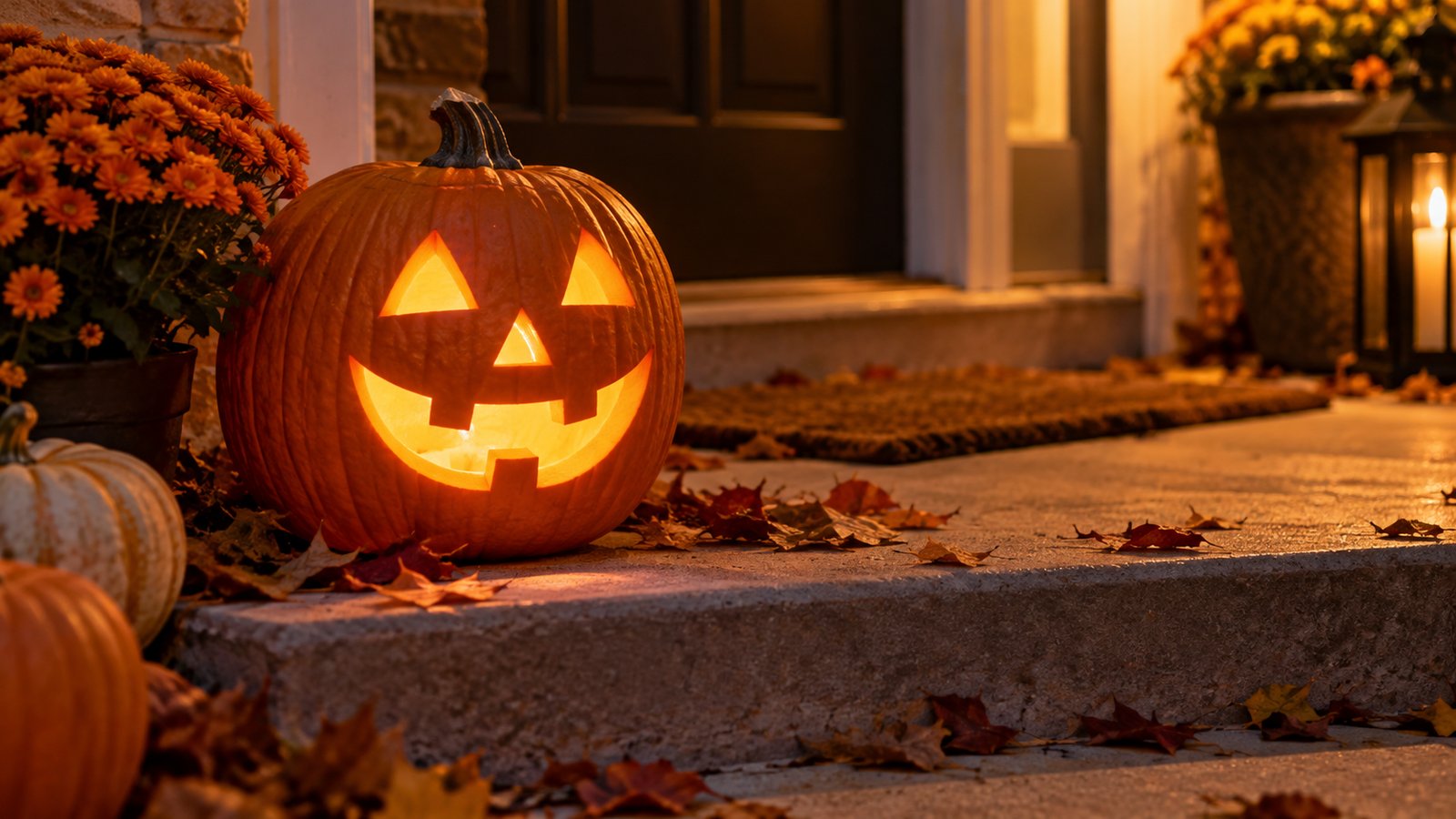
Pumpkin carving is a favorite tradition, and the CDC and AAP suggest letting kids draw the design and leaving the cutting to adults. Small children can scoop out the seeds. Consider using a glow stick or battery-operated candle inside instead of a real candle, because the NFPA reports that decorations catching fire from candles are a cause of Halloween-night home fires.
Keep decorations such as dried flowers, cornstalks and crepe paper away from heat sources and open flames. Keep walkways clear of tripping hazards, turn on the porch light, and trim anything that could block the path. If you have pets, note that many get anxious with trick-or-treaters at the door, so think about a quiet room for them. Chocolate is also toxic to dogs, so keep the candy out of reach.
Clutter from costumes and decorations can build up fast once the night is over. Our post on how to declutter Halloween costumes helps with what to do with the pile of costumes, wigs and props afterward.
Halloween for Different Ages and Needs
Babies and toddlers
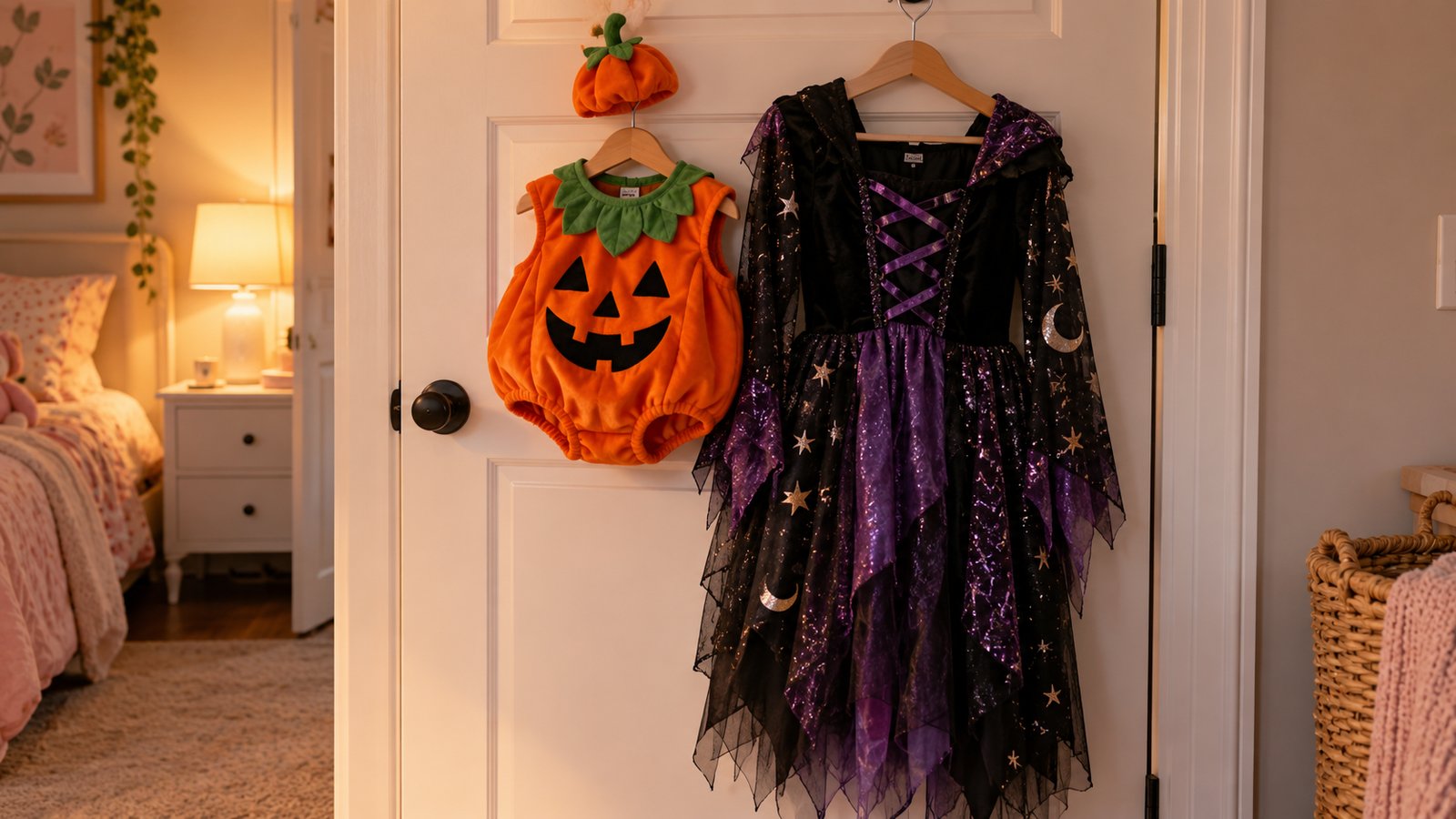
Little ones often enjoy the costume more than the candy, and a short walk to a few houses may be plenty. Dress them warmly, skip masks and hats that can slip over the face, and keep an eye on small decorations that can be choking hazards. Because toddlers cannot eat many Halloween candies safely, plan to hand over a few age-appropriate snacks instead.
Tweens and teens
Older kids want independence, and they can have some, with agreements in place. Ask them for the route, who they are going with and when they will be back. Make sure their phones are charged and that they have a way to reach you. Remind them of road rules and that costumes with masks or hoods can limit vision. Talk through what to do if someone makes them uncomfortable or if a prank gets out of hand. Respectful behavior toward neighbors, such as not damaging decorations, is part of the conversation as well.
Sensory-sensitive and disabled children
Crowds, scratchy costumes and loud noises can be hard for kids with sensory sensitivities. Pick soft clothes, try the costume on ahead of time, and go early, before the streets get busy. Some communities hold sensory-friendly or accessible events. Children who cannot say “trick or treat” can carry a card or use a communication device, and many families use a blue bucket to signal autism awareness, though it is a personal choice. Keep a calm plan for leaving early without any pressure.
Keep the Night Fun
Safety does not have to cancel the fun. Let your kids help plan the costume, make a loose route and take pictures. Bring water or a thermos of warm cider, especially for little ones. Plan for the tiredness and sugar crash that often arrives right after. And for kids who find the night scary, offer options such as handing out candy at home, a costume that is not frightening, or a daylight event.
Looking for something to do after the candy is sorted? Our fall daily journal for kids makes a calm, creative activity for the next day.
A short checklist on the fridge can save you on the night itself: costumes tried on, flashlights with fresh batteries, phones charged, route and return time agreed, an early dinner planned, and a safe place for the candy when you get back. Run through it a few days ahead, so there is time to fix anything that does not work. When everything is ready, you can relax and enjoy watching your children have the kind of night they will remember. Also have a plan for the following morning: a calm breakfast, an agreed candy limit and maybe an earlier bedtime that night, since kids are often tired after the late night and the sugar.
Frequently Asked Questions
What age can kids trick-or-treat without an adult?
The AAP says that children under 12 should not be out alone at night without adult supervision. Older children should go in groups, stick to a planned route, and have a set time to be home.
Is it safe to eat homemade treats from neighbors?
Many families choose to eat only wrapped, store-bought candy from strangers, and to accept homemade treats only from people they know. When in doubt, throw it out.
What should I do if my child has a food allergy?
Check every label, keep safe treats at home to swap, and carry any prescribed emergency medicine such as epinephrine. Talk to your child’s allergist about a plan for the holiday.
Are masks safe for kids?
Masks can block vision and breathing, so many experts suggest face paint instead. If your child wears a mask, make sure the eye holes are large enough and that the mask fits snugly and does not slip.
How much Halloween candy is too much?
There is no single number. Many parents allow a couple of pieces a day and set limits that fit their family. The important parts are good teeth brushing and a normal meal pattern.
Sources: CDC Halloween health and safety tips; American Academy of Pediatrics, HealthyChildren.org Halloween safety; Safe Kids Worldwide; NFPA Halloween safety; FARE Teal Pumpkin Project; FDA guidance on decorative contact lenses. Product links are affiliate links. This article is general information and not medical advice.