Water Safety for Kids: Bath, Pool, Beach and Lake Rules Every Parent Should Know
Water safety for kids at every age: why drowning is silent and fast, bath and bucket rules, layers of protection for home pools, swim lessons, life jackets, open water and beach safety, water watchers and CPR, with CDC and AAP guidance.
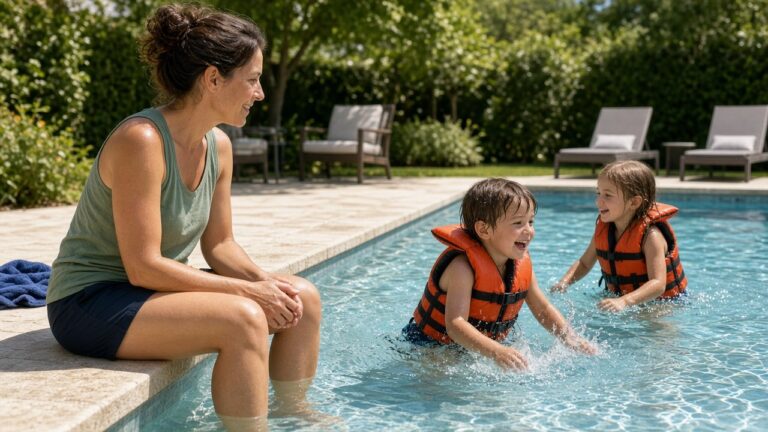
Quick answer: water safety for kids depends on layers of protection, because no single step is enough. Keep babies and toddlers within arm’s reach in and near any water, including bathtubs and buckets; fence home pools on all four sides with a self-closing, self-latching gate; start swim lessons when your child is ready (the AAP says many children can begin around age 1); put children in a U.S. Coast Guard-approved life jacket on boats and in open water; assign an adult “water watcher” with no distractions; and learn CPR.
Drowning does not look like it does in the movies. There is usually no splashing or shouting, just a child slipping quietly under the surface, often within sight of adults who are nearby but not watching. That is why water safety for kids focuses on supervision and barriers rather than relying on a child’s ability to call for help.
The CDC reports that drowning is the leading cause of death for children aged 1 to 4 and the second leading cause of unintentional injury death, after car crashes, for children aged 5 to 14. This guide covers water safety at home, at the pool and in open water, organized by age and setting. It is part of the Living Life as Moms family health and safety guide.
This article is general safety information, not a substitute for swim instruction, lifeguard supervision or CPR training. In an emergency call 911. Sources: Centers for Disease Control and Prevention (drowning facts and prevention); American Academy of Pediatrics, “Prevention of Drowning” policy statement (2019) and HealthyChildren.org; U.S. Consumer Product Safety Commission Pool Safely campaign; U.S. Coast Guard; National Weather Service and NOAA (rip currents); American Red Cross. Checked October 2026.

Why Drowning Is Silent and Fast
Drowning happens quickly and quietly, which is why constant, close supervision is the core of water safety for kids. A child in trouble often cannot wave or call out, because all their effort goes into trying to breathe. The American Red Cross teaches that drowning can happen in seconds, in as little as an inch or two of water for a baby.
Where drowning happens changes with age, according to the CDC:
- Babies under 1 most often drown in bathtubs, buckets or toilets.
- Children aged 1 to 4 most often drown in home swimming pools and hot tubs, frequently during times they were not expected to be in the water, such as slipping out a back door.
- Older children and teens are more likely to drown in natural water such as lakes, rivers and oceans.
Knowing which risk fits your child’s age tells you where to focus first.
Water Safety at Home: Baths, Buckets and Toilets
At home, water safety for babies and toddlers means never leaving them alone near any amount of water, not even for a moment. The AAP recommends “touch supervision” for young children in the bath: an adult within arm’s reach at all times.
Home water rules:
- Stay in the bathroom. Gather towels, soap and pajamas before the bath starts. If you must leave, wrap the child in a towel and take them with you.
- Do not rely on bath seats or rings. The CPSC warns that these products are not safety devices; babies can slip out or tip over in them.
- Do not leave an older sibling in charge of a baby in the bath.
- Empty the tub as soon as bath time ends.
- Empty buckets, coolers and kiddie pools right after use and store them upside down. A toddler who leans into a bucket can fall in headfirst and be unable to get out.
- Close toilet lids and consider toilet locks for curious toddlers.
- Keep bathroom and laundry room doors closed.
- Check the water heater. The CPSC recommends setting it at 120 degrees Fahrenheit or lower to prevent scalds.
Bath time is often part of the nightly wind-down, so build these rules into the routine itself. If you use a picture chart, our guide to a bedtime routine chart for kids shows how to add a bath step that always includes an adult.
Pool Safety: Layers of Protection
Pool safety for kids works best with several layers of protection, so that if one fails, another catches it. The AAP and the CPSC’s Pool Safely campaign describe the main layers.
Fences and Gates
A pool fence is one of the most effective drowning prevention steps for young children. The AAP recommends a four-sided fence, at least 4 feet high, that separates the pool from the house and yard completely, with a self-closing, self-latching gate that opens away from the pool. A fence with the house as one side is far less protective, because children can walk straight out a back door to the water.
Other Barriers
- Door alarms on doors that lead to the pool area
- Pool covers that meet safety standards (never a floating solar cover, which a child can slip under)
- Removing ladders from above-ground pools when not in use
- Keeping toys out of the pool when it is not in use, so children are not tempted to reach for them
Drain Safety
The Virginia Graeme Baker Pool and Spa Safety Act of 2007 requires anti-entrapment drain covers in public pools and spas. Teach kids to stay away from drains and suction outlets, and ask about drain covers at hotel and community pools.
Supervision and the Water Watcher
Active supervision means one adult whose only job is to watch the water, without phones, books, chores or alcohol. Many safety organizations recommend naming a “water watcher” at parties and gatherings, because drowning often happens when many adults are present and each assumes someone else is watching.
How to be a good water watcher:
- Keep your eyes on the water, scanning every few seconds, and count the children regularly.
- Stay close. For babies, toddlers and weak swimmers, stay within arm’s reach, in the water if needed.
- Hand off clearly. When your turn ends, hand a card or tag to the next adult and say “you are watching now.”
- Do not drink alcohol while supervising.
- Keep a phone nearby for emergencies only.
Lifeguards add protection, but the AAP notes that parents should still watch their own children at guarded pools and beaches.

Swim Lessons by Age
Swim lessons lower the risk of drowning, but they do not make any child “drown-proof.” The AAP’s 2019 policy statement says that many children can start swim lessons around age 1, and that by age 4 most children are ready for formal lessons. Readiness depends on the child’s development, comfort in water and health.
What to look for in a program:
- Experienced, certified instructors
- Small classes and lots of time in the water
- Lessons that teach water competency: entering the water, surfacing, turning around, floating, moving to an exit and getting out
- Parent-and-child classes for babies and toddlers that focus on water comfort and safety for adults
Even after lessons, keep supervising closely. A child who swims well in a calm pool may struggle in cold water, waves or currents.

Life Jackets and Flotation
A properly fitted, U.S. Coast Guard-approved life jacket is the right flotation for children on boats and in open water, and for weak swimmers around pools. The U.S. Coast Guard notes that many states require children under a certain age to wear a life jacket while a boat is underway, and federal rules require one for each person on board.
Life jacket tips:
- Check the label for Coast Guard approval and the weight range.
- Test the fit. Lift the jacket at the shoulders; it should not ride up past your child’s chin or ears.
- Choose a jacket with a head support and crotch strap for babies and toddlers.
- Skip “water wings,” pool noodles and inflatable rings as safety devices. The AAP and CPSC warn that air-filled toys can deflate or slip off and give a false sense of security.

Open Water: Beaches, Lakes and Rivers
Open water is harder to judge than a pool, so kids need closer supervision and life jackets in natural water. Water depth can change suddenly, the bottom may be hard to see, currents can be strong and cold water can make even good swimmers tire quickly.
Beach Safety
- Swim near a lifeguard, and check flags or posted warnings.
- Learn about rip currents. The National Weather Service advises anyone caught in a rip current to stay calm, not swim against it, and swim parallel to the shore until out of the current, then swim back at an angle. If they cannot escape, float or tread water and wave for help.
- Keep young children within arm’s reach at the shoreline; waves can knock them over.
Lakes and Rivers
- Wear life jackets for boating, tubing, kayaking and paddleboarding.
- Never dive into lakes, rivers or quarries; hidden rocks and shallow spots cause serious injuries.
- Watch for cold water and currents, especially in spring.
- Teach the “reach or throw, don’t go” rule. Children should reach toward a struggling swimmer with a pole or throw a flotation device, not jump in to help.
Ice
In winter, keep children off frozen ponds and lakes unless the ice has been checked by local officials. Ice thickness can vary across the same pond.

Hot Tubs and Water Parks
Hot tubs and water parks bring their own risks for kids. The CPSC says hot tub water should never be hotter than 104 degrees Fahrenheit, and many pediatricians advise keeping babies and young children out of hot tubs entirely because they overheat quickly. Use a locked safety cover when the hot tub is not in use.
At water parks:
- Check height and swimming requirements for each ride or pool.
- Use life jackets offered by the park for weak swimmers, especially in wave pools.
- Pick a meeting spot in case you get separated.
- Take regular breaks for water, shade and sunscreen.
If you are planning a winter getaway, our roundup of indoor waterpark weekend getaways in Ohio compares family resorts; the same supervision rules apply indoors.

Teaching Kids Water Safety Rules
Clear, simple rules help children understand water safety, though they never replace adult supervision. Teach rules early and repeat them every season.
- Always ask permission before going near water.
- Never swim alone. Swim only when an adult is watching.
- Walk, do not run, around pools.
- Feet first the first time into any water.
- Stay away from drains.
- Wear your life jacket on boats and docks.
- Reach or throw, don’t go if someone is in trouble.
Summer outings and staycations are a natural time to practice these rules. For ideas on low-cost days at home, see these summer staycation ideas and pair them with a quick rules review before any water play.
Learn CPR and Know What to Do
Learning CPR is one of the most useful things parents and caregivers can do, because bystander CPR started immediately can improve survival after drowning, the AAP notes. The American Red Cross and American Heart Association offer infant and child CPR courses, many with blended online and in-person options.
If a child is missing, check the water first. If you find a child in the water:
- Get them out of the water safely.
- Shout for help and have someone call 911.
- Check breathing. If the child is not breathing normally, begin CPR right away.
- Keep going until emergency responders take over.
Anyone who babysits your children should also know CPR basics and your water rules.

Frequently Asked Questions

Frequently Asked Questions
At what age should kids start swim lessons? The AAP says many children can start swim lessons around age 1, and most are ready for formal lessons by age 4. Readiness varies, so consider your child's comfort, development and health.
How much water does it take for a child to drown? A baby or toddler can drown in just an inch or two of water, such as in a bathtub, bucket or toilet. That is why touch supervision matters for young children.
What are the best pool safety rules for toddlers? Use a four-sided fence at least 4 feet high with a self-closing, self-latching gate, keep toddlers within arm's reach in and near the water, remove toys from the pool after use and name a water watcher at every gathering.
Are water wings and pool noodles safe for kids? No. Air-filled toys can deflate or slip off and are not safety devices. Use a U.S. Coast Guard-approved life jacket for weak swimmers and in open water.
What should my child do if caught in a rip current? Stay calm, do not swim against the current, and swim parallel to the shore until out of it, then swim back at an angle. If they cannot, they should float or tread water and wave for help.
Can kids use hot tubs? Many pediatricians advise keeping babies and young children out of hot tubs because they overheat quickly. The CPSC says hot tub water should never exceed 104 degrees Fahrenheit.

The Bottom Line
Water safety for kids rests on layers: an adult within arm’s reach of young children, barriers like four-sided pool fences and closed bathroom doors, swim lessons when your child is ready, life jackets in open water, a dedicated water watcher and CPR skills. No single step prevents every drowning, but together they cover the moments when a child slips away for just a second.