Bike Helmet Fit for Kids: How to Size a Helmet, Scooter and Skateboard Helmets and Safe Riding Rules
How to make sure a kid's bike helmet fits (the eyes, ears and mouth test), which helmet to use for bikes, scooters, e-scooters and skateboards, when to replace a helmet and the riding rules kids should learn by age.
Quick answer: a kid’s bike helmet fits when it sits level on the head about one to two finger-widths above the eyebrows, the side straps form a V just under each ear, and the chin strap is snug enough that only one or two fingers fit underneath; when your child opens their mouth wide, the helmet should press down on the top of the head. Use a helmet certified to the CPSC bike standard for bikes and scooters, a certified multi-sport or skate helmet for skateboarding, and replace any helmet after a crash.
A helmet only protects a child if it fits and is worn on every ride. Many helmets sit tipped back on the forehead, with loose straps and a buckle that has not been clicked, which leaves the front of the head exposed in exactly the kind of fall kids have most often.
This guide explains bike helmet fit for kids step by step, using the National Highway Traffic Safety Administration (NHTSA) fitting method, then covers helmets for scooters and skateboards, when to replace a helmet and the safety rules children should know at each age. It is part of the Living Life as Moms family health and safety guide.
This article is general safety information, not medical advice. Sources: National Highway Traffic Safety Administration, “Easy Steps to Properly Fit a Bicycle Helmet” and bicycle safety pages; U.S. Consumer Product Safety Commission (bicycle helmet standard 16 CFR Part 1203 and helmet guidance); American Academy of Pediatrics, HealthyChildren.org; Jake Olivier and Prudence Creighton, “Bicycle injuries and helmet use: a systematic review and meta-analysis,” International Journal of Epidemiology (2017). Checked October 2026.

Why Helmet Fit Matters
Helmet fit matters because a helmet that slides back, tilts or comes off cannot absorb the force of a fall where it counts. Head injuries are among the most serious injuries children suffer on bikes, scooters and skateboards, and a properly fitted, certified helmet is the best protection available.
The evidence is strong. A 2017 meta-analysis by Jake Olivier and Prudence Creighton in the International Journal of Epidemiology, pooling dozens of studies, found that bicycle helmet use was associated with roughly half the risk of head injury and a much larger reduction in serious head injury.
Fit is what turns a helmet into that protection. The foam liner is designed to crush and absorb energy, but only if it is in contact with the head when the impact happens.
How to Choose the Right Size Helmet
Choose a helmet by measuring your child’s head, not by age. Wrap a soft tape measure around the head about one inch above the eyebrows, keeping it level, and compare the measurement with the size chart on the box.
Tips for choosing:
- Try it on in person if you can. Different brands have different shapes.
- Look for the CPSC certification sticker inside. Since 1999, bike helmets sold in the United States must meet the Consumer Product Safety Commission’s safety standard.
- Pick an adjustable fit system, such as a dial at the back, which helps fine-tune fit as a child grows.
- Choose bright colors that make your child easier to see.
- Let your child help pick it. Kids are more likely to wear a helmet they like.
- Avoid used helmets with an unknown history; a previous crash can damage the foam without visible signs.
Toddler helmets exist for children on balance bikes and in bike seats. The AAP advises that babies under 1 year old should not ride as passengers on bikes, because their necks are not strong enough to support a helmet in a sudden stop.

The Eyes, Ears and Mouth Fit Test
NHTSA’s three-step fit test is the easiest way to check bike helmet fit for kids at home. Do it each time you adjust the helmet and every few months as your child grows.
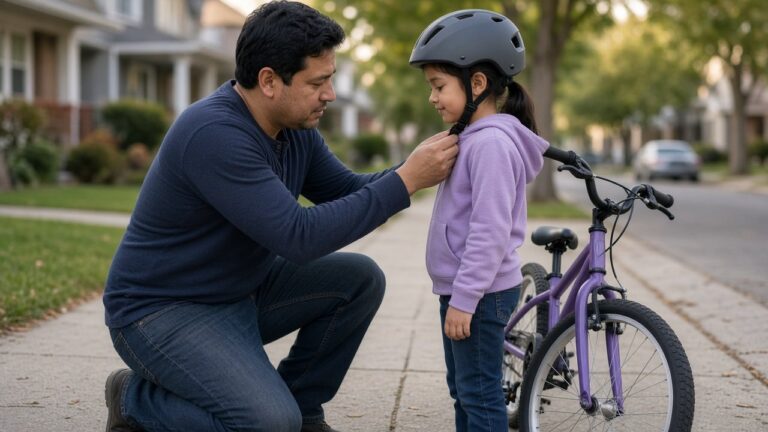
- Eyes: put the helmet on level, not tipped back. When your child looks up, they should see the bottom rim of the helmet. That rim should be one to two finger-widths above the eyebrows.
- Ears: the side straps should form a V shape just under, and slightly in front of, each earlobe. Adjust the sliders so the V meets right below the ear.
- Mouth: buckle the chin strap and tighten it until no more than one or two fingers fit between the strap and the chin. When your child opens their mouth wide, as if yawning, the helmet should hug the head.
Final Checks
- Shake test: ask your child to shake their head side to side and up and down. The helmet should stay in place without sliding.
- Push test: push the helmet up from the front and back. It should not move more than about an inch.
- No hats underneath: baseball caps and thick headbands change the fit. Long hair should be worn low, not in a high ponytail that pushes the helmet forward.
If the helmet still moves after adjusting, use the thicker fitting pads that come in the box or try a different size.

Helmets for Scooters, Skateboards and Skates
The right helmet depends on the activity. A bike helmet certified to the CPSC standard works well for bikes, kick scooters and inline skating, according to CPSC guidance. Skateboarding involves more frequent falls, often backward, so the CPSC recommends a helmet designed for skateboarding.
| Activity | Helmet to use |
|---|---|
| Bicycles, balance bikes, kick scooters | Bike helmet certified to the CPSC standard |
| Inline skates and roller skates | Bike helmet certified to the CPSC standard |
| Skateboards | Skateboarding helmet; dual-certified multi-sport helmets cover both skate and bike use |
| Electric scooters and e-bikes | At minimum a CPSC bike helmet; some riders choose helmets certified for higher speeds |
| Horseback riding, skiing, snowboarding | A helmet made and certified for that sport |
Multi-sport helmets labeled as meeting both the CPSC bike standard and a skateboarding standard are a practical choice for kids who switch between activities.
Electric Scooters and E-Bikes
Electric scooters and e-bikes reach higher speeds than kick scooters and pedal bikes, and the CPSC has reported sharp increases in emergency room visits tied to micromobility products. Check the age and speed limits set by the manufacturer and by your state or city; many rental scooter programs require riders to be adults. Children who ride e-bikes or e-scooters with parental permission should always wear a helmet and follow the same road rules as cyclists.

Other Protective Gear
Helmets protect the head, but wrist guards, elbow pads and knee pads help with the scrapes and fractures that come from scooter, skate and skateboard falls. The AAP recommends wrist guards in particular for inline skating and skateboarding, since wrist fractures are common when kids put out a hand to break a fall.
Also consider:
- Closed-toe shoes with good grip; no sandals or flip-flops.
- Bright or reflective clothing, especially near dusk.
- Lights on bikes and scooters: a white front light and a red rear light or reflector for any riding in low light. The same reflective tape and lights used for Halloween trick-or-treating safety make kids easier to see on autumn evenings.
When to Replace a Helmet
Replace a helmet after any crash in which it hit something, even if it looks fine, because the CPSC notes that the foam liner may be compressed or cracked in ways you cannot see. Bike helmets are designed for one serious impact.
Also replace a helmet when:
- Your child outgrows it, and pads or adjustments no longer give a snug fit.
- The shell or foam is cracked, dented or peeling.
- Straps or buckles are frayed or broken.
- It is old. Follow the manufacturer’s recommendation, since materials can break down over time with heat and sunlight.
Do not store helmets in a hot car trunk or leave them in direct sun for long periods, and avoid stickers or paint unless the manufacturer says they are safe for the shell.
Safe Riding Rules by Age
Safe riding rules should match a child’s age and judgment, because younger children cannot yet read traffic well. The AAP notes that many children are not ready to ride on streets with traffic until about age 10, and younger riders should stay on sidewalks, paths and in parks with an adult.
Ages 2 to 5
- Ride balance bikes, tricycles or kick scooters in enclosed, car-free areas.
- Helmet on before getting on, every time.
- An adult within reach, especially near driveways where drivers may not see small children.
Ages 6 to 9
- Practice stopping, steering around obstacles and looking back without swerving.
- Ride on paths and quiet sidewalks with an adult nearby.
- Learn to stop at the end of every driveway and look both ways before crossing.
Ages 10 and Up
NHTSA’s bicycle safety rules for riding in the road:
- Ride on the right side of the road, with traffic, not against it.
- Obey stop signs, traffic lights and lane markings, just like drivers.
- Use hand signals before turning or stopping.
- Look before turning and watch for cars pulling out of driveways and parked car doors opening.
- Ride single file with friends.
- No headphones or phones while riding.
Practice these skills together before letting an older child ride alone, starting with short, familiar routes.
How to Get Kids to Wear Helmets Every Time
The most effective way to get kids to wear helmets is to make it a non-negotiable rule from the very first ride and to wear one yourself. Children copy the adults around them, and the AAP encourages parents to model helmet use.
Strategies that help:
- No helmet, no ride. Keep the rule consistent from the start.
- Make it part of the routine: helmet hangs on a hook next to the bike or scooter.
- Let kids choose the color and design.
- Check the fit together using the eyes, ears and mouth test, so kids learn to do it themselves.
- Point out that athletes wear helmets in many sports.
- Check local laws. Many states and cities require helmets for riders under a certain age, which can reinforce the family rule.
Biking and scootering are great ways to get kids outside. For ideas to keep them active, try this outdoor challenge for kids when the weather warms up.

Bike Seats, Trailers and Passengers
When children ride as passengers, they still need helmets and the right equipment. The AAP advises that infants younger than 12 months should not ride on a bicycle, either in a rear seat or a trailer, because their neck muscles are not yet strong enough to support a helmet.
For children 1 year and older:
- Use a rear-mounted child seat or a trailer designed for children, following weight limits.
- Buckle the harness and fit the child’s helmet before every ride.
- Add a tall flag to trailers so drivers can see them.
- Avoid busy roads; trailers and child seats change how the bike handles.
Just as with car seat stages by age and size, follow the manufacturer’s height and weight limits and move to the next stage only when your child is ready.

Frequently Asked Questions

Frequently Asked Questions
How should a child's bike helmet fit? It should sit level, one to two finger-widths above the eyebrows, with the side straps forming a V just under each ear and a chin strap snug enough that only one or two fingers fit beneath it. When your child opens their mouth wide, the helmet should hug the head.
Can my child use a bike helmet for a scooter? Yes. The CPSC says a bike helmet certified to its standard is appropriate for kick scooters and inline skating. For skateboarding, use a skateboarding helmet or a dual-certified multi-sport helmet.
When should I replace my child's helmet? Replace it after any crash where it hit something, when your child outgrows it, if the shell, foam or straps are damaged, or as the manufacturer recommends based on age.
At what age can kids ride bikes on the street? The AAP notes that many children are not ready to ride in traffic until around age 10. Younger children should ride on paths, sidewalks and in parks with adult supervision.
Should toddlers wear helmets on balance bikes and tricycles? Yes. Starting the helmet habit with a toddler's very first ride makes it routine. Use a properly fitted toddler helmet certified to the CPSC standard.
Are used or hand-me-down helmets safe? It is best to avoid them unless you know the helmet has never been in a crash and is within the manufacturer's recommended age, since damage to the foam may not be visible.

The Bottom Line
Bike helmet fit for kids comes down to three checks: eyes (rim one to two fingers above the brows), ears (straps in a V under each ear) and mouth (snug chin strap that tugs the helmet down when they yawn). Choose a certified helmet for the activity, replace it after any crash, add bright clothing and lights, and teach riding rules that match your child’s age. Most of all, make the helmet a part of every ride, for kids and parents alike.