Poison Prevention at Home: Safe Storage, Common Culprits and When to Call Poison Control
Poison prevention at home for families with kids: the products most often involved in child poisonings, how to store medicines and chemicals, room-by-room checks, what to do if a child swallows something and when to call Poison Help.
Quick answer: poison prevention at home starts with storing every medicine, vitamin, cleaner, laundry pod, cannabis product and button battery up high and locked, in its original child-resistant container, and putting it away right after each use. Save Poison Help, 1-800-222-1222, in every phone. If you think a child swallowed something, stay calm, take the product away, do not make them vomit and call Poison Help right away; call 911 if the child is unconscious, having a seizure or struggling to breathe.
Most child poisonings happen at home, during ordinary moments: a purse left on the floor, a bottle of children’s medicine on the counter, a laundry pod that looks like candy. Toddlers explore with their mouths and can open more than parents expect, which is why child-resistant caps are labeled child-resistant, not childproof.
This guide covers practical poison prevention at home, from the products most often involved to a room-by-room checklist and the exact steps to take in an emergency. It is part of the Living Life as Moms family health and safety guide, which covers fire, water, car seat and seasonal safety as well.
This article is general safety information, not medical advice. In an emergency call 911. For a possible poisoning call Poison Help at 1-800-222-1222 (free, confidential, 24 hours a day). Sources: America’s Poison Centers; National Capital Poison Center (Poison.org); CDC “Up and Away” campaign and lead poisoning prevention pages; U.S. Consumer Product Safety Commission; U.S. Food and Drug Administration; American Academy of Pediatrics, HealthyChildren.org; Pediatrics (2023) study on edible cannabis exposures. Checked October 2026.
Why Poison Prevention Matters for Young Children
Poison prevention matters most for children under 6, because they are curious, they put things in their mouths and their small bodies react to smaller doses than adults. America’s Poison Centers reports that young children account for a large share of the calls poison centers answer every year, and most of those exposures happen in the child’s own home.
A few facts shape how to protect them:
- Child-resistant does not mean childproof. Under the Poison Prevention Packaging Act of 1970, child-resistant packaging is designed so most young children cannot open it within a set test time, not so that no child ever can.
- A small amount can be dangerous. Some adult medicines, such as certain heart, blood pressure and diabetes drugs, can be harmful to a toddler in a single pill, according to the National Capital Poison Center.
- Exposures happen fast. Many happen in the minute or two when a product is in use, such as when a parent turns to answer the door while cleaning.
The good news: the same handful of storage habits prevents most incidents.
The Most Common Poisons in the Home
The products most often involved in child poisonings are everyday items, not exotic chemicals. America’s Poison Centers’ annual reports consistently list these categories near the top for young children:
- Cosmetics and personal care products: nail polish remover, mouthwash containing alcohol, hand sanitizer, perfume, hair products.
- Household cleaning products: bleach, drain and oven cleaners, toilet bowl cleaners, dishwasher and laundry detergents.
- Pain and fever medicines: acetaminophen, ibuprofen and others, both adult and children’s versions.
- Small objects and toys, including button batteries and small magnets.
- Vitamins and dietary supplements, especially products containing iron.
- Antihistamines, cough and cold medicines and topical creams.
- Plants, pesticides and garage chemicals such as antifreeze and windshield washer fluid.
Several newer products deserve special mention.
Laundry and Dishwasher Pods
Brightly colored detergent packets can look like candy or toys and burst when bitten. The CPSC has warned for years that children who bite into them can suffer vomiting, breathing problems and eye injuries. Keep pods in their original closed container, high and locked, and consider using liquid or powder detergent while children are very young.
Edible Cannabis Products
A 2023 study in the journal Pediatrics found that reported edible cannabis exposures in children under 6 rose from 207 in 2017 to 3,054 in 2021, a sharp increase as more states legalized cannabis. Gummies, chocolates and cookies are easy to mistake for ordinary treats. Store them locked, in child-resistant packaging, away from regular snacks.
Liquid Nicotine and Vapes
E-liquid refills can be dangerous if swallowed or spilled on the skin. The Child Nicotine Poisoning Prevention Act of 2015 requires child-resistant packaging for liquid nicotine containers, but devices and refills still need locked storage.
Button Batteries and Magnets
Swallowed button batteries can burn through tissue within hours, and two or more swallowed magnets can pinch the intestines together. Reese’s Law, signed in 2022, requires secure battery compartments and warnings on products that contain button and coin batteries. Older remotes, key fobs, flameless candles and musical greeting cards may still be easy to open. Any suspected battery or magnet swallowing needs emergency care right away.
Iron Supplements
The FDA has required a warning on iron-containing supplements since 1997, because accidental iron overdose was once a leading cause of poisoning deaths in children under 6. Prenatal vitamins and adult multivitamins are common sources, so store them with medicines, not on the kitchen counter.
How to Store Medicines Safely
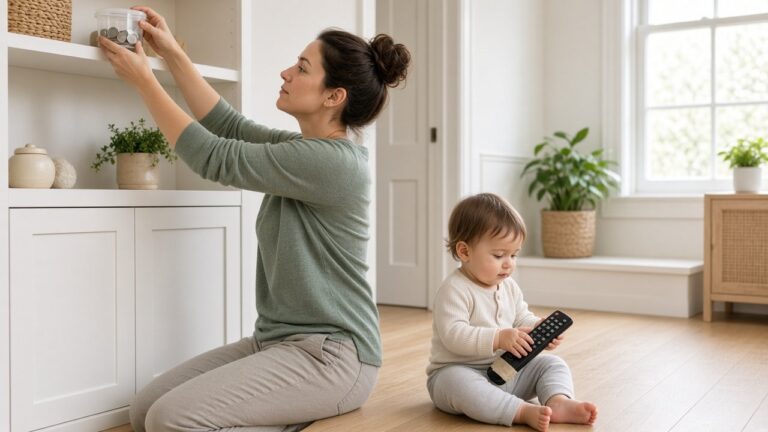
Store medicines up, away and out of sight, in a locked cabinet or box, and put them back immediately after every dose. The CDC’s “Up and Away” campaign was built around that habit, because many incidents happen when a medicine is left out “just for a minute” or kept handy on a nightstand.
Medicine storage rules that work:
- Lock it up. A small lockbox is inexpensive and portable, which helps when traveling or visiting grandparents.
- Close caps all the way until you hear or feel the click.
- Keep products in their original containers with labels and dosing instructions.
- Never call medicine candy, even to get a reluctant child to take it.
- Check bags and coats. Purses, diaper bags and visitors’ luggage often hold loose pills.
- Clear out old medicines. The FDA lists safe disposal options, and the DEA holds National Prescription Drug Take Back Days, usually in April and October, with year-round drop boxes at many pharmacies.
For children’s medicine, use the dosing device that comes with the product, not a kitchen spoon, and write down each dose when more than one adult is caring for a sick child. Double dosing is a common cause of poison center calls.
Room-by-Room Poison Prevention Checklist
A room-by-room check is the fastest way to find risks you have stopped noticing. Get down to a toddler’s eye level and open the doors and drawers they can reach.
Kitchen
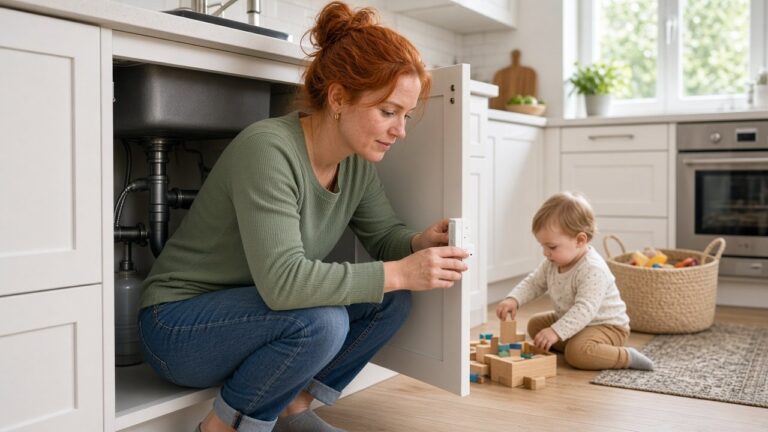
- Move cleaners, dishwasher pods and drain openers from under the sink to a high, locked cabinet, or add safety latches.
- Keep vitamins, supplements and medicines off the counter and table.
- Store alcohol out of reach; even small amounts can cause dangerously low blood sugar in young children, according to the National Capital Poison Center.
Bathroom
- Lock away medicines, mouthwash, nail products and hair dye.
- Supervise toothbrushing. The AAP recommends just a smear of fluoride toothpaste for children under 3 and a pea-sized amount from 3 to 6. For more on age-by-age brushing, see our guide to kids’ dental care by age.
- Store hand sanitizer high; most contain a high percentage of alcohol.
Bedrooms
- Keep nightstands free of medicines, nicotine products and cosmetics.
- Check visitors’ bags before guests settle in.
- Look for button batteries in remotes, scales and small electronics; tape compartments that do not lock with a screw.
Laundry Room
- Store pods, detergents, bleach and stain removers high and locked.
- Close lids every time you finish a load.
Garage and Yard
- Keep antifreeze, windshield fluid, gasoline, pesticides and fertilizers in original containers on high shelves or in locked cabinets.
- Never store chemicals in food or drink containers.
- Learn which plants in your yard are toxic; Poison.org has plant information you can look up.
Hidden Household Poisons Parents Overlook
Some poisoning risks are invisible or seasonal, so they are easy to miss even in a well-organized home.
Carbon Monoxide
Carbon monoxide is an odorless, colorless gas produced by furnaces, gas appliances, generators and cars. The CPSC recommends CO alarms on every level of the home and outside sleeping areas. Never run a generator, grill or car in a garage or indoors. Our home fire safety checklist for families covers alarm placement and testing.
Lead
The CDC says no safe blood lead level in children has been identified. Homes built before 1978 may contain lead-based paint, which becomes dangerous as it chips or turns to dust during renovation. Talk to your pediatrician about lead testing, especially if you live in an older home, and wet-wipe window sills and floors regularly.
Seasonal Risks
- Halloween: cannabis edibles can look like regular candy, so check treats before kids eat them. Our Halloween safety tips for kids include a candy-check routine.
- Winter holidays: button batteries in new toys and decorations, alcohol at parties and some holiday plants.
- Summer: insect repellent, sunscreen and pool chemicals.
What to Do If Your Child Swallows Something Poisonous
If you think your child has swallowed something harmful, act quickly but calmly: remove the product, check how your child is breathing and call Poison Help at 1-800-222-1222. Call 911 instead if your child is unconscious, having a seizure, struggling to breathe or cannot be woken.
Step by step:
- Take the product away and remove anything left in the child’s mouth.
- Do not make your child vomit. The AAP stopped recommending syrup of ipecac in 2003, and vomiting can cause more harm with some substances.
- Do not wait for symptoms. Some poisons cause no signs for hours.
- Have the container ready so you can read the label and tell the poison specialist the product name, ingredients and how much might be missing.
- Follow the specialist’s instructions. Many calls are handled at home with simple monitoring.
Poison on the Skin or in the Eyes
- Skin: remove contaminated clothing and rinse the skin with running water for 15 to 20 minutes, then call Poison Help.
- Eyes: rinse with a gentle stream of lukewarm water for 15 to 20 minutes while the child blinks, then call Poison Help.
Inhaled Poisons
Move the child to fresh air right away. If they are not breathing, call 911 and begin CPR if you are trained.
How Poison Help Works
Poison Help is a free, confidential service that connects you to your local poison center, staffed around the clock by nurses, pharmacists and doctors trained in toxicology. America’s Poison Centers coordinates the national network.
What to know:
- The number is 1-800-222-1222 everywhere in the United States.
- You can call for any question, not only emergencies: a double dose of medicine, a bite of a houseplant or a splash of cleaner.
- Interpreters are available in many languages.
- Online help is available too. The National Capital Poison Center offers webPOISONCONTROL, an online tool that gives guidance for some swallowed substances.
Save the number in every phone and post it on the fridge for babysitters and grandparents. National Poison Prevention Week, held each year in the third week of March, is a good reminder to check your storage again.
Teaching Kids About Poison Safety
Teaching children about poison safety supports, but never replaces, safe storage. Toddlers cannot be relied on to remember rules, while preschool and school-age children can start to understand simple messages.
- Use a clear rule: “Always ask a grown-up before you eat, drink or touch anything you are not sure about.”
- Explain that medicine is not candy, and only a trusted adult gives it.
- Point out warning labels as kids learn to read.
- Practice with pretend play. Ask, “What would you do if you found pills on the floor?”
- Teach older kids how to call 911 and where the Poison Help number is posted.
Frequently Asked Questions
Frequently Asked Questions
What are the most common causes of poisoning in children at home? Cosmetics and personal care products, household cleaners, pain medicines, small objects such as button batteries, vitamins and supplements, antihistamines and topical creams are among the most common, according to America's Poison Centers.
What is the Poison Control phone number? Call Poison Help at 1-800-222-1222. It is free, confidential and available 24 hours a day across the United States, and it connects you to your local poison center.
Should I make my child throw up if they swallow something poisonous? No. Do not make your child vomit. The AAP no longer recommends syrup of ipecac. Call Poison Help for instructions, or 911 if your child has serious symptoms.
Are child-resistant caps enough to keep kids safe? No. Child-resistant packaging slows children down but does not stop every child. Close caps fully and still store products high, locked and out of sight.
How should I store laundry pods with young children in the house? Keep pods in their original container with the lid closed, stored high in a locked cabinet. Some families switch to liquid or powder detergent until children are older.
When should I call 911 instead of Poison Help? Call 911 if a child is unconscious, having a seizure, struggling to breathe, cannot be woken or may have swallowed a button battery or magnets.

The Bottom Line
Poison prevention at home is mostly about storage and habits: lock up medicines, cleaners, pods, cannabis and nicotine products, keep everything in its original container, put products away right after use and check rooms from a toddler’s point of view. Keep Poison Help, 1-800-222-1222, in every phone, and know the steps to take if something happens. Those few habits cover the vast majority of risks in a family home.