Family Health and Safety Guide: Home, Car, School and Seasonal Safety Basics for Parents
A parent's family health and safety guide: sleep and screen habits, home safety (fire, poisons, water, furniture), car seats, school-year health, seasonal risks, dental care, when to call a doctor and an emergency kit list, with sources.
Quick answer: family health and safety comes down to a handful of habits that prevent the most common injuries and illnesses in children: enough sleep for their age, sensible screen limits, working smoke and carbon monoxide alarms, medicines and cleaners locked up, constant supervision around water, the right car seat for your child’s size, safe food handling, regular checkups and dental care, and a written emergency plan with a basic kit. The sections below walk through each area with what the CDC, the American Academy of Pediatrics (AAP), NHTSA, NFPA, CPSC and USDA recommend.
Keeping kids safe can feel like a list that never ends. There is always another recall, another product warning or another headline. Most of the protection, though, comes from a short set of habits that you set up once and then maintain: alarms that work, a car seat installed correctly, a cabinet that locks, a bedtime that sticks.
In this guide
- How to Use This Family Safety Guide
- Sleep and Screen Habits
- Home Safety: Fire, Poisons, Water and Falls
- Safe Sleep for Babies
- Car and Travel Safety
- School-Year Health: Lunches, Sick Days and Checkups
- Seasonal Safety: Halloween, Holidays and Winter
- Dental and Routine Care
- When to Call the Doctor or 911
- Emergency Plan and Family Kit
- Family Safety Checklist by Age
- Frequently Asked Questions
- Frequently Asked Questions
- Related Family Health and Safety Guides
This guide pulls those habits together in one place, organized by area of family life. Each section gives the core recommendation, the reason behind it and a link to a deeper guide on this site where one exists. Use it as a checklist, a starting point for a new baby or a once-a-year review.
This guide is general information for parents, not medical advice. For anything specific to your child, talk to your pediatrician. In an emergency call 911. For a possible poisoning call Poison Help at 1-800-222-1222. Sources are listed at the end and named in each section. Checked October 2026.
How to Use This Family Safety Guide
Use this guide as a room-by-room and season-by-season checklist: read the section that matches your child’s age or the time of year, act on the one or two gaps you find and come back later for the rest. Trying to fix everything in a weekend usually leads to doing nothing.
A simple way to work through it:
- Start with the big four. Smoke and CO alarms, safe storage of medicines and chemicals, water supervision and car seats prevent the most serious harm. Check these first.
- Then build daily habits. Sleep, screens, food safety and handwashing affect health every day.
- Add seasonal checks. Put reminders on your calendar for Halloween, the holidays, winter heating, summer water and sun.
- Review once a year. A birthday or the start of the school year is a good moment to look again, because what fits a toddler does not fit a six-year-old.
Every family’s home and child are different. A family in a high-rise apartment has different priorities from one with a backyard pool, so adapt the list rather than copying it.

Sleep and Screen Habits
Healthy sleep and reasonable screen limits are the daily foundation of family health, and both are easier to manage with a simple routine than with rules made up on the spot.
How Much Sleep Kids Need
The American Academy of Sleep Medicine, in recommendations endorsed by the AAP, sets these ranges per 24 hours, including naps:
| Age | Recommended sleep |
|---|---|
| 4 to 12 months | 12 to 16 hours |
| 1 to 2 years | 11 to 14 hours |
| 3 to 5 years | 10 to 13 hours |
| 6 to 12 years | 9 to 12 hours |
| 13 to 18 years | 8 to 10 hours |
Regular bedtimes, a calm wind-down routine and screens off before bed make those numbers realistic. Our guide on how much sleep kids need goes deeper on signs of too little sleep and how to shift bedtimes. Seasonal clock changes can throw routines off too: daylight saving time ends on November 1, 2026, and our tips for helping kids adjust when the clocks fall back explain how to ease the shift.
Screen Time by Age
The AAP has long advised avoiding screen media for children younger than 18 months other than video chatting, choosing high-quality programming and watching together for toddlers, and limiting children aged 2 to 5 to about one hour a day of high-quality programs. For school-age kids and teens, the AAP focuses less on a single number and more on a family plan that protects sleep, physical activity, homework and face-to-face time. Its free Family Media Plan tool helps you write those rules down.
Practical habits that help at any age: no screens during meals, devices charged outside bedrooms overnight, and parents modeling the same rules. A separate breakdown of screen time for kids by age covers each stage in more detail.

Home Safety: Fire, Poisons, Water and Falls
Home is where most childhood injuries happen, so the highest-value safety steps are working alarms, locked storage for anything toxic, constant supervision near water and anchoring heavy furniture.
Fire and Carbon Monoxide
The National Fire Protection Association (NFPA) recommends smoke alarms inside every bedroom, outside each sleeping area and on every level of the home, including the basement. Test them monthly and replace any alarm that is 10 years old. NFPA notes that working smoke alarms cut the risk of dying in a reported home fire roughly in half.
Make a home escape plan with two ways out of every room and a meeting spot outside, and practice it twice a year. Carbon monoxide (CO) alarms belong on every level and outside sleeping areas, as the U.S. Consumer Product Safety Commission (CPSC) recommends. Our home fire safety checklist for families walks through alarms, escape plans and kitchen rules step by step.
Poisons and Medicines
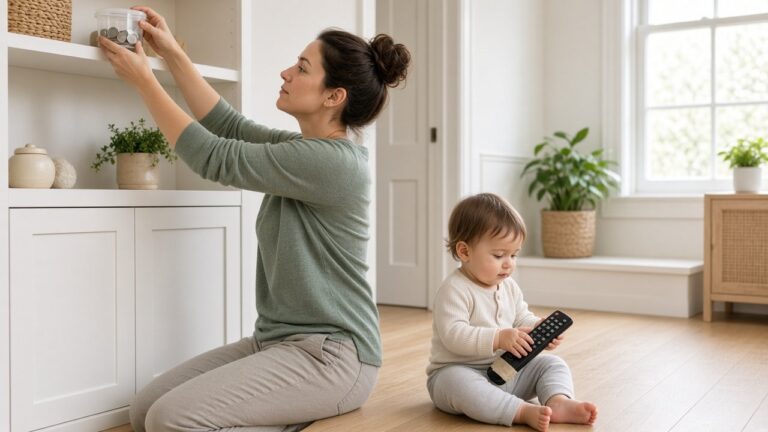
Keep medicines, vitamins, cleaning products, laundry pods and alcohol locked up and out of sight, even if a cap says child-resistant. The CDC’s “Up and Away” campaign stresses putting medicines away after every use, including ones you take daily. Save the Poison Help number, 1-800-222-1222, in every phone in the house; it connects you to your local poison center, run with America’s Poison Centers, 24 hours a day.
Watch especially for button batteries and small, powerful magnets. Both can cause severe internal injuries if swallowed. Reese’s Law, signed in 2022, requires secure battery compartments and warnings on products containing button and coin batteries, but older remotes, toys and greeting cards may not comply. If you think a child swallowed one, go to the emergency room right away.
Water
The CDC reports that drowning is the leading cause of death for children aged 1 to 4. It happens quickly and quietly, often in bathtubs, buckets and backyard pools. Stay within arm’s reach of babies and toddlers in or near water, empty buckets and kiddie pools after use and never leave a child alone in the bath, even for a moment.
For home pools, the CPSC’s Pool Safely campaign recommends a four-sided fence at least 4 feet high with a self-closing, self-latching gate that separates the pool from the house. Swim lessons and CPR training for parents add further layers of protection.
Falls, Furniture and Burns
- Anchor furniture and TVs. The CPSC’s Anchor It! campaign urges anchoring dressers, bookcases and televisions to the wall to prevent tip-overs.
- Use safety gates at the top and bottom of stairs for babies and toddlers.
- Install window guards or stops on upper floors; screens do not stop a fall.
- Set the water heater to 120 degrees Fahrenheit or lower, as the CPSC recommends, to reduce scald risk.
- Keep hot drinks and pot handles out of reach and turned inward.

Safe Sleep for Babies
The AAP’s safe sleep recommendations come down to placing babies on their backs, alone, on a firm, flat surface without soft bedding, for every sleep. Its 2022 policy statement recommends room-sharing without bed-sharing, ideally for at least the first six months, and advises against inclined sleepers, bumpers, pillows and loose blankets.
Other points from the AAP guidance:
- Use a crib, bassinet or play yard that meets current CPSC safety standards, with a tight-fitting sheet.
- Offer a pacifier at sleep time once breastfeeding is established, if your baby will take one.
- Avoid overheating; dress the baby in light layers or a wearable blanket.
- Keep the baby’s environment smoke-free.
Grandparents and caregivers may remember older advice, such as putting babies to sleep on their stomachs. It is worth sharing the current rules with anyone who puts your baby down for a nap.

Car and Travel Safety
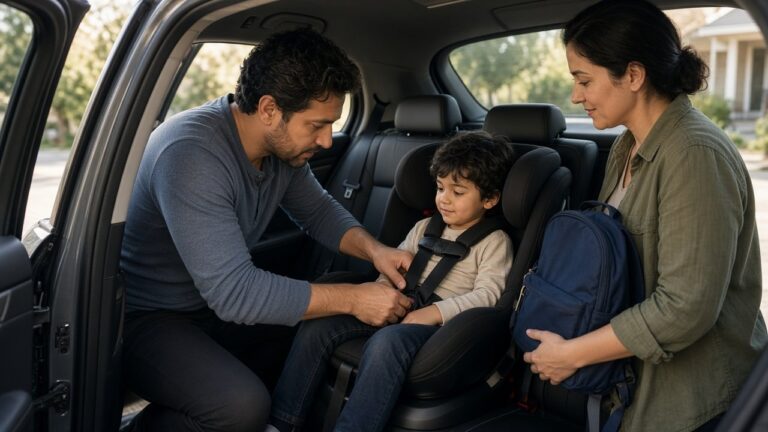
Car safety for children depends on using the right seat for your child’s size, installing it correctly and keeping kids under 13 in the back seat. Motor vehicle crashes remain a leading cause of death for children in the United States, according to the CDC, and correctly used car seats greatly reduce that risk.
NHTSA and the AAP describe four general stages:
- Rear-facing car seat for as long as possible, until your child reaches the top height or weight limit of the seat.
- Forward-facing seat with a harness once they outgrow rear-facing limits, again until they reach that seat’s limits.
- Booster seat until the vehicle seat belt fits properly, which for many kids is when they reach about 4 feet 9 inches tall, often between ages 8 and 12.
- Seat belt in the back seat, with the lap belt low across the hips and the shoulder belt across the chest, not the neck.
NHTSA’s website lists free car seat inspection stations where certified technicians check installation. Our guide to car seat stages by age and size explains when to switch and how to tell if a seat fits.
On trips, also pack medicines in a carry bag, bring a basic first aid kit and check that any rental or borrowed car seat has not expired or been in a crash.

School-Year Health: Lunches, Sick Days and Checkups
During the school year, the biggest health wins are safe packed lunches, clear rules about when kids stay home sick and keeping checkups and vaccines on schedule.
Packed Lunches
The USDA’s food safety guidance says perishable foods should not stay in the “danger zone” between 40 and 140 degrees Fahrenheit for more than two hours (one hour if it is above 90 degrees). For packed lunches, that means an insulated bag with at least two cold sources, such as frozen gel packs or a frozen water bottle, and throwing out perishable leftovers rather than bringing them home. Our guide on how to pack a safe school lunch has a full checklist.
When to Keep Kids Home
Most schools ask that children stay home with a fever and return only once they have been fever-free for 24 hours without fever-reducing medicine. Vomiting, diarrhea, a contagious rash or a child too sick to take part in class are other common reasons. School policies vary, so check yours. Our parent guide on when to keep your child home from school goes symptom by symptom.
Checkups and Vaccines
The AAP’s Bright Futures schedule calls for frequent well-child visits in the first years of life and yearly visits from about age 3. These visits track growth and development, cover vaccines on the CDC’s recommended schedule and give you time to ask questions. Keep a simple record of shots and visits; schools, camps and sports teams often ask for them.
Handwashing remains one of the simplest ways to cut the spread of germs. The CDC recommends scrubbing with soap for at least 20 seconds, especially before eating and after using the bathroom.
Seasonal Safety: Halloween, Holidays and Winter
Seasonal risks shift through the year, so a few calendar reminders keep your safety plan current without much effort.
Halloween
Choose bright or reflective costumes, add a flashlight or glow stick, use face paint rather than masks that block vision and walk with children under about 12. Check candy at home before eating and remove anything unwrapped or homemade from strangers, as the U.S. Food and Drug Administration advises. Our Halloween safety tips for kids cover costumes, trick-or-treating routes and candy checks.
Thanksgiving and Holiday Cooking
USDA guidance says to thaw a turkey in the refrigerator, allowing about 24 hours for every 4 to 5 pounds, and to cook it until the thickest parts reach 165 degrees Fahrenheit on a food thermometer. Refrigerate leftovers within two hours. Busy kitchens are also a burn risk, so create a “kid-free zone” around the stove. Our Thanksgiving turkey food safety guide has thawing charts and leftover rules.
Winter
- Space heaters: keep them at least 3 feet from anything that can burn, as NFPA advises, and turn them off when you leave the room or go to sleep.
- Carbon monoxide: never run generators, grills or cars in a garage or indoors, and check CO alarm batteries when heating season starts.
- Holiday decorations: keep small ornaments, batteries and plants that may be toxic out of reach of toddlers, and water live trees daily.
- Outdoor play: dress kids in layers, with hats and gloves, and bring them in when clothing gets wet.
Summer
Summer adds sun and water risks. The AAP recommends broad-spectrum sunscreen of at least SPF 15 (ideally SPF 30) for children over 6 months, reapplied every two hours and after swimming, plus shade, hats and protective clothing. Keep babies under 6 months out of direct sun.
Dental and Routine Care
Good dental care starts with the first tooth and is one of the easiest health habits to build into a daily routine. The AAP and the American Dental Association recommend:
- Brushing twice a day with fluoride toothpaste.
- A smear the size of a grain of rice for children under 3, and a pea-sized amount from ages 3 to 6.
- A first dental visit by the first birthday or within six months of the first tooth.
- Limiting sugary drinks and snacks, and not putting babies to bed with a bottle of milk or juice.
Kids usually need help brushing until they can do it well on their own, often around age 6 to 8. The guide to kids’ dental care by age covers fluoride, flossing and first visits in more detail.
Other routine care worth scheduling: vision screening at well-child visits, hearing checks if you notice concerns and an annual flu vaccine for everyone 6 months and older, as the CDC recommends.
When to Call the Doctor or 911
Call 911 for any situation that looks life-threatening, call Poison Help for a possible poisoning, and call your pediatrician for symptoms that worry you but are not an emergency. When in doubt, call; pediatric offices expect these calls and many have a 24-hour nurse line. For a deeper look, see our guide to poison prevention at home.
Call 911 or go to the emergency room for:
- Trouble breathing, blue or gray lips, or choking that does not clear
- A seizure, unresponsiveness or being very hard to wake
- A suspected swallowed button battery or magnet
- Severe bleeding, a serious burn or a head injury with vomiting or confusion
- Signs of a severe allergic reaction, such as swelling of the face or throat
Call your pediatrician promptly for:
- Any fever in a baby younger than 3 months (the AAP treats a rectal temperature of 100.4 degrees Fahrenheit or higher as urgent at this age)
- Signs of dehydration, such as no wet diaper for many hours or no tears when crying
- A fever that lasts more than a couple of days or keeps coming back
- Ear pain, a rash with fever or anything that just seems wrong to you
Trust your instincts. Parents often notice subtle changes before anyone else.
Emergency Plan and Family Kit
A family emergency plan and a basic kit mean you can handle a power outage, storm or evacuation without scrambling. Ready.gov, run by FEMA, recommends that every household make a plan, build a kit and stay informed about local alerts.
Your Family Plan
- Choose a meeting place near home and one outside your neighborhood.
- Pick an out-of-town contact everyone can call or text.
- Write down phone numbers; kids may not know them by heart, and phones die.
- Learn your child’s school or daycare emergency procedures and pickup rules.
- Teach children how and when to call 911 as soon as they are old enough.
Kit Basics
Ready.gov suggests enough supplies to last several days, including:
- Water, about one gallon per person per day
- Non-perishable food your kids will actually eat
- Flashlights, extra batteries and a battery or hand-crank radio
- First aid kit and a supply of prescription medicines
- Diapers, wipes, formula and comfort items for little ones
- Copies of important documents, including insurance cards and vaccine records
- Phone chargers or a power bank
Store a smaller version in the car and check expiration dates twice a year, perhaps when you test your smoke alarms.
Family Safety Checklist by Age
A quick age-by-age checklist helps you focus on the risks that matter most right now.
| Age | Top priorities |
|---|---|
| 0 to 12 months | Safe sleep on the back, rear-facing car seat, water heater at 120 degrees, no small objects within reach |
| 1 to 3 years | Locked medicines and cleaners, constant water supervision, anchored furniture, safety gates, Poison Help saved |
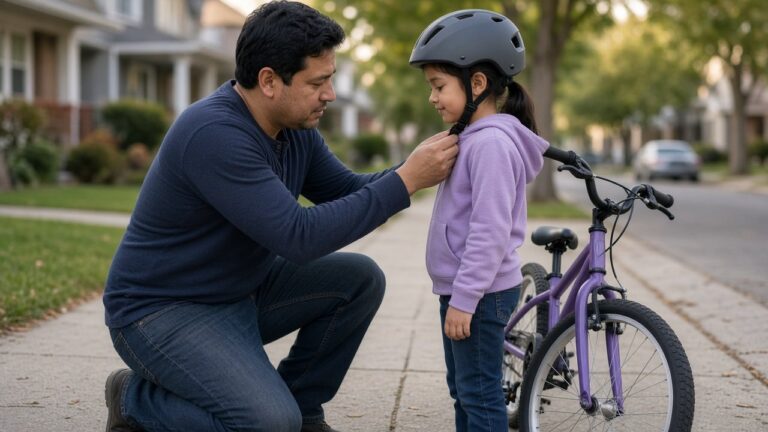
| 4 to 7 years | Booster seat readiness, street-crossing rules, helmet for bikes and scooters, swim skills, calling 911 |
| 8 to 12 years | Seat belt fit, online safety rules, sports gear and hydration, knowing the family emergency plan |
| 13 and up | Driving safety, sleep and screen balance, mental health check-ins, first aid basics |
Revisit the table each birthday and move to the next row when your child is ready.
Frequently Asked Questions
Frequently Asked Questions
What are the most important safety steps for families with young children? The highest-impact steps are working smoke and carbon monoxide alarms, locked storage for medicines and chemicals, constant supervision around water, the correct car seat for your child's size and safe sleep for babies.
How often should I test smoke alarms? NFPA recommends testing smoke alarms once a month and replacing any alarm that is 10 years old. Practice a home fire drill twice a year.
What number do I call for a possible poisoning? Call Poison Help at 1-800-222-1222, which connects you to your local poison center 24 hours a day. Call 911 if the child is unconscious, having a seizure or struggling to breathe.
How much sleep does my child need? The American Academy of Sleep Medicine recommends 11 to 14 hours for 1- to 2-year-olds, 10 to 13 hours for 3- to 5-year-olds, 9 to 12 hours for ages 6 to 12 and 8 to 10 hours for teens, including naps.
When can my child sit in the front seat? NHTSA and the AAP recommend that children under 13 ride in the back seat, properly restrained in a car seat, booster or seat belt that fits them.
What should be in a family emergency kit? Ready.gov suggests water (about one gallon per person per day), non-perishable food, flashlights, batteries, a radio, a first aid kit, medicines, baby supplies, document copies and phone chargers.
Related Family Health and Safety Guides
These guides on Living Life as Moms go deeper on each topic covered above:
- How much sleep do kids need? A guide by age
- Daylight saving time and kids’ sleep
- Screen time for kids by age
- Home fire safety for families
- Car seat stages by age and size
- How to pack a safe school lunch
- When to keep your child home from school
- Halloween safety tips for kids
- Thanksgiving turkey food safety
- Kids’ dental care by age
Sources used in this guide: American Academy of Pediatrics (HealthyChildren.org, safe sleep policy statement 2022, Bright Futures, Family Media Plan); American Academy of Sleep Medicine; Centers for Disease Control and Prevention (drowning, Up and Away, handwashing, vaccines); National Highway Traffic Safety Administration; National Fire Protection Association; U.S. Consumer Product Safety Commission (Anchor It!, Pool Safely, carbon monoxide, water heater temperature); U.S. Department of Agriculture Food Safety and Inspection Service; U.S. Food and Drug Administration; America’s Poison Centers; American Dental Association; Ready.gov (FEMA).