
How Much Sleep Do Kids Need? A Guide by Age
How many hours of sleep kids need from babyhood to the teen years, based on AASM and AAP guidance, plus practical steps for bedtime, naps and a calmer evening.
As an Amazon Associate I earn from qualifying purchases. Some links in this post are affiliate links, which means I may earn a small commission at no extra cost to you.
Parents tend to measure sleep in terms of the night before: did she go down easily, did he wake at 3 a.m., how early did the day start? Doctors look at the bigger picture. They look at total hours across a full 24 hours, and they compare those hours with ranges built from sleep research. Those ranges are worth knowing, because they give you something steadier to aim for than a single rough night.
This guide walks through how much sleep children need at each age, what the numbers mean in real life, and how to get closer to them without turning bedtime into a battle. Everything here is general information drawn from published pediatric guidance. It does not replace advice from your child’s own doctor.
Quick answer: the American Academy of Sleep Medicine recommends 12 to 16 hours per 24 hours for babies 4 to 12 months, 11 to 14 hours for ages 1 to 2, 10 to 13 hours for ages 3 to 5, 9 to 12 hours for ages 6 to 12, and 8 to 10 hours for teens 13 to 18. The American Academy of Pediatrics endorses these ranges.
Where the Sleep Recommendations Come From
The numbers most pediatricians quote come from a consensus statement by the American Academy of Sleep Medicine (AASM). A panel of sleep experts reviewed hundreds of studies on sleep and health, then agreed on how many hours children should regularly get. The American Academy of Pediatrics (AAP) has endorsed those recommendations, and the Centers for Disease Control and Prevention (CDC) lists the same ranges on its sleep pages for families.
Two details matter. First, the hours are totals for a full 24-hour day, so naps count. A two-year-old who sleeps 10 hours overnight and takes a two-hour nap lands at 12 hours, which sits comfortably inside the range for her age. Second, the recommendation is for what a child should “regularly” get. One short night after a birthday party will not undo anything. A pattern of short nights is what researchers connect with trouble.
The AASM statement does not give a number for newborns younger than 4 months, because sleep at that stage is so variable. Newborns wake to feed around the clock, and the guidance for those first months is mostly about safe sleep rather than hour counts. If you have a newborn, your pediatrician is the best source for what is typical for your baby.
Sleep Needs From Infants to Preschoolers
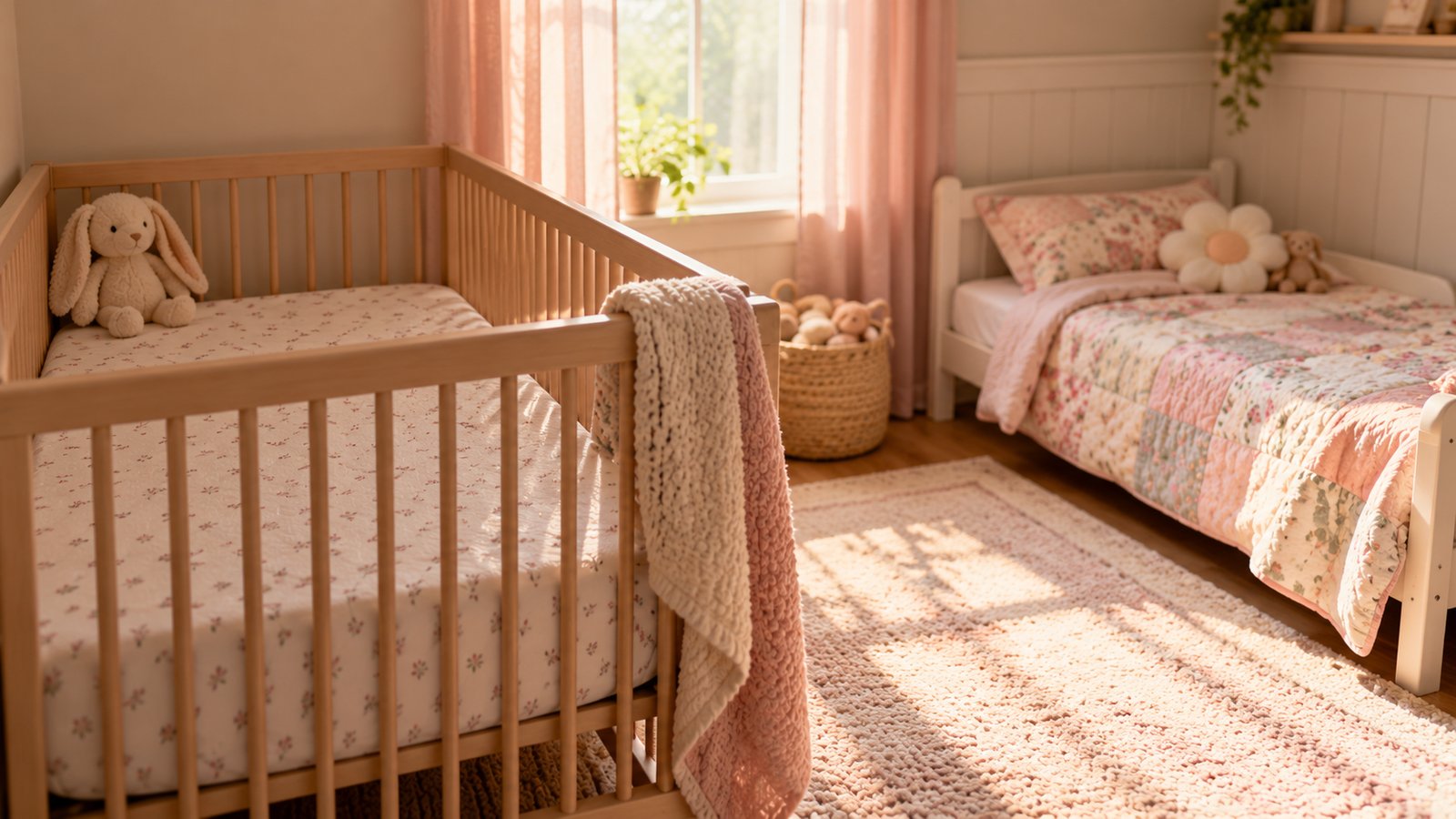
Babies, 4 to 12 months: 12 to 16 hours
Babies in this window usually sleep in two or three chunks of daytime naps and one longer stretch overnight. Total sleep can swing quite a bit from one baby to the next and still be normal. Many babies drop from three naps to two somewhere between six and nine months, though the timing varies. Rather than chasing a schedule printed on a chart, watch for tired signs such as rubbing eyes, staring off, fussiness and slower movement.
For safe sleep, the AAP advises placing babies on their backs, on a firm, flat surface with no pillows, bumpers, blankets or soft toys, and sharing a room but not a bed during at least the first six months. Those safe-sleep rules matter far more than any hour count.
Toddlers, 1 to 2 years: 11 to 14 hours
Toddlers generally move from two naps to one around 12 to 18 months. The single nap tends to land after lunch and last one to three hours. Toddlers are also the age group most likely to resist bedtime, because they have discovered the word “no” and a strong interest in staying up. A short, predictable routine helps more than long negotiations.
Preschoolers, 3 to 5 years: 10 to 13 hours
Around age three many children keep a nap, and by five most have dropped it. If your preschooler stops napping but gets cranky in the late afternoon, an earlier bedtime for a few weeks often evens things out. Quiet time with books on the bed can bridge the gap and gives you a break as well.
Sleep Needs for School-Age Kids and Teens
Ages 6 to 12: 9 to 12 hours
Once school starts, bedtime has a deadline built in. A child who needs a wake-up time of 6:45 a.m. and 10 hours of sleep has to be asleep by about 8:45 p.m., which means starting the bedtime routine closer to 8:00. Many families find the math surprising the first time they do it, since homework, activities and dinner all squeeze the evening.
If your children are heading back to a school routine after a break, our post on getting kids back on schedule for school lays out an easy way to shift bedtimes in small steps.
Teens, 13 to 18 years: 8 to 10 hours
Teen sleep is its own subject. During puberty the body clock shifts later, so many teens do not feel sleepy until late in the evening, while school start times pull them out of bed early. The AAP has called for middle and high schools to start at 8:30 a.m. or later for this reason. You cannot change your school district from your kitchen, but you can protect the hours teens do have: phones charging outside the bedroom, a steady weekend wake-up time that is no more than an hour or so later than weekdays, and caffeine kept to earlier in the day.

Signs Your Child Is Not Getting Enough Sleep
Kids rarely say “I am tired.” They show it through behavior, and that behavior can look the opposite of sleepy. The CDC and the AAP both note that insufficient sleep in children is linked with problems in attention, behavior and learning, as well as with higher risks of obesity, injuries and, in older kids, mood problems. A few signs to watch for:
- Hard to wake in the morning, or needing to be dragged out of bed on most school days.
- Meltdowns, clinginess or short fuse in the late afternoon and evening, especially in younger children.
- Hyperactivity, which in young children can show up as a second wind rather than yawning.
- Falling asleep in the car on short trips, or nodding off during quiet activities.
- Trouble concentrating, forgetfulness, or a drop in school performance.
- Needing a long weekend sleep-in to catch up.
Any one of these can have other causes. If problems persist, or if your child snores loudly, gasps during sleep, or seems to stop breathing for moments, mention it to the pediatrician. Those can be signs of a sleep disorder that deserves a proper look.
Building a Bedtime Routine That Holds
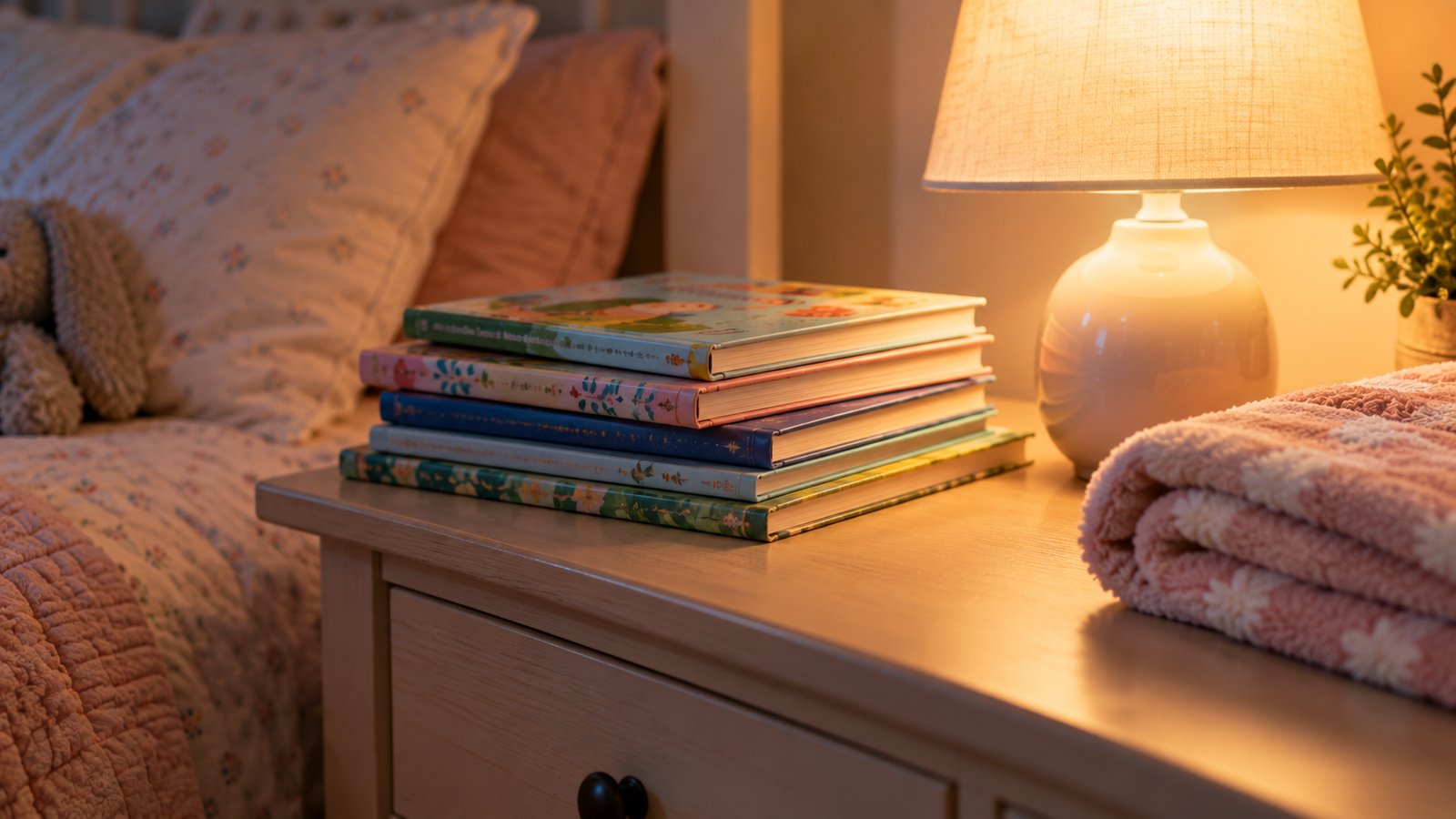
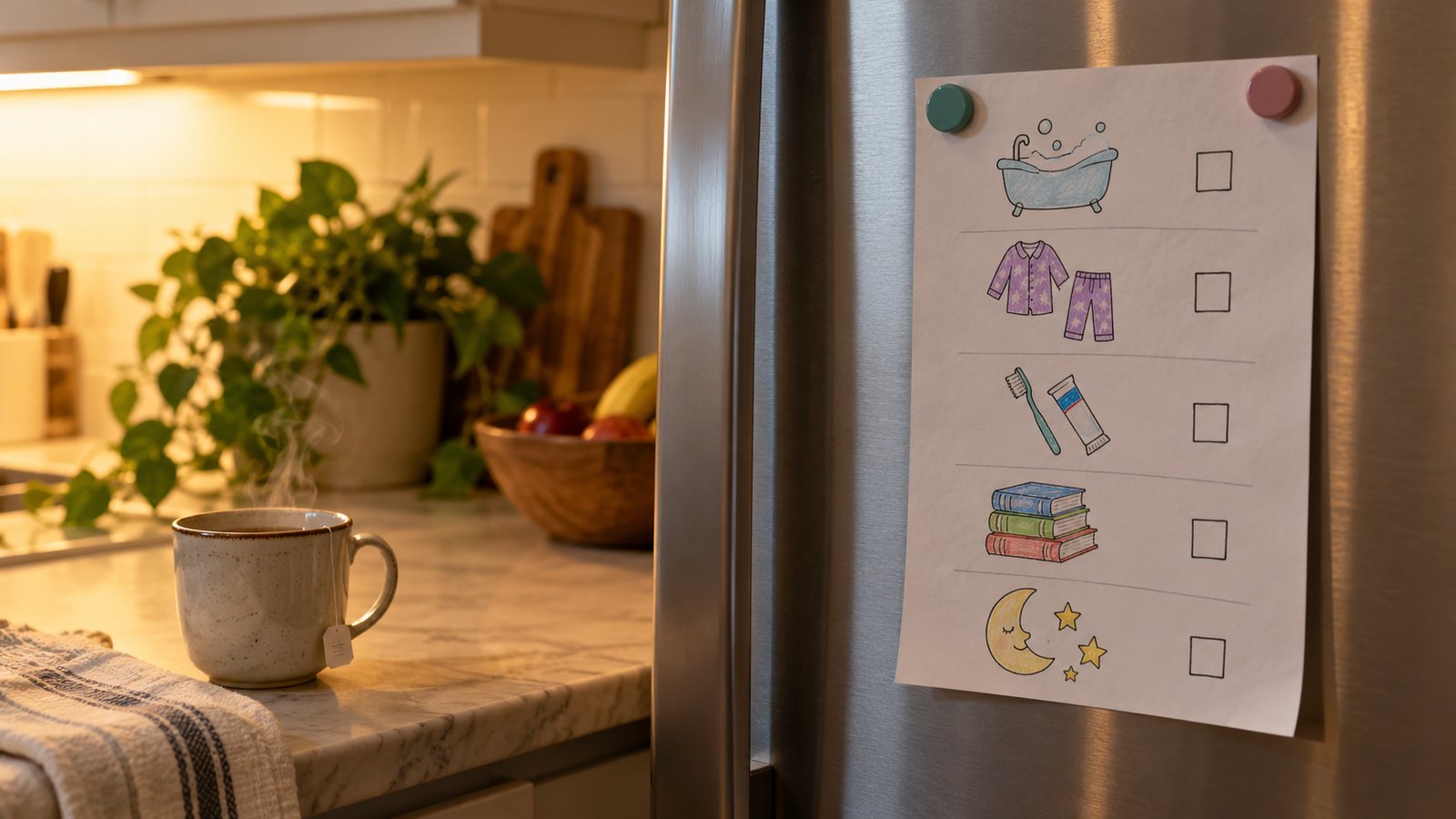
Routines work because they tell the brain what is coming. They do not need to be long or fancy. Twenty to thirty minutes of the same few steps, in the same order, is plenty. A workable sequence for many families looks like this:
- Turn off screens and start dimming the lights about an hour before the target sleep time.
- Bath or wash-up, pajamas and teeth.
- Tidy the room together for five minutes, so the morning starts with fewer jobs.
- Read one or two books, or tell a calm story.
- Say goodnight, lights off, and leave the room while your child is drowsy but awake, if that suits their age.
Consistency beats perfection. A routine that happens at 7:30 on most nights is better than an elaborate one that happens only on good days. If evenings in your house are the hard part of the day, the ideas in our working mom evening routine guide may help you carve out the time and energy for it.
Keep the sleep environment cool, dark and quiet
A bedroom that is slightly cool, dark and quiet supports sleep for most children. If streetlights or early summer sunrise cut into your child’s sleep, blackout curtains can make a big difference. A pair like these thermal blackout curtains are a typical choice, and you can check the width and length of your window before ordering. A small night light with a warm glow is fine for children who are afraid of the dark; the AAP suggests avoiding bright blue-toned light close to bedtime.
Screens, Food and Activity Before Bed
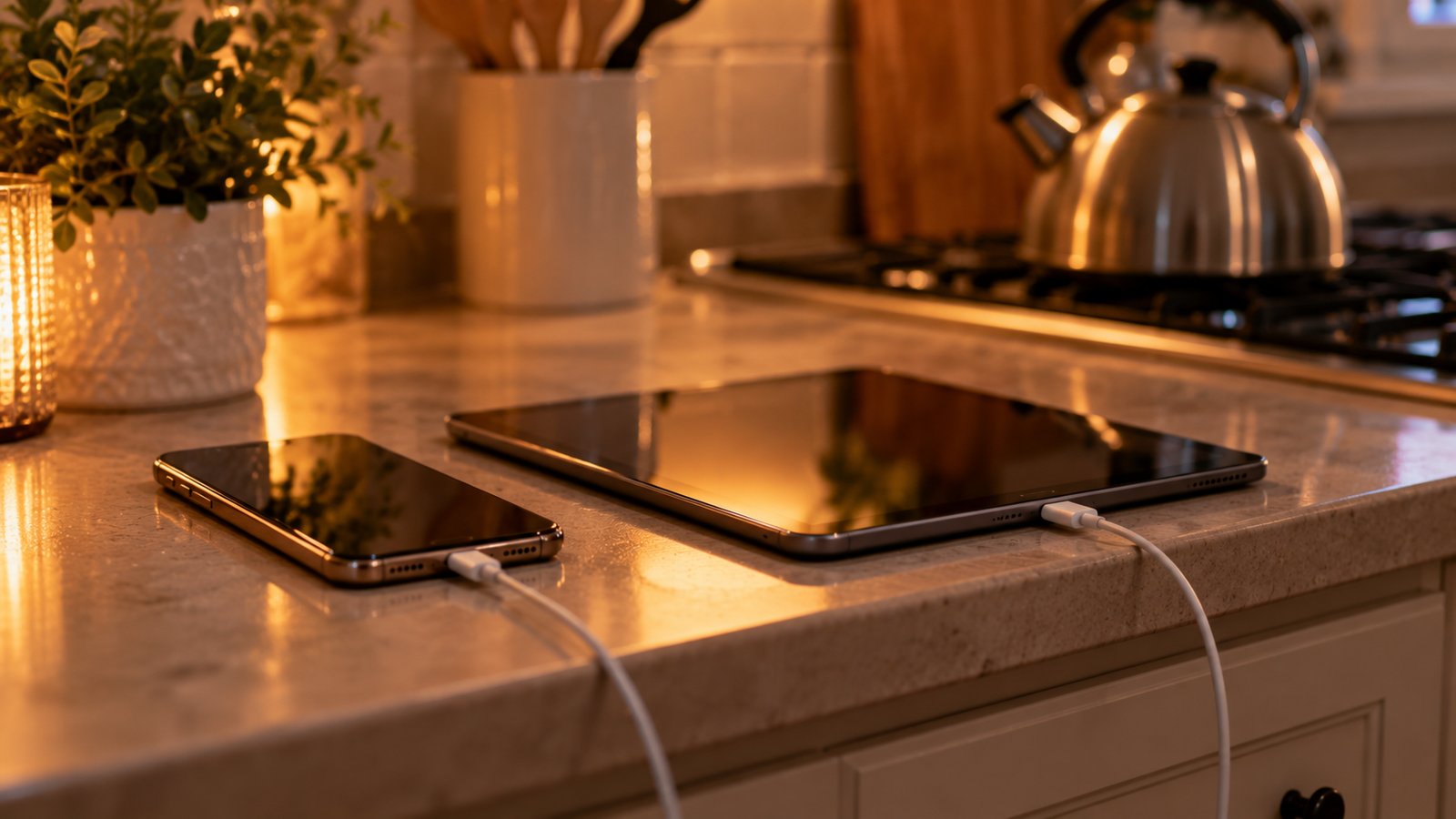
Screens deserve their own paragraph because the research is fairly consistent. Light from tablets and phones can delay the body’s melatonin release, and exciting content keeps the brain switched on. The AAP recommends removing screens from bedrooms and turning them off at least 30 minutes to an hour before bed. Out of the bedroom is the key: a tablet that stays on the kitchen counter cannot be picked up at midnight.
Food matters too, though in a smaller way. A large heavy meal right before bed can make it harder to settle, and so can sugary snacks. A light snack, such as a banana or toast, is fine if your child is hungry. Caffeine, found in soda, tea, energy drinks and chocolate, can linger for hours, which is relevant for older kids and teens.
Daytime activity helps nighttime sleep. Time outside, especially in morning light, helps set the body clock. Ideas for getting little ones moving are in our post on the outdoor challenge for kids, which works well in cooler months too if you dress for the weather.
Naps, Weekends and Changing Schedules
Naps should fit the child, not the other way around. If a four-year-old naps for two hours at 3:00 p.m. and then lies awake until 10:00 p.m., the nap is probably borrowing from the night. Shortening it, moving it earlier or switching to quiet time may solve the late bedtime. On the other hand, a toddler who suddenly fights the nap may not be ready to drop it. Give a new schedule a couple of weeks before deciding.
Weekends are where routines most often fall apart. Sleeping in by a couple of hours can shift the body clock enough to make Sunday night difficult. A reasonable compromise is to let the weekend wake-up drift by no more than about an hour. Travel, holidays and time changes are also predictable disruptions. Plan for a few off nights, return to the routine as soon as you can, and avoid reacting to every glitch as if the whole schedule had collapsed.
Mornings can help the evening, too. A smoother morning means a more relaxed household by night. The structure in our morning routine post and the quiet early morning tips are worth a look if your day starts in a scramble.
When Parents Need Sleep Too
Children are not the only ones who suffer from short nights. Adults need seven or more hours, according to the CDC, and a tired parent has less patience for a bedtime that drags. If you are running on little sleep, set a realistic bedtime for yourself as well, and protect it where you can. Our list of 12 ways to get relaxed and fall asleep has simple ideas that work for adults.
Aim for steady habits rather than a perfect score. Most kids are resilient, and the goal is to get most nights into the recommended range most of the time.
Frequently Asked Questions
Do naps count toward the daily sleep totals?
Yes. The AASM ranges are for total sleep in 24 hours, so daytime naps are included. A toddler who sleeps 10 hours at night and naps for two hours has had 12 hours of sleep.
What if my child needs less sleep than the chart says?
The ranges describe what is recommended for health for most children. A child who seems rested, wakes easily, and behaves well during the day may simply sit near the low end of the range. If you are unsure, ask your pediatrician.
Is it okay to let a baby sleep in the car seat or swing?
The AAP advises that babies should sleep on a firm, flat surface on their backs. Car seats and swings are not designed for routine sleep, and a baby who falls asleep in one should be moved to a flat sleep surface as soon as possible.
How can I tell if my teenager is sleep deprived?
Look for difficulty waking, moodiness, falling asleep in class, reliance on caffeine and big weekend sleep-ins. Teens often need 8 to 10 hours, but many get far fewer on school nights.
When should I talk to a doctor about my child's sleep?
Contact your pediatrician about loud snoring, pauses in breathing, frequent night terrors, sleepwalking that puts your child at risk, or sleep problems that last for weeks and affect daytime life.
Sources: American Academy of Sleep Medicine consensus statement on pediatric sleep durations (endorsed by the American Academy of Pediatrics); CDC, “How Much Sleep Do I Need?”; AAP safe sleep recommendations at HealthyChildren.org. This article is general information and not medical advice.