Thanksgiving Turkey Food Safety: Thawing, Cooking Temperatures and Leftovers
A USDA-based Thanksgiving food safety guide: how to thaw a turkey safely, the right internal temperature, stuffing rules, buffet timing, leftovers storage and a countdown schedule.
As an Amazon Associate I earn from qualifying purchases. Some links in this post are affiliate links, which means I may earn a small commission at no extra cost to you.
Thanksgiving dinner asks a home cook to do something unusual: cook a very large piece of poultry, hit a dozen side dishes at the same time, and feed a table of people who range from toddlers to grandparents. It is no surprise that a few food safety details slip through the cracks. The good news is that the rules are simple, and they are the same every year.
This guide follows the U.S. Department of Agriculture (USDA) and FoodSafety.gov advice on turkey. It walks through buying and thawing, cooking and checking temperature, stuffing, the serving table, leftovers, and a countdown schedule you can print. Thanksgiving falls on Thursday, November 26 this year, so there is plenty of time to plan.
Quick answer: thaw the turkey in the refrigerator (about 24 hours for every 4 to 5 pounds), in cold water (30 minutes per pound, changing the water every 30 minutes), or in the microwave. Cook it in an oven set to at least 325°F until a food thermometer reads 165°F in the innermost part of the thigh and wing and in the thickest part of the breast. Refrigerate leftovers within two hours.
Buy the Right Size and Plan Your Space
The USDA suggests planning for about 1 pound of turkey per person. That gives you enough for the meal and some leftovers. A fresh turkey should be bought only one to two days before you plan to cook it, and kept in the refrigerator. A frozen turkey can be bought well ahead, but you will need room and time to thaw it.
Clear refrigerator space early. A 16-pound turkey takes up a lot of room, and a crowded refrigerator warms up. Check that the temperature is at or below 40°F, using an appliance thermometer if you have one. Plan the schedule for sides and dessert at the same time, so you know where everything will be stored.
Three Safe Ways to Thaw a Turkey
Never thaw a turkey on the counter. When the outside of the bird warms up to room temperature, bacteria can multiply there while the inside is still frozen. The USDA approves three methods.
In the refrigerator
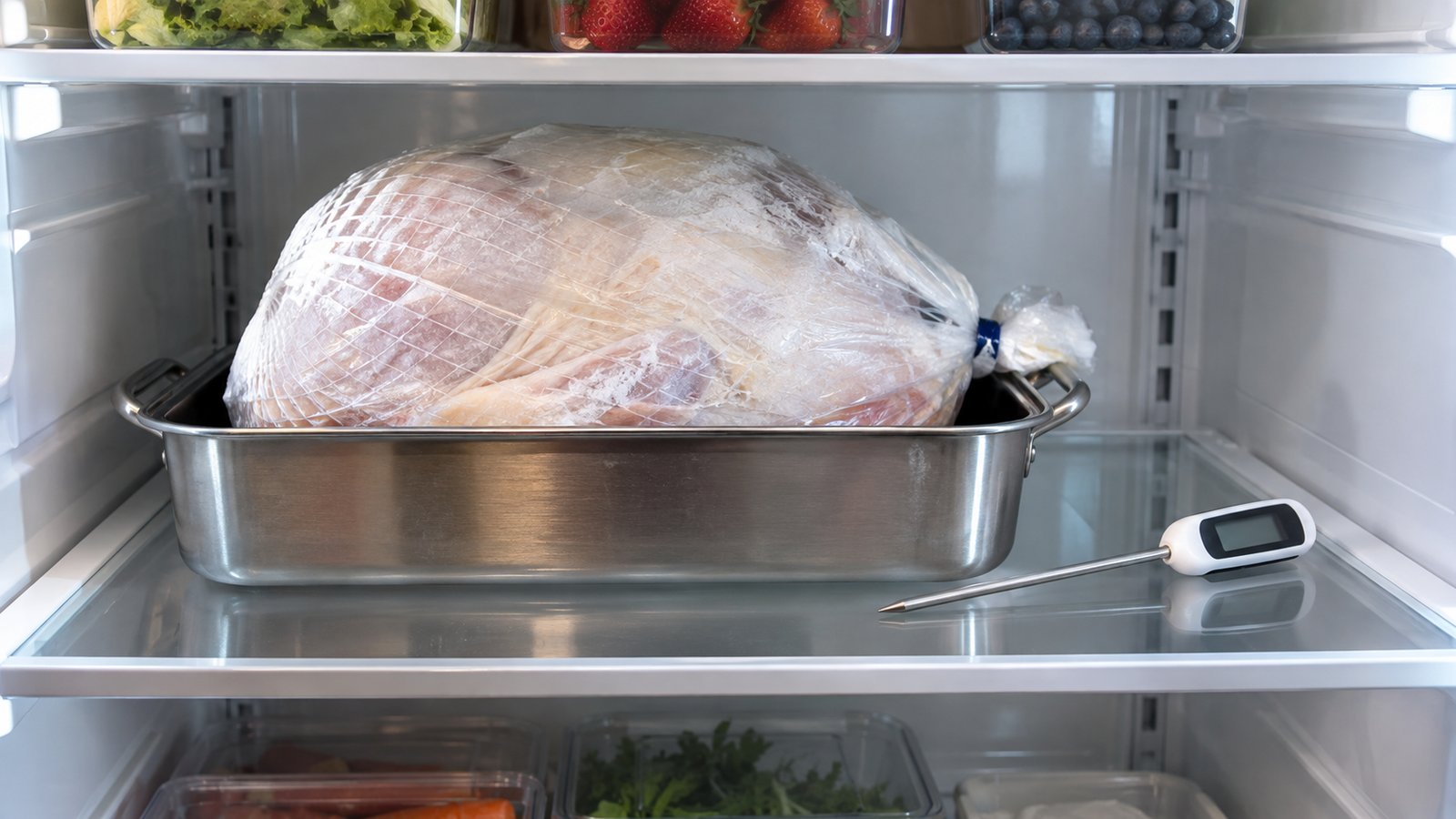
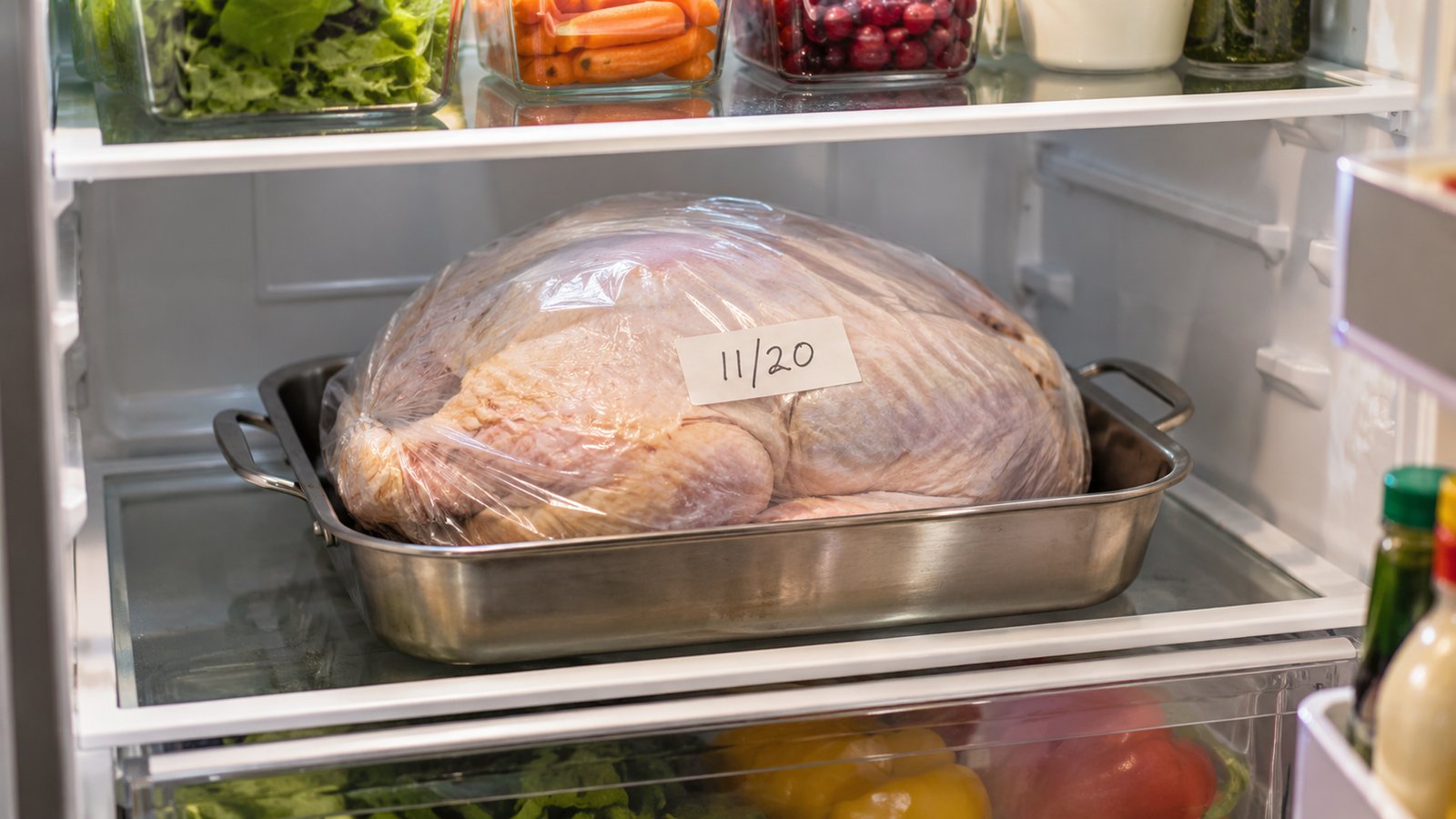
This is the easiest and the safest method. Allow about 24 hours for every 4 to 5 pounds of turkey. A 20-pound turkey needs four to five days. Put the turkey on a tray or in a pan to catch drips, and store it on the bottom shelf so that juices do not touch other food. Once thawed, a turkey can stay in the refrigerator for another one to two days before cooking.
In cold water
For a quicker thaw, put the turkey in a leak-proof bag and submerge it in cold tap water. Allow about 30 minutes per pound and change the water every 30 minutes to keep it cold. A 12-pound turkey takes about six hours. Cook it immediately after thawing.
In the microwave
Check your microwave’s manual for the size limit and power settings. Cook the turkey right after thawing this way, since some areas may begin to cook during the process.
If you run out of time, there is another option: cook the turkey from frozen. The USDA says it is safe, and it will take about 50 percent longer than the time for a fully thawed bird. You will not be able to remove the giblets until the turkey has partly cooked.
Do not wash the turkey
Many people were taught to rinse a turkey before cooking. The USDA says not to. Washing raw poultry can spread bacteria to the sink, countertops and nearby foods through splashing, and it does not remove germs. Cooking to the right temperature does that. Pat the turkey dry with paper towels if a recipe asks for it, and throw them away right away.
Follow the four basic steps from FoodSafety.gov: clean, separate, cook and chill. Wash hands with soap and water for 20 seconds after touching raw turkey. Use a separate cutting board for raw meat, and wash boards, knives and counters with hot, soapy water afterward.
Cooking and Checking the Temperature
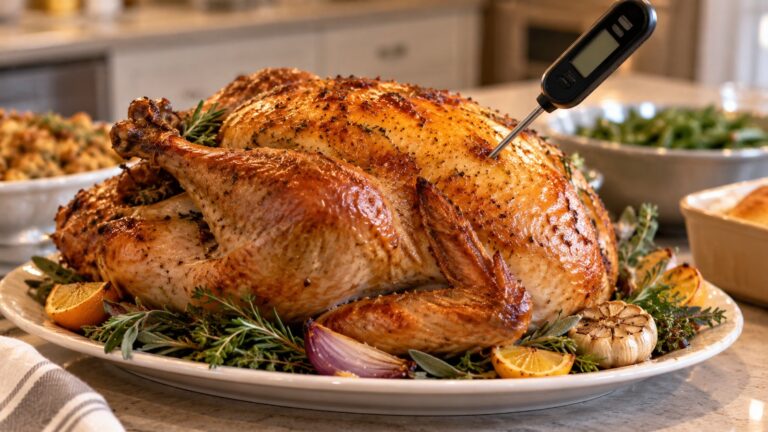
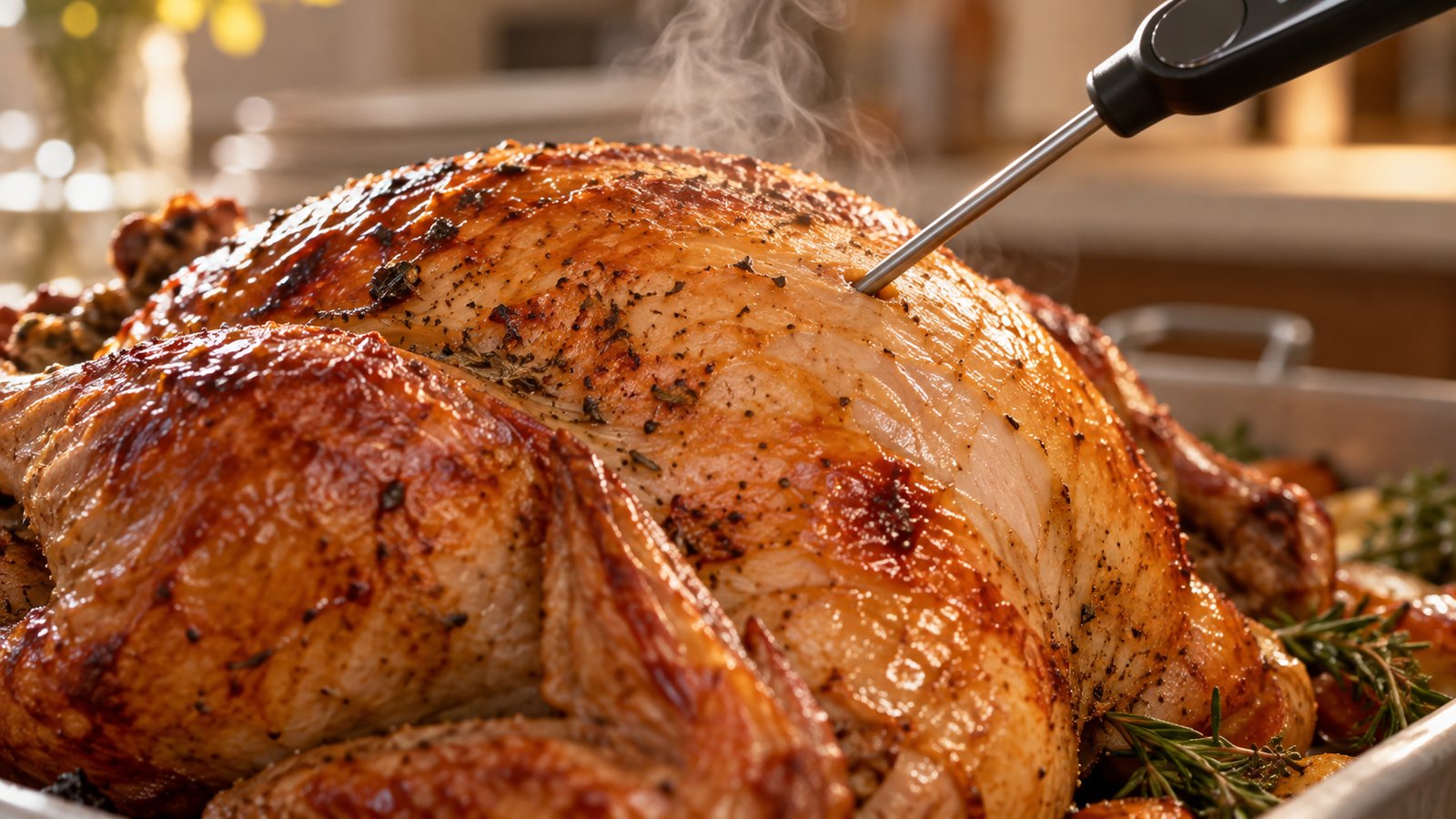
The USDA recommends setting the oven to at least 325°F. The turkey is safe when the temperature reaches 165°F, measured with a food thermometer in three places: the innermost part of the thigh, the innermost part of the wing, and the thickest part of the breast. Do not rely on a pop-up timer or on color. Turkey can look done and still be undercooked.
A good thermometer is the single most useful tool for the holiday. An instant-read model such as this digital instant-read food thermometer gives you a quick reading, and you can check several spots. Make sure to follow the instructions for insertion depth, and avoid touching bone, which can give a false reading. Test your thermometer ahead of time in a pot of boiling water, which should read around 212°F at sea level.
Roasting times are only estimates
The USDA publishes timetables that give a range, based on weight and whether the bird is stuffed. A 12 to 14 pound unstuffed turkey, for instance, takes about 3 to 3.75 hours at 325°F. Treat these times as a guide, and begin checking the temperature early. Let the turkey rest for 20 minutes after taking it out. The temperature continues to rise as it rests, and the juices settle, which makes carving easier.
A note on deep-fried turkey
Turkey fryers are popular, and they are also dangerous. The National Fire Protection Association (NFPA) says that fryers using a large amount of hot oil can tip over, overflow or ignite, and it recommends that families choose a fryerless option, such as an oil-free fryer or a store that fries turkeys for you. If you do fry, do it outdoors, well away from the house, garage and any deck. The turkey must be completely thawed and patted dry, since ice and water cause hot oil to erupt. Keep children and pets far from the area, never leave the fryer unattended, and keep a multipurpose fire extinguisher nearby. Do not use water on an oil fire.
Resting and carving
Resting the bird for 20 to 30 minutes under loose foil gives you time to finish the gravy and heat the rolls. Use a clean cutting board for carving, one that has not held raw turkey, or wash it first. Put the carved meat on a clean platter and serve it right away or keep it warm in a low oven. Cover and refrigerate anything not served in the first round, so it does not drift past the two-hour mark while people are talking.
Stuffing and Side Dishes
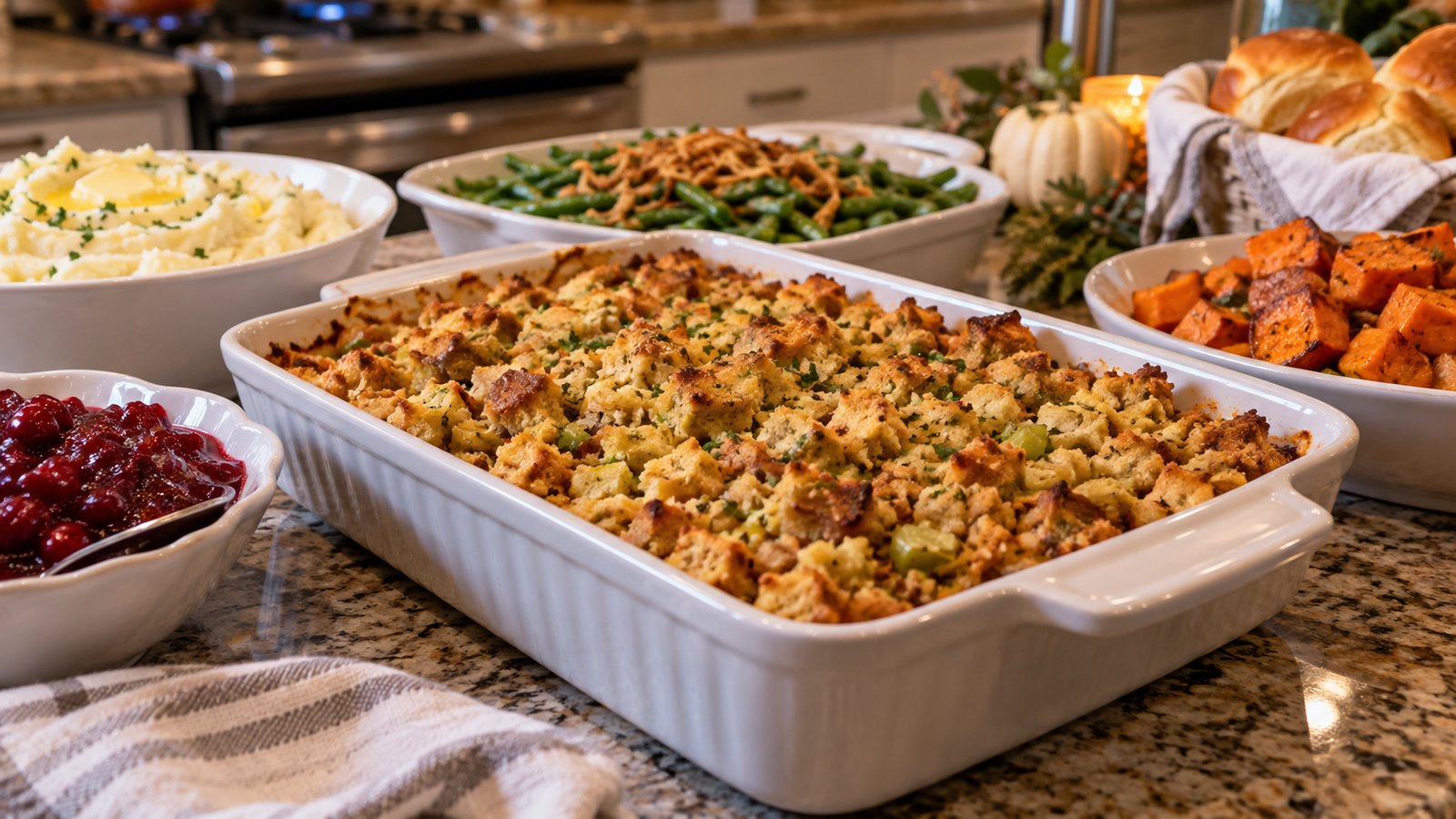
Stuffing, or dressing, needs to reach 165°F as well. The USDA says that cooking stuffing separately in a casserole dish is the simplest way to make sure it is safe, because the center of a stuffed bird is slow to heat up. If you do stuff the turkey, mix the stuffing right before putting it in the bird, fill loosely and check that the stuffing in the center has reached 165°F as well. If it has not, keep cooking.
Other dishes have their own rules. Cook egg-based casseroles and custards until set. Do not taste batters or dough that contain raw eggs or raw flour. Wash fresh produce under running water. Keep cold dishes such as salads and dips in the refrigerator until serving.
When you are cooking a lot at once, a written plan saves you. Our weekly planner guide helps you map out the week, and our list of meals for dinner is useful for the days around the holiday. For dessert ideas, see our apple crisp with oats.
Serving Safely: The Two-Hour Rule
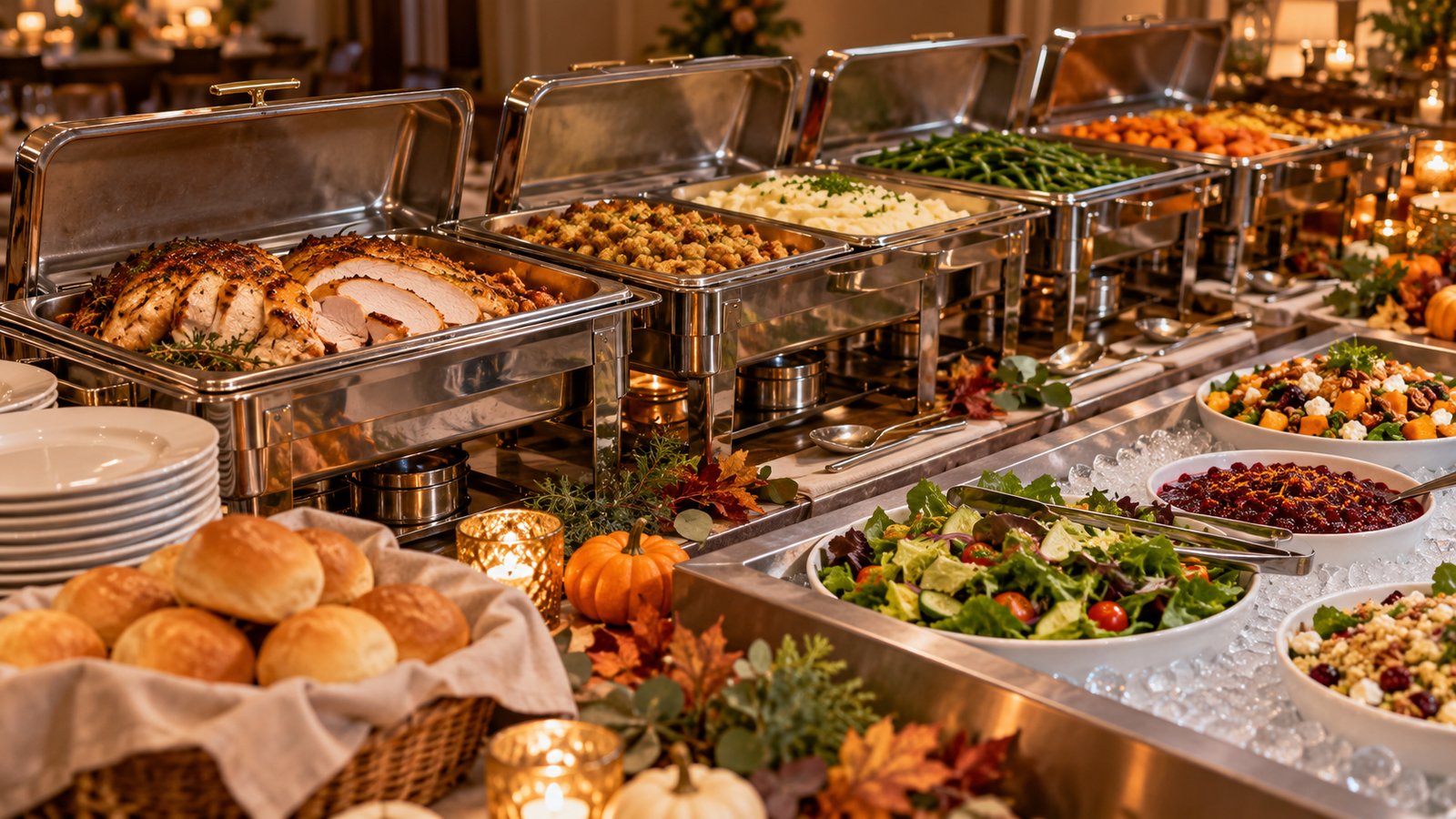
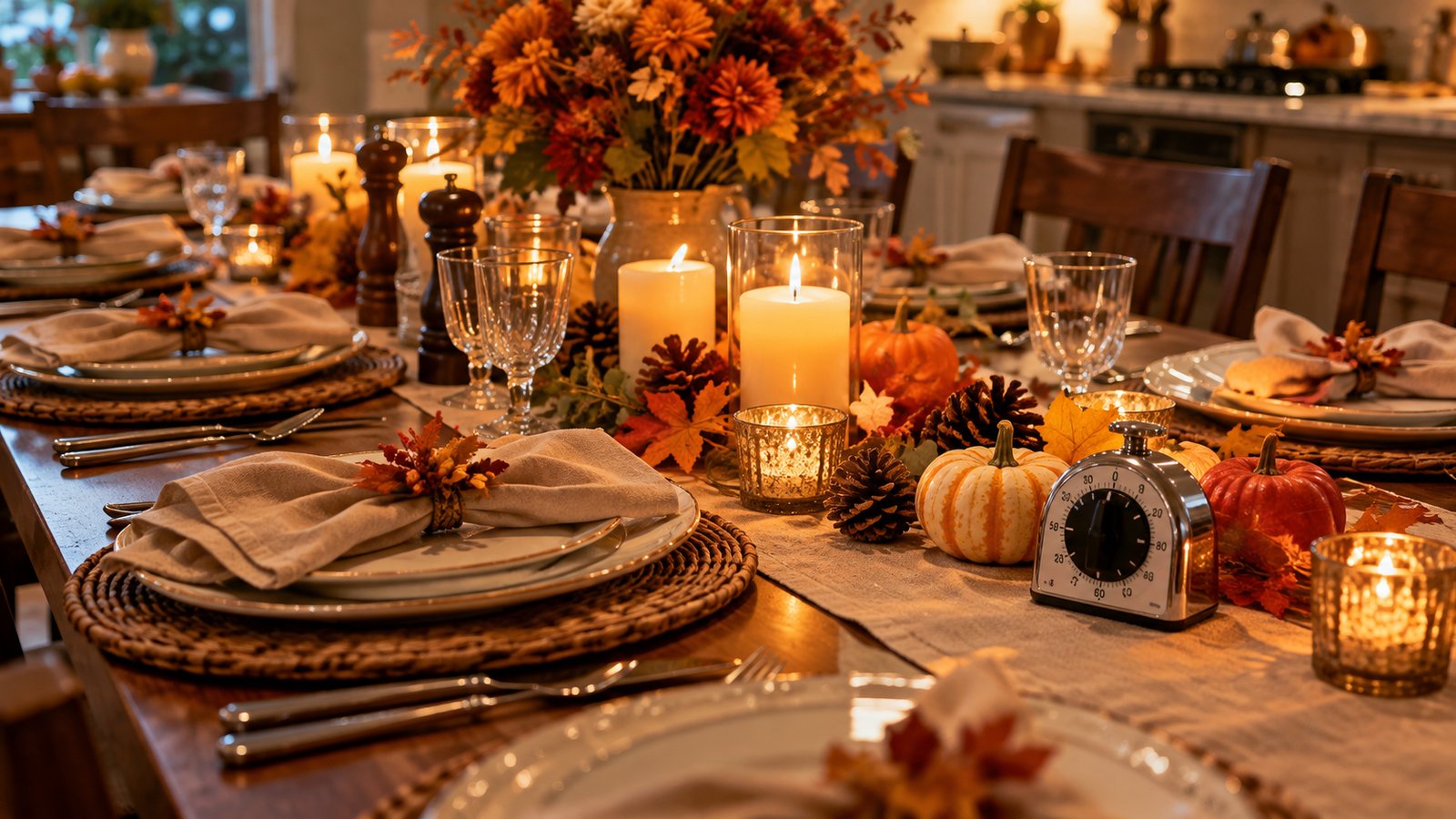
Thanksgiving dinner often goes on for hours, with people returning to the table for seconds and sometimes thirds. The two-hour rule applies here. Perishable food should not sit out for more than two hours, and no more than one hour if the room is above 90°F. Put out smaller portions, and keep the rest warm in the oven or refrigerated.
- Keep hot food hot, at 140°F or above, with chafing dishes, warming trays or a slow cooker.
- Keep cold food cold, at 40°F or below, on a bed of ice if it sits out.
- Replace serving dishes rather than topping up half-empty ones.
- Set a timer when the food goes on the table, so you know when two hours are up.
- Use clean serving spoons, and do not let guests use their own forks to serve themselves.
Kids and older relatives need extra care, as do pregnant women and anyone with a weak immune system. They are more likely to become seriously ill from foodborne illness. If you are hosting such guests, be especially careful about keeping time and temperature in check, and skip raw or undercooked foods such as unpasteurized cider or soft cheeses unless you know the label.
Leftovers: Store Them Fast and Reheat Them Right
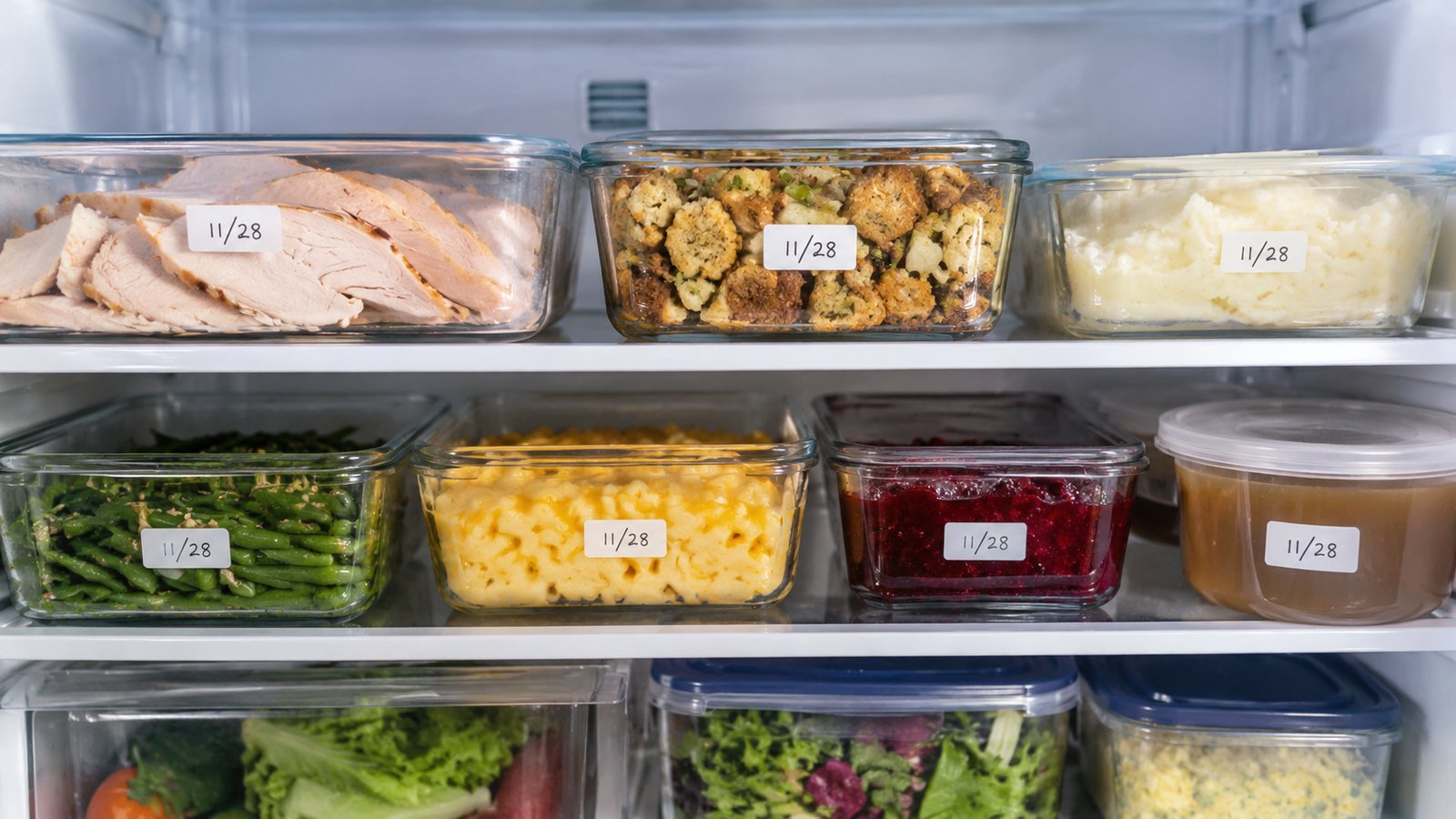
Get leftovers into the refrigerator within two hours of the turkey coming out of the oven. Cut the meat off the bones and divide it into shallow containers so that it cools quickly. Do not leave the whole carcass in the fridge to carve later.
Leftover turkey and stuffing will last three to four days in the refrigerator, according to the USDA. For longer storage, freeze it. Frozen leftovers stay safe indefinitely, though the quality is best in two to six months. Reheat leftovers to 165°F before eating, and bring gravy to a rolling boil. Pumpkin and other egg-rich pies should be refrigerated after they have cooled.
If you do not want to eat turkey sandwiches for a week, freeze portions for easy meals. Soups, casseroles and pot pies all use up leftover turkey. For kids, our Thanksgiving snack for kids adds something festive to the table, and the Thanksgiving painted rocks craft keeps little hands busy while you cook.
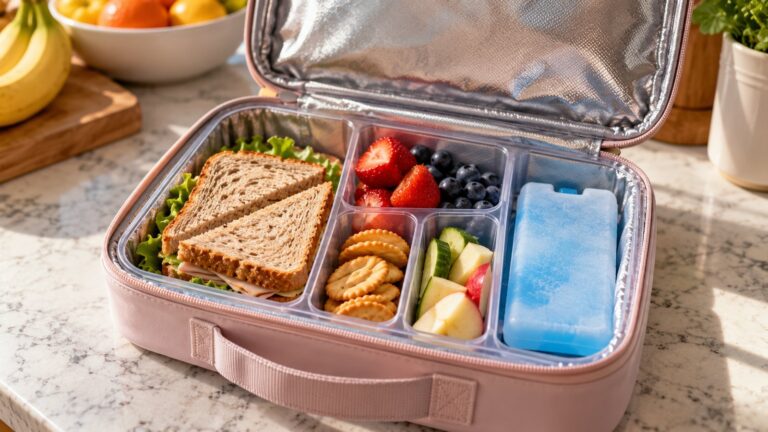
Leftovers also make good packed lunches for the week after the holiday. Reheat turkey and stuffing to 165°F, then pack them in an insulated container so they stay hot, following the steps in our guide to packing a safe school lunch. Label every container with the date so that nothing stays in the refrigerator past the fourth day, and ask guests who take home plates to refrigerate or freeze them promptly as well. A quick message after the party with the same reminder is a thoughtful gesture, and it helps everyone enjoy the leftovers without worry.
A Simple Thanksgiving Countdown
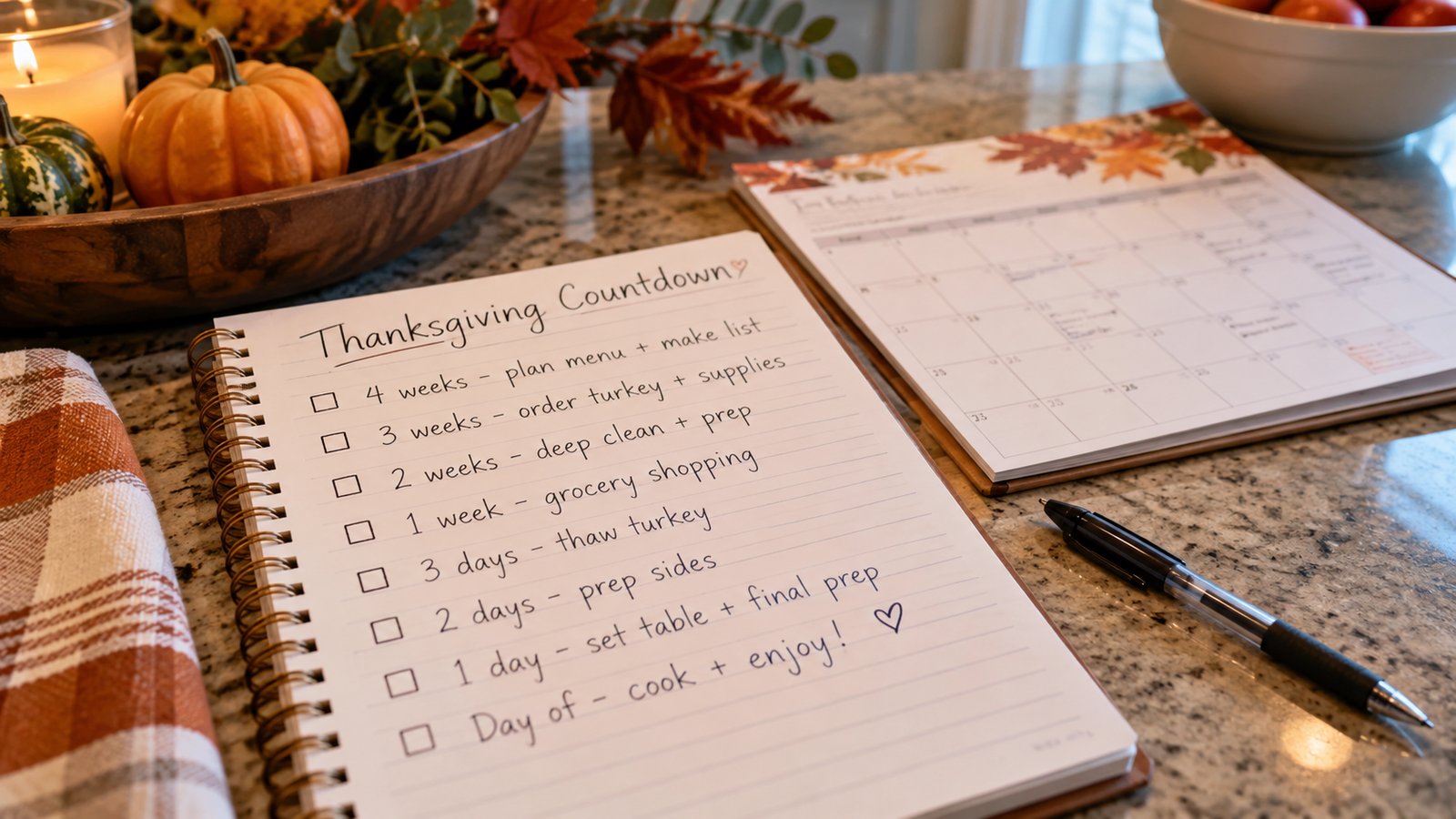
- One week out: buy the turkey, clear refrigerator space, and check that your thermometer works.
- Five days out: start thawing a frozen turkey in the refrigerator, if it is large.
- Two days out: shop for fresh ingredients, and make anything that can be prepared ahead.
- The day before: thaw is complete, make sides that reheat well, and set the table.
- Thanksgiving morning: preheat the oven, take the turkey out of the refrigerator, and check the temperature in three places when the timer goes off.
- After dinner: refrigerate leftovers within two hours, and label containers with the date.
If you have a question on the day, the USDA Meat and Poultry Hotline is available at 1-888-674-6854, and it also offers an online chat. The staff are happy to answer thawing and cooking questions, including on holidays, though hours vary, so check ahead.
Frequently Asked Questions
Can I cook a turkey straight from frozen?
Yes. The USDA says it is safe, and it takes about 50 percent longer than cooking a fully thawed turkey. Make sure the temperature reaches 165°F in all three spots.
Is it safe to cook stuffing inside the turkey?
It can be, if the stuffing reaches 165°F in the center. Cooking it separately is easier and more reliable.
How long can turkey sit out after dinner?
No more than two hours, or one hour if the temperature is above 90°F. After that, throw it away.
How long are leftovers good?
Three to four days in the refrigerator. Freeze anything you will not use by then.
Do I need to rinse the turkey?
No. The USDA recommends not washing raw poultry, because it can spread bacteria around the kitchen.
Sources: USDA Food Safety and Inspection Service, “Let’s Talk Turkey,” safe thawing and safe minimum internal temperature charts; FoodSafety.gov, four steps to food safety. Product links are affiliate links. This article is general information.