Winter Home Safety Tips for Families: Space Heaters, Carbon Monoxide, Holiday Decorations and Cold-Weather Basics
Winter home safety tips for families with kids: space heater and fireplace rules, carbon monoxide and generator safety, Christmas tree, lights and candle safety, toy and plant hazards, frozen pipes, outages and dressing kids for cold.
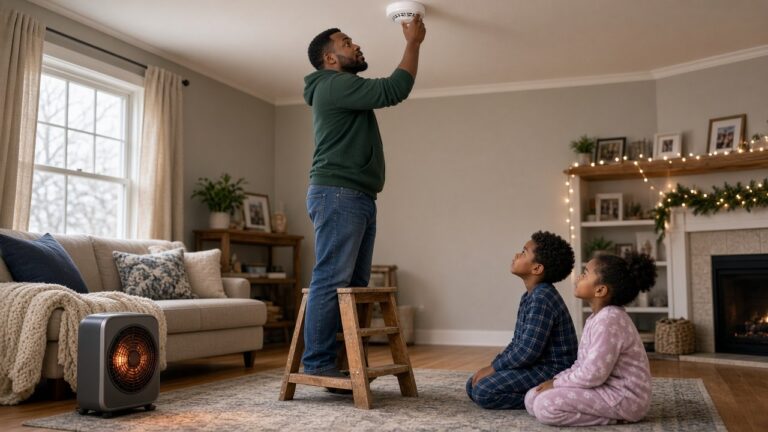
Quick answer: the most important winter home safety tips for families are to keep a 3-foot kid-free zone around space heaters, fireplaces and wood stoves; plug heaters directly into the wall and turn them off when you leave the room; test smoke and carbon monoxide alarms before heating season; never run a generator, grill or car indoors or in a garage; water a live Christmas tree daily and keep it away from heat; turn off holiday lights at bedtime; and keep button batteries, small magnets and holiday plants away from young children.
Winter brings the coziest parts of family life, from holiday lights to evenings by the fire, along with a predictable set of hazards. The National Fire Protection Association (NFPA) reports that home heating fires peak in December, January and February, and the CDC warns that carbon monoxide poisoning rises in cold months when furnaces, generators and space heaters are running.
These winter home safety tips are organized so you can work through them room by room before the first cold snap, then return to the holiday and outage sections as the season goes on. This article is part of the Living Life as Moms family health and safety guide, which covers year-round safety at home, in the car and at school.
This article is general safety information, not professional or medical advice. In an emergency call 911. For a possible poisoning call Poison Help at 1-800-222-1222. Sources: National Fire Protection Association (NFPA); Centers for Disease Control and Prevention (carbon monoxide poisoning); U.S. Consumer Product Safety Commission (CPSC); American Academy of Pediatrics, HealthyChildren.org; National Highway Traffic Safety Administration; American Red Cross; Ready.gov; National Capital Poison Center (Poison.org). Checked October 2026.

Get Your Home Ready Before It Gets Cold
The best time to prepare for winter is in the fall, before the heat is running every day. A one-afternoon check covers most of the risks in this guide:
- Test smoke and CO alarms and replace batteries where needed.
- Schedule a furnace inspection with a qualified technician.
- Have chimneys and vents checked. NFPA recommends that chimneys, fireplaces and vents be inspected once a year by a qualified professional and cleaned when needed.
- Clear outdoor vents for the furnace, dryer and water heater, and plan to keep them clear of snow.
- Locate your water shut-off valve in case a pipe freezes and bursts.
- Stock a winter kit with flashlights, batteries, blankets and a battery radio.
- Review your fire escape plan with the kids, including the meeting spot outside.
Our home fire safety checklist for families explains where to put smoke and CO alarms and how to practice an escape drill.

Space Heater Safety With Kids
Space heaters are safe enough when you follow the 3-foot rule, use a heater with modern safety features and turn it off whenever no adult is watching. NFPA data show that space heaters are involved in a small share of home heating fires but most of the deaths from them, often because something that can burn was too close.
Space Heater Rules
- Keep a 3-foot kid-free and pet-free zone around the heater, and keep bedding, curtains, furniture, toys and clothes at least that far away.
- Choose a heater with automatic shut-off that turns it off if it tips over or overheats, and that carries the mark of a recognized testing laboratory such as UL or ETL.
- Plug it directly into a wall outlet. Do not use an extension cord or power strip, which can overheat.
- Turn it off when you leave the room or go to bed.
- Place it on a hard, level floor, not on a rug, bed or table.
- Never use it to dry clothes or warm blankets.
- Check the cord and plug for damage before each season.
Kids and Heaters
Toddlers can burn their hands on the grill of some heaters, so look for models with cool-touch housings and place them where small children cannot reach. Older children should learn the 3-foot rule and know never to put toys or paper near a heater. A bedroom heater should never run overnight while a child sleeps.
Fireplace and Wood Stove Safety
Fireplaces and wood stoves need a sturdy screen or gate, a clean chimney and careful ash disposal. A glass fireplace door can stay hot enough to burn a child long after the fire is out.
- Use a fireplace screen and consider a safety gate around the hearth if you have a baby or toddler.
- Burn only dry, seasoned wood. Never burn trash, cardboard or wrapping paper, which can flare up.
- Never use flammable liquids to start or speed up a fire.
- Put the fire out before going to bed or leaving the house.
- Dispose of ashes safely. NFPA advises putting cooled ashes in a metal container with a lid and keeping it outside at least 10 feet from the home.
- Keep matches and lighters locked up and out of children’s reach.
Gas fireplaces need annual service as well. Teach kids that the glass front is “hot, do not touch,” even when the flames are off.

Carbon Monoxide Safety in Winter
Carbon monoxide (CO) is the winter hazard parents worry about least and should worry about most, because it is invisible and odorless. The CDC reports that more than 400 people in the United States die each year from unintentional CO poisoning not linked to fires, and thousands more visit emergency rooms.
Prevent CO Buildup
- Install CO alarms on every level of the home and outside sleeping areas, as the CPSC recommends, and test them monthly.
- Have heating systems, water heaters and gas appliances serviced once a year.
- Never use a gas stove or oven to heat your home.
- Never run a car in an attached garage, even with the garage door open.
- Keep vents clear of snow. Blocked furnace and dryer vents can push CO back into the house, and a snow-blocked tailpipe can fill a parked car with CO.
Know the Symptoms
The CDC lists headache, dizziness, weakness, upset stomach, vomiting, chest pain and confusion as common symptoms. They are easy to mistake for the flu. If several people in the home feel sick at once and feel better away from the house, suspect CO. If a CO alarm sounds, get everyone outside to fresh air and call 911. We cover this in more detail in our guide to poison prevention at home.
Generator and Power Outage Safety
Winter storms can knock out power for days, and the most dangerous mistakes happen while families try to stay warm. Never use a portable generator, camp stove, charcoal grill or propane heater designed for outdoor use inside your home, garage, basement or crawl space.
Generator rules from the CDC and CPSC:
- Run it outside, at least 20 feet from windows, doors and vents.
- Point the exhaust away from the house.
- Use heavy-duty outdoor extension cords rated for the load.
- Never plug a generator into a wall outlet, which can send power back into utility lines and endanger workers.
During an outage, use flashlights or battery lanterns instead of candles, as the American Red Cross recommends. Close off unused rooms, gather the family in one room with layers and blankets, and keep the refrigerator closed as much as possible. Ready.gov suggests having enough water, food and supplies to last several days.
Christmas Tree and Holiday Lights Safety
Holiday decorations are safest when trees are kept watered and away from heat, lights are in good condition and everything is turned off at bedtime. NFPA notes that electrical problems are a leading cause of Christmas tree fires and that a dry tree burns extremely fast.
Live Trees
- Choose a fresh tree with green needles that do not fall off easily.
- Cut about 2 inches from the base before placing it in the stand, as NFPA suggests.
- Water it every day; a dry tree is a serious fire hazard.
- Keep it at least 3 feet from fireplaces, radiators, space heaters, candles and heat vents.
- Get rid of it after the holidays or when it becomes dry, and never burn it in the fireplace.
Artificial Trees
Look for a label saying the tree is fire-resistant. Anchor tall trees so a climbing toddler or a pet cannot pull them over.
Lights and Cords
- Use lights listed by a recognized testing laboratory, and choose indoor or outdoor lights based on where they will go.
- Throw out strings with frayed wires, broken sockets or loose connections.
- Follow the manufacturer’s limit on how many strands to connect.
- Keep cords out of walkways and away from doors where they can be pinched.
- Turn off all lights before going to bed or leaving home. Timers make this easy.

Candles, Ornaments and Toy Hazards
December is a peak month for home candle fires, according to NFPA, and holiday decorations add choking and swallowing risks for little ones.
Candles
- Keep lit candles at least 12 inches from anything that can burn and out of children’s reach.
- Never leave a burning candle unattended, and blow candles out before leaving the room.
- Consider battery-operated flameless candles, but check that the battery compartment is secured with a screw.
Ornaments and Decorations
- Hang glass, small or breakable ornaments high on the tree, out of a toddler’s reach.
- Avoid ornaments that look like candy or food.
- Watch out for tinsel, ornament hooks and small decorations that can be swallowed.
Toys and Gifts
The CPSC advises keeping toys with small parts away from children under 3 and checking the age rating on every gift. Two newer gift hazards deserve attention:
- Button batteries: found in remotes, musical cards, key fobs and some toys. If swallowed, they can cause serious internal burns within hours. Reese’s Law now requires secure battery compartments, but check older products and hand-me-downs.
- Small, powerful magnets: if a child swallows more than one, they can attract each other through the intestines. Treat any suspected swallowing as an emergency.
Wrapping paper, ribbons and plastic packaging should be cleared away promptly after gift opening.
Holiday Plants and Party Hazards
Most common holiday plants cause only mild symptoms if a child nibbles them, but some berries and party leftovers can cause real problems. Poison.org, run by the National Capital Poison Center, notes that poinsettias have a worse reputation than they deserve and usually cause, at most, mild mouth or stomach irritation. Holly and mistletoe berries can cause vomiting and diarrhea if swallowed and are best kept out of reach.
Other holiday hazards to watch:
- Alcohol left in glasses after a party; even small amounts can be dangerous for young children.
- Guests’ bags and coats, which may contain medicines.
- Hot dishes and busy stoves. Create a kid-free zone in the kitchen while cooking.
- Food safety for big meals. Our Thanksgiving turkey food safety guide covers thawing, cooking temperatures and leftovers for holiday roasts.
Save Poison Help, 1-800-222-1222, in every phone in case a child swallows something.
Dressing Kids for Cold Weather and Car Safety
Dressing kids in warm layers keeps them safe outside, but bulky coats should come off before they are buckled into a car seat. The AAP suggests dressing babies and young children in one more layer than an adult would wear in the same conditions, with a hat, mittens and warm boots.
Outdoor Play
- Use layers: a base layer, a warm middle layer and a waterproof outer layer.
- Bring children inside when clothing gets wet or they start shivering.
- Watch for signs of frostbite (pale, gray or blistered skin on fingers, toes, ears or nose) and hypothermia (shivering, sluggishness, confusion).
- For sledding, the AAP advises sitting up or lying on the back feet-first, never head-first, on slopes free of trees and obstacles and away from streets.
In the Car
Puffy coats compress in a crash, leaving car seat harness straps too loose. NHTSA and the AAP recommend buckling children in with thinner layers and then placing a blanket or the coat backward over the harness. Our guide to car seat stages by age and size covers harness fit and when to switch seats.
Keep a winter car kit with blankets, extra mittens, snacks, water, a flashlight, a phone charger and an ice scraper, as Ready.gov recommends.

Frozen Pipes, Ice and Outdoor Hazards
Cold snaps can freeze pipes and turn steps into slip hazards, so a few simple steps protect both your home and your family.
- Prevent frozen pipes. The American Red Cross suggests letting faucets on outside walls drip during extreme cold, opening cabinet doors under sinks so warm air can reach pipes, and keeping the thermostat at the same temperature day and night. If you travel, leave the heat set to at least 55 degrees Fahrenheit.
- Clear steps and walkways and use ice melt, stored out of reach of children and pets.
- Watch for icicles over doors and play areas.
- Store antifreeze and windshield washer fluid high and locked; both can be poisonous if swallowed.
- Shovel safely. Take breaks, push snow rather than lift it where possible, and let kids help with small, light shovels.

Frequently Asked Questions

Frequently Asked Questions
Is it safe to use a space heater in a child's bedroom? It is safest not to run a space heater while a child sleeps. If you use one in a bedroom, keep it at least 3 feet from beds and anything that can burn, choose a model with tip-over and overheat shut-off, plug it directly into the wall and turn it off before bedtime.
Where should carbon monoxide alarms go? The CPSC recommends CO alarms on every level of the home and outside sleeping areas. Test them monthly and replace them according to the manufacturer's instructions.
How far should a generator be from the house? The CDC advises running portable generators outside, at least 20 feet from windows, doors and vents, and never in a garage, basement or crawl space, even with doors open.
How often should I water a Christmas tree? Check and water a live Christmas tree every day. A dry tree catches fire easily and burns very fast, so remove it from the house once it starts dropping needles.
Are poinsettias poisonous to kids? Poinsettias usually cause only mild mouth or stomach irritation if a child chews the leaves, according to the National Capital Poison Center. Holly and mistletoe berries are more likely to cause vomiting. Call Poison Help at 1-800-222-1222 with any concern.
Should kids wear winter coats in car seats? No. Bulky coats can leave harness straps too loose in a crash. Buckle children in with thinner layers, then put a blanket or their coat on backward over the straps.

The Bottom Line
Winter home safety for families comes down to heat, air and decorations: keep a 3-foot zone around heaters and fireplaces, turn heaters off when no one is watching, keep CO alarms working and generators outside, water the tree and switch off lights at bedtime, and keep button batteries, magnets and small ornaments away from little ones. Add warm layers outside, thin layers in the car seat and a stocked winter kit, and your family is ready for the season.