Safe Sleep for Babies: What the AAP Recommends and How to Set Up a Safe Crib
Safe sleep for babies explained using the American Academy of Pediatrics 2022 guidelines: back to sleep, a bare crib, room-sharing without bed-sharing, swaddling, pacifiers, products to avoid and what to tell grandparents and sitters.
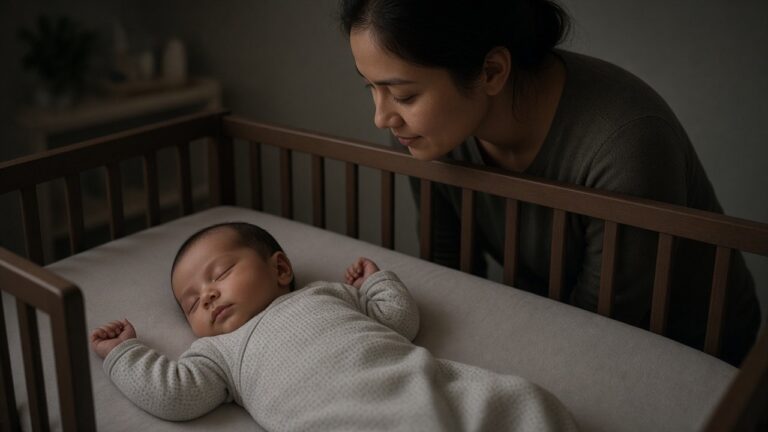
Quick answer: the American Academy of Pediatrics (AAP) says safe sleep for babies means placing your baby on their back for every sleep, alone, on a firm, flat surface in a crib, bassinet or play yard with only a fitted sheet: no pillows, blankets, bumpers or toys. Share a room but not a bed, ideally for at least the first six months. Avoid inclined sleepers, weighted sleep sacks and sleeping with a baby on a couch or armchair, offer a pacifier at sleep times, keep the baby from overheating and keep smoke away.
Sleep-related deaths remain one of the leading causes of death for babies under one year old in the United States, according to the CDC. Most happen during ordinary sleep, at home, and many are linked to an unsafe sleep position or surface. The encouraging part is how much parents can control: the core safe sleep steps are free and take only minutes to put in place.
This guide explains safe sleep for babies based on the AAP’s 2022 policy statement, the NICHD’s Safe to Sleep campaign and federal product rules. You will find the “ABCs” of safe sleep, a crib setup checklist, guidance on swaddling, naps and travel, and answers to the questions new parents ask most. It is part of the Living Life as Moms family health and safety guide.
This article is general information based on published guidance, not medical advice. Talk to your pediatrician about your baby’s specific needs, especially for premature babies or babies with medical conditions. Sources: American Academy of Pediatrics, “Sleep-Related Infant Deaths: Updated 2022 Recommendations for Reducing Infant Deaths in the Sleep Environment” and HealthyChildren.org; Eunice Kennedy Shriver National Institute of Child Health and Human Development (NICHD) Safe to Sleep campaign; Centers for Disease Control and Prevention (sudden unexpected infant death); U.S. Consumer Product Safety Commission; Safe Sleep for Babies Act of 2022. Checked October 2026.
What Safe Sleep for Babies Means
Safe sleep for babies is a set of practices that lower the risk of sudden infant death syndrome (SIDS) and accidental suffocation or strangulation in bed. Doctors group these deaths under the term sudden unexpected infant death, or SUID. The CDC notes that thousands of babies in the United States die suddenly and unexpectedly each year, most often in their first six months.
Researchers still do not fully understand why some babies die of SIDS. Accidental suffocation, on the other hand, usually has a clear cause: soft bedding over the face, a gap between a mattress and a wall, or an adult or sibling rolling onto a baby. Safe sleep guidance targets both.
The approach works. After the national Back to Sleep campaign (now called Safe to Sleep) began in 1994 and told parents to place babies on their backs, SIDS rates in the United States dropped sharply, according to the NICHD.
The ABCs of Safe Sleep
The easiest way to remember safe sleep for babies is the ABCs: Alone, on the Back, in a Crib. Many hospitals and health departments teach this shorthand.
- Alone: your baby sleeps in their own space, without pillows, blankets, bumpers, stuffed animals or another person.
- Back: place your baby on their back for every nap and every night, until their first birthday.
- Crib: use a crib, bassinet, portable crib or play yard that meets federal safety standards, with a firm, flat mattress and a fitted sheet.
The AAP adds a few more pieces: room-sharing without bed-sharing, breastfeeding when possible, offering a pacifier, avoiding overheating and keeping the baby’s environment free of smoke, alcohol and drugs. Each is covered below.

Always Place Babies on Their Backs
Babies should sleep on their backs for every sleep until they are 1 year old, the AAP says, including naps and short dozes. Side sleeping is not safe, because babies can easily roll from their side onto their stomach.
Parents often worry that a baby on their back might choke if they spit up. The AAP explains that healthy babies have a natural gag reflex that protects their airway, and research has not shown an increase in choking with back sleeping.
What If My Baby Rolls Over?
Once your baby can roll from back to front and front to back on their own, you do not need to flip them back over during the night. Keep placing them on their back at the start of each sleep, and keep the crib bare so there is nothing to press their face into.
Tummy Time While Awake
Back sleeping can lead to flat spots on the head. Supervised tummy time while your baby is awake and someone is watching builds neck and shoulder strength and helps prevent flattening. The AAP suggests starting soon after birth with short sessions several times a day.
How to Set Up a Safe Crib or Bassinet
A safe sleep space is firm, flat and bare. The AAP recommends a surface that is not inclined, with a mattress that fits snugly and does not indent when your baby lies on it.
Crib setup checklist:
- Use a product that meets current CPSC standards. Cribs, bassinets, play yards and bedside sleepers sold new in the United States must meet federal safety standards. Avoid drop-side cribs, which were banned in 2011, and be cautious with older, secondhand cribs.
- Check the mattress fit. There should be no gaps between the mattress and the sides.
- Use only a fitted sheet made for that mattress.
- Remove pillows, blankets, quilts, bumpers, positioners and stuffed toys.
- Keep the crib away from windows, blind cords, curtains and wall decorations.
- Follow weight and age limits. Move from a bassinet to a crib when your baby reaches the bassinet’s limit or begins trying to roll or push up.
Products to Avoid
The Safe Sleep for Babies Act, signed into law in 2022, banned the sale of inclined sleepers for infants and padded crib bumpers. The AAP also advises against:
- Sleep positioners and wedges
- Weighted sleep sacks, weighted swaddles and weighted blankets
- Products marketed to reduce the risk of SIDS without evidence
- Home heart and breathing monitors used as a SIDS prevention strategy (they may be used for other medical reasons your doctor recommends)
Room-Sharing Without Bed-Sharing
Babies should sleep in their parents’ room, close to the parents’ bed but on a separate surface, ideally for at least the first six months, the AAP recommends. Room-sharing makes feeding and checking on your baby easier and is associated with a lower risk of SIDS.
Bed-sharing is not recommended. The AAP’s 2022 statement notes that the risk of sleep-related death is higher when babies share an adult bed, and it is especially high when:
- The baby is younger than 4 months or was born preterm or with a low birth weight
- An adult in the bed smokes, or the mother smoked during pregnancy
- An adult has had alcohol, cannabis or medicines that cause drowsiness
- The surface is soft, such as a waterbed, old mattress or one with pillows and heavy covers
- The baby shares the bed with siblings, pets or more than one adult
The Danger of Couches and Armchairs
Falling asleep with a baby on a sofa, recliner or armchair is one of the most dangerous situations, the AAP warns. Babies can become wedged between an adult and the cushions. If you feel drowsy while feeding on the couch, move to your bed and, once you wake, put the baby back in their own sleep space. Feeding in an adult bed is safer than on a sofa if you might fall asleep, as long as pillows and blankets are moved away from the baby.

Swaddling and Sleep Sacks
Swaddling can calm newborns, but it must be done correctly and stopped as soon as your baby shows signs of trying to roll. The AAP says swaddled babies should always be placed on their backs, and that swaddling should end when a baby starts attempting to roll, which often happens around 3 to 4 months.
Swaddling safety tips:
- Wrap snugly around the chest but loosely around the hips, so legs can bend up and out. The International Hip Dysplasia Institute and AAP both stress room for hip movement.
- Keep the swaddle below the shoulders and away from the face.
- Do not swaddle in a way that lets the blanket come loose in the crib.
After swaddling ends, a wearable blanket or sleep sack (not weighted) keeps your baby warm without loose covers.
Temperature, Clothing and Overheating
Overheating is linked to a higher SIDS risk, so dress your baby in no more than one layer more than an adult would wear to be comfortable in the same room. The AAP advises against hats indoors during sleep and against covering the baby’s face or head.
Signs your baby may be too warm include sweating, damp hair, flushed cheeks, heat rash and rapid breathing. A comfortable room temperature and a light sleep sack are usually enough. Skip extra blankets; if the room is cold, add a layer of clothing instead.
Pacifiers, Breastfeeding and Other Protective Factors
Several everyday choices further lower the risk of sleep-related death, according to the AAP.
- Breastfeeding: any amount of human milk is associated with a lower risk of SIDS, and longer breastfeeding offers more protection.
- Pacifiers: offering a pacifier at nap time and bedtime is associated with lower SIDS risk. If you are breastfeeding, the AAP suggests waiting until breastfeeding is going well. You do not need to put the pacifier back in once your baby falls asleep, and never hang it on a cord around the neck.
- Smoke-free environment: avoid smoking and nicotine during pregnancy and after birth, and keep your home and car smoke-free.
- Prenatal care and vaccines: regular prenatal care and following the recommended immunization schedule are both part of the AAP’s risk-reduction list.

Naps, Car Seats, Swings and Travel
Every sleep counts, including naps at grandma’s house and dozes in the car. The AAP says sitting devices such as car seats, strollers, swings, infant carriers and bouncers are not recommended for routine sleep. If your baby falls asleep in one, move them to a firm, flat sleep surface as soon as it is safe and practical.
A car seat is the safest place for a baby while the car is moving. Once you arrive, take your baby out to sleep. Our guide to car seat stages by age and size covers rear-facing installation and fit.
When traveling:
- Bring a portable crib or play yard that meets safety standards and use it with only the sheet made for it.
- Check hotel cribs for missing parts and tight-fitting mattresses.
- Keep the same back-to-sleep routine, even when schedules change.
Clock changes can shift nap and bedtime schedules too. Our tips on helping kids adjust when daylight saving time ends include ideas for little ones.
Talk to Grandparents, Sitters and Daycare
Anyone who puts your baby down to sleep should follow the same safe sleep rules you do. Advice has changed a lot since many grandparents raised their own children, when stomach sleeping, bumpers and heavy blankets were common.
Simple ways to share the rules:
- Write the ABCs on a card near the crib: Alone, Back, Crib.
- Show caregivers the setup and explain why the crib stays empty.
- Ask your child care provider about their safe sleep policy. Licensed child care programs in many states must follow back-to-sleep and bare-crib rules.
- Repeat it kindly. A short “the doctor told us” conversation is often easier than a debate.
As babies grow, sleep needs change. For a look at how much sleep children need at each age, from infancy to the teen years, see our guide on how much sleep kids need.
Frequently Asked Questions
Frequently Asked Questions
What are the AAP safe sleep guidelines? The AAP recommends placing babies on their backs for every sleep, on a firm, flat, non-inclined surface with only a fitted sheet, room-sharing without bed-sharing for ideally at least six months, offering a pacifier, avoiding overheating and soft bedding, and keeping the environment smoke-free.
When can a baby sleep with a blanket? The AAP advises keeping blankets, pillows and other soft items out of the sleep space for at least the first year. Use a wearable blanket or sleep sack instead.
Is it safe for my baby to sleep on their side? No. Side sleeping is not safe, because babies can roll onto their stomachs. Always place your baby on their back for every sleep until age 1.
How long should my baby sleep in my room? The AAP recommends room-sharing on a separate sleep surface, ideally for at least the first six months.
Can my baby nap in a swing or car seat? Sitting devices are not recommended for routine sleep. If your baby falls asleep in a car seat, swing or bouncer, move them to a crib, bassinet or play yard as soon as you safely can.
When should I stop swaddling? Stop swaddling as soon as your baby shows signs of trying to roll over, which often happens around 3 to 4 months. Switch to a non-weighted sleep sack.

The Bottom Line
Safe sleep for babies comes down to a few simple, repeatable habits: on the back, alone, in a bare crib or bassinet, in your room but not your bed. Skip inclined sleepers, bumpers, weighted products and couch naps, keep your baby comfortably cool and smoke-free, and make sure every caregiver follows the same rules. Ask your pediatrician if your baby has special medical needs; for most babies, these steps are the best protection available.